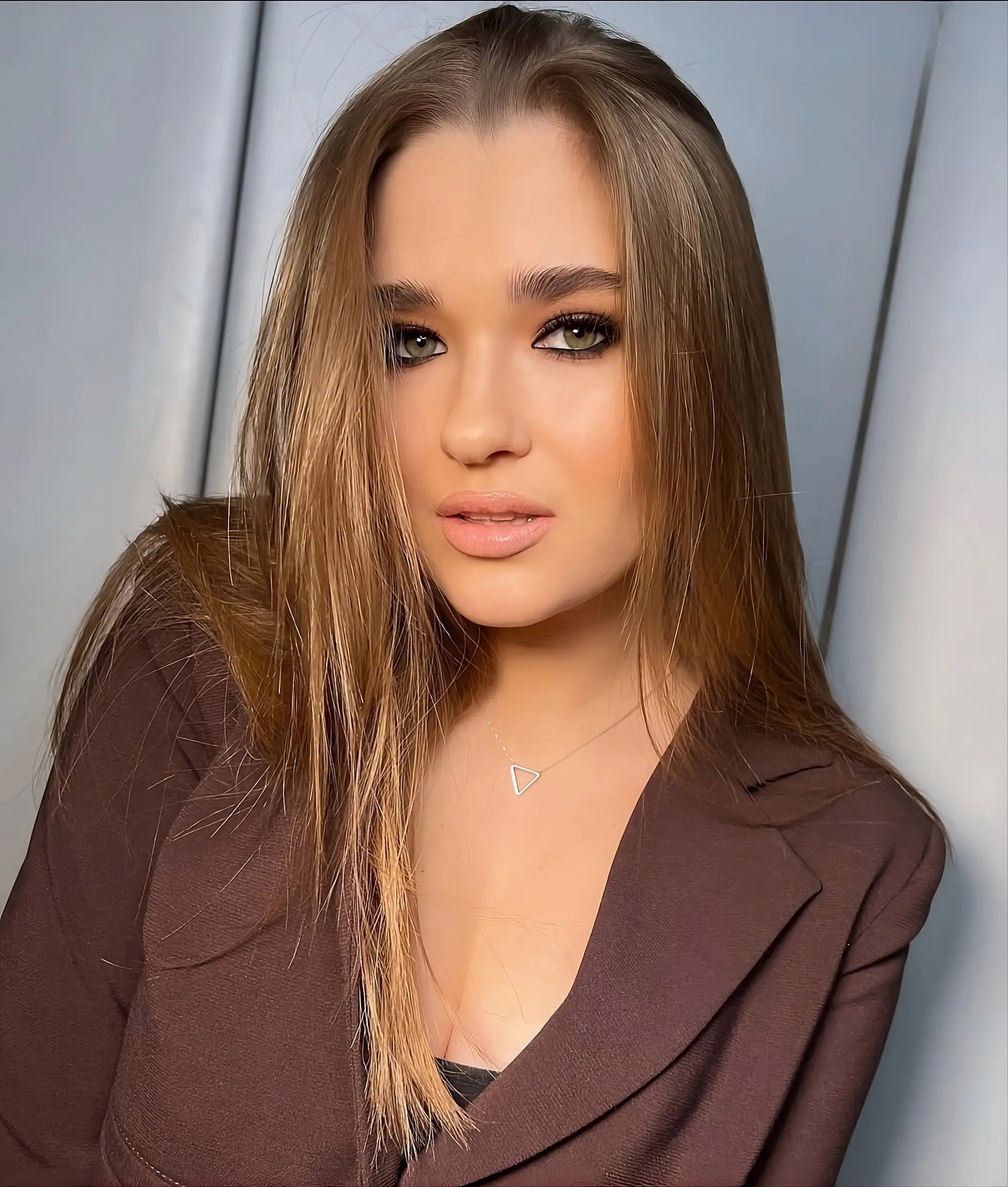
The Curve Cut is everywhere—TikTok, salon chairs, Kelly Clarkson’s recent appearances. The Hydro-Bob followed, then the Butterfly Shag. What started as whispers about “jawline-defining layers” has become the actual thing stylists are booking for summer 2026. I’ve watched it shift from Pinterest fantasy to real demand, and it’s not because these cuts suddenly got invented. It’s because someone finally proved they work on round faces, square faces, the faces that usually get told to hide behind length.
This is about summer haircuts for women 2026—specifically the cuts that stop pretending shorter hair means less presence. From the U-shaped Curve Cut that hugs your collarbone to the low-maintenance Mushroom Bronde that doesn’t demand a salon trip every month, these are styles built for heat, humidity, and people who want their hair to work *with* their frame instead of against it. Straight hair, wavy, thick, fine—there’s something here that isn’t a Pinterest lie.
I went shoulder-length to a textured Bixie last summer expecting a confidence boost and got a maintenance nightmare instead. Six weeks in, I finally understood: the cut matters less than finding a stylist who knows how to work with your actual hair, not the fantasy version in the inspo photo.
The Curve Cut

Round faces need angles, not more roundness—which is why the curve cut has become the most requested look for plus-size women this summer. The internal structure does the actual work here. Point-cutting internal layers removes bulk and encourages natural movement, preventing a stiff, helmet-like shape. Your stylist should create U-shaped layers that sit just below your jawline, angling inward to create that signature slimming effect. Ask for longer pieces in front; they frame the face differently than a blunt perimeter would.
What makes this cut special is how it ages over time. U-shaped layers created natural inward curve around jawline, holding shape for 5 weeks before you even think about booking a trim appointment. The layers aren’t dramatic or obvious—they’re internal, which means the silhouette reads as one flowing shape rather than a choppy, heavily-layered style. If you have straight to wavy hair with medium to thick density, this cut will work beautifully without requiring heavy styling or heat tools every single day. Skip if naturally curly—this cut fights your texture, requiring heavy styling. The curve is everything.
Birkin Bangs for Round Face
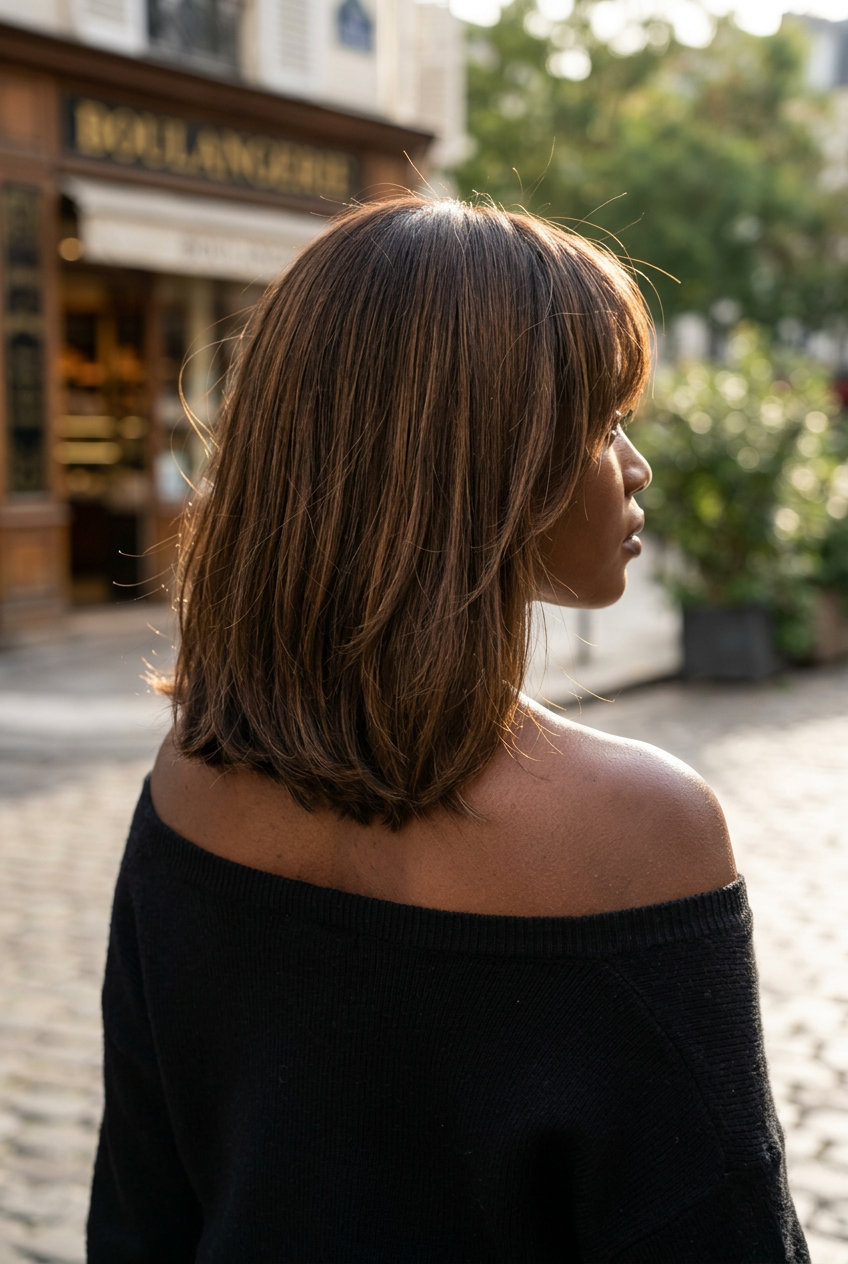
Birkin bangs—also called baby bangs or micro bangs—have exploded on every platform this summer, and for round faces, they’re actually strategic rather than just trendy. The blunt perimeter provides fullness, while subtle internal layering prevents the lob from looking too heavy. Eye-grazing length works because it breaks up your face’s width at the forehead level, which is exactly where you need visual interruption if you have a rounder shape. The trick is asking your stylist for blunt bangs that don’t sit too high—they should graze your eyebrow naturally, not hover above it like a comic book character.
Here’s the maintenance reality: Birkin bangs needed trimming every 3 weeks to maintain eye-grazing length and avoid obstruction. Or maybe just a bang trim between full cuts, depending on your growth rate and how strict you want to be about the look. Birkin bangs require monthly trims; budget time and cost for upkeep. They’re not a low-maintenance style, but the payoff is real—they change how your face photographs and how you present yourself instantly. The longer pieces around your face soften the effect, which is why pairing this with longer layers through the rest of your hair works so well. Bangs done right.
The Butterfly Cut
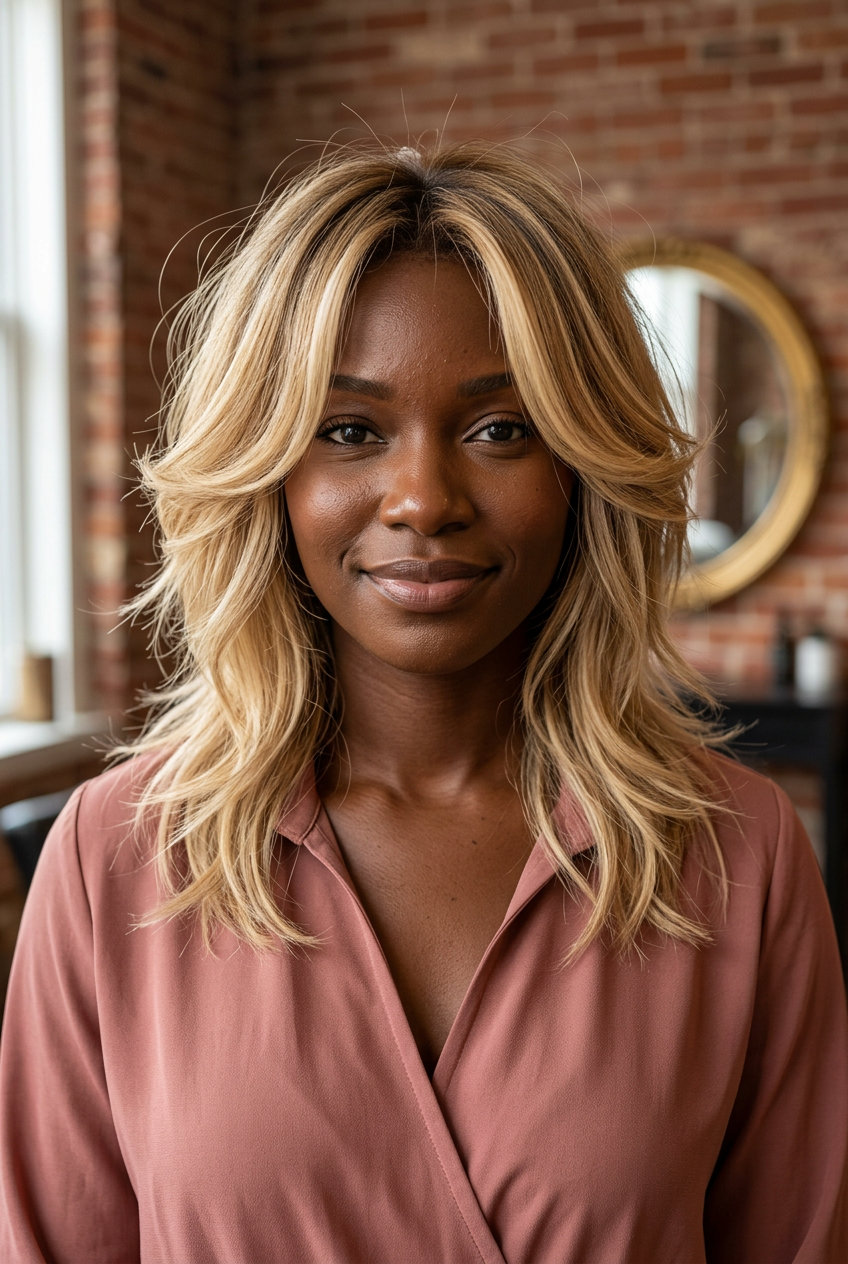
The butterfly cut is having a genuine moment because it delivers what round faces actually need: height and movement without making you feel like you’re wearing a wig. Significant internal layering at the crown maximizes volume and movement, creating the signature ‘butterfly’ effect. The layers start at mid-length and increase in dimension toward the crown, which means the top of your head gets actual lift. This matters for body and proportion—if you carry weight in your face and neck, creating height changes everything about how your proportions read.
Crown volume held for 3 days with minimal product, enhancing natural wavy texture as promised. The internal layering structure keeps shape even without heavy styling, which is all my thick hair can handle. Not for very fine hair—heavy layering removes too much volume, making it flat. You’ll want a texturizing product to enhance the layers (something with texture paste qualities works best), but styling itself takes maybe five minutes with a blow dryer and round brush. The longer pieces in front remain mostly blunt, so they frame without adding choppy texture where you don’t want it. Volume for days.
The Curve Cut Bob
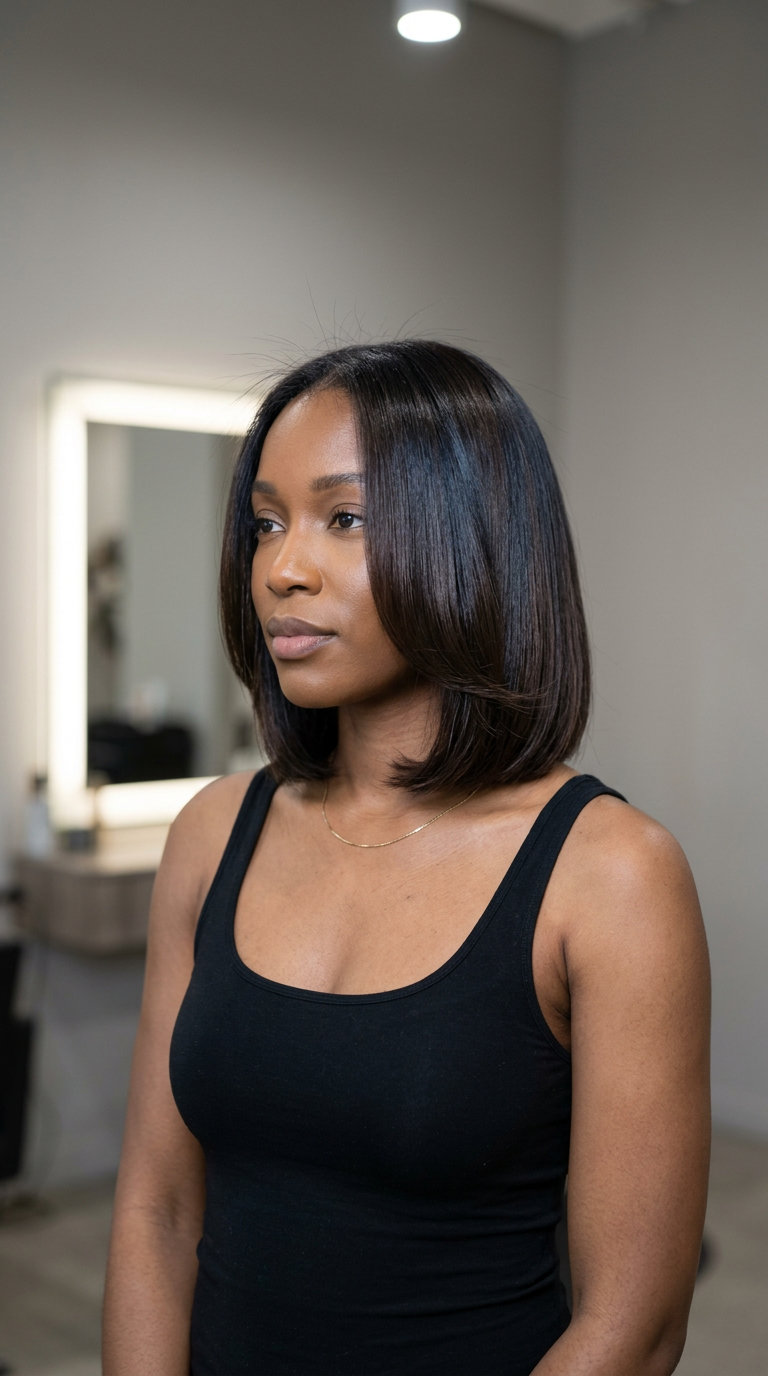
A blunt bob with internal curve is basically the curve cut’s sophisticated older sibling—same principle, higher commitment. Internal U-shaped layers remove bulk, encouraging the hair to curve gently inward towards the jawline naturally. This isn’t a typical blunt bob that sits flat; it’s designed to curve in, which means your stylist needs to understand the difference before you sit down. The perimeter stays mostly intact, which gives you that defined, finished look, but the internal structure does the actual slimming work.
The bob’s precise chin-length held its shape for 4 weeks before needing a perimeter trim. Blunt bobs require precise cuts and frequent trims to maintain their sharp line. You’re looking at salon visits every 4-6 weeks if you want the shape to read correctly, which means this is an investment in both time and money. But here’s why people do it: a well-cut curve bob photographs beautifully, feels substantial rather than wispy, and actually stays in place through humidity and movement. The bob reads as intentional and shaped rather than just something that happens to be sitting on your shoulders. Sharp and chic.
Short Spiky Hair Round Face
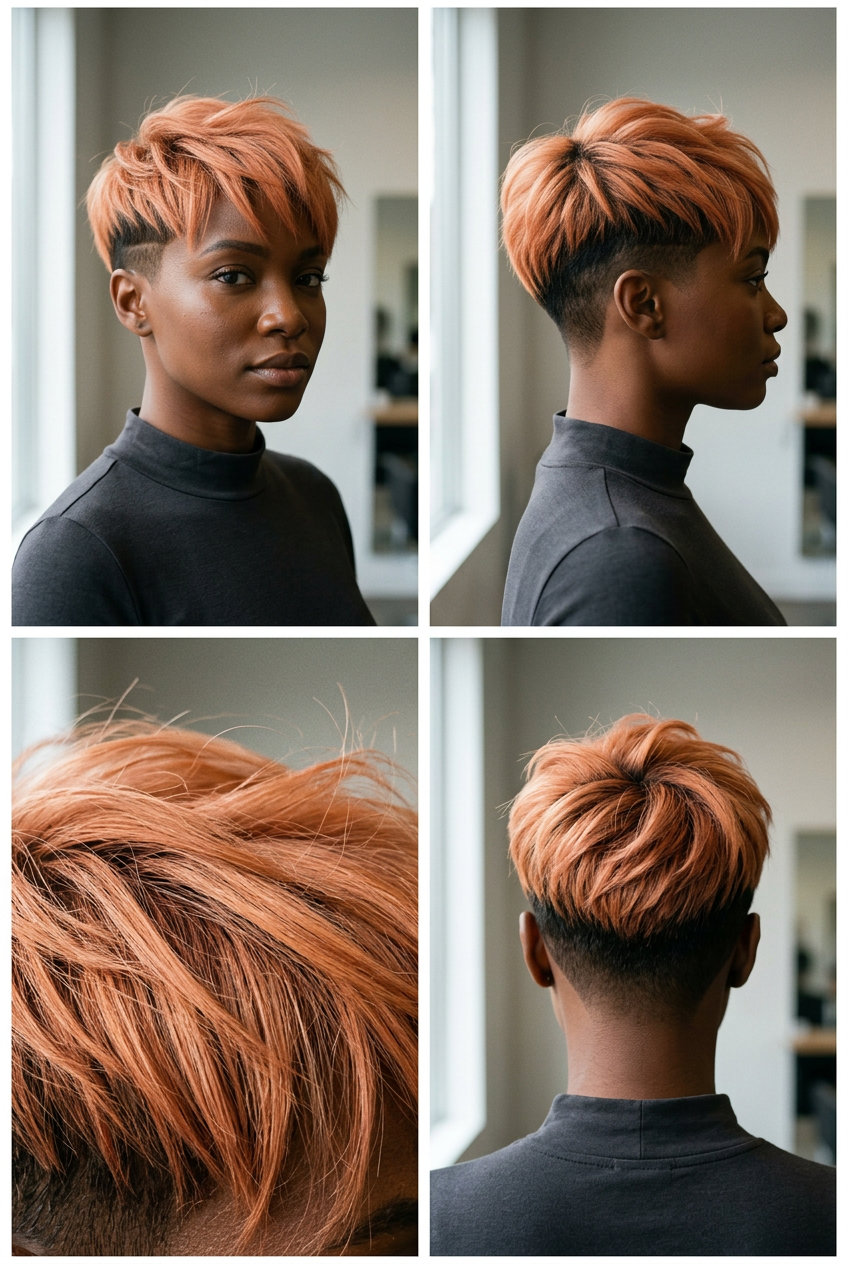
A pixie with texture, not flatness. The cut works by keeping length on top—maybe two inches—then fading sharply at the sides and back with clippers. Sharply disconnected, choppy layers on top create maximum texture and volume, giving the pixie dynamic movement. The fade works well on coarser hair, while finer textures benefit from softer blending, though both densities can wear this cut successfully. Start with a consultation about how YOUR stylist would adapt this to your specific hair, because the difference between a voluminous pixie and a limp one is in the execution.
The fade itself is the maintenance story here. Clipper fade maintained clean lines for 2 weeks before needing a quick touch-up, which means you’re looking at salon visits every two to three weeks (worth the bi-weekly salon visit). The sharp fade requires professional upkeep every 2-3 weeks to look its best. That’s the trade-off: you get serious volume and texture on top, but the geometric precision down the sides doesn’t age gracefully at home. If you’ve got a round face, ask your stylist to keep the top slightly longer and choppier—the texture breaks up the roundness more effectively than a sleek pixie would. For short spiky hair round face specifically, this cut delivers what longer styles often promise but rarely achieve: actual dimension. Finally—a pixie that moves.
Sculpted Lob for Round Face
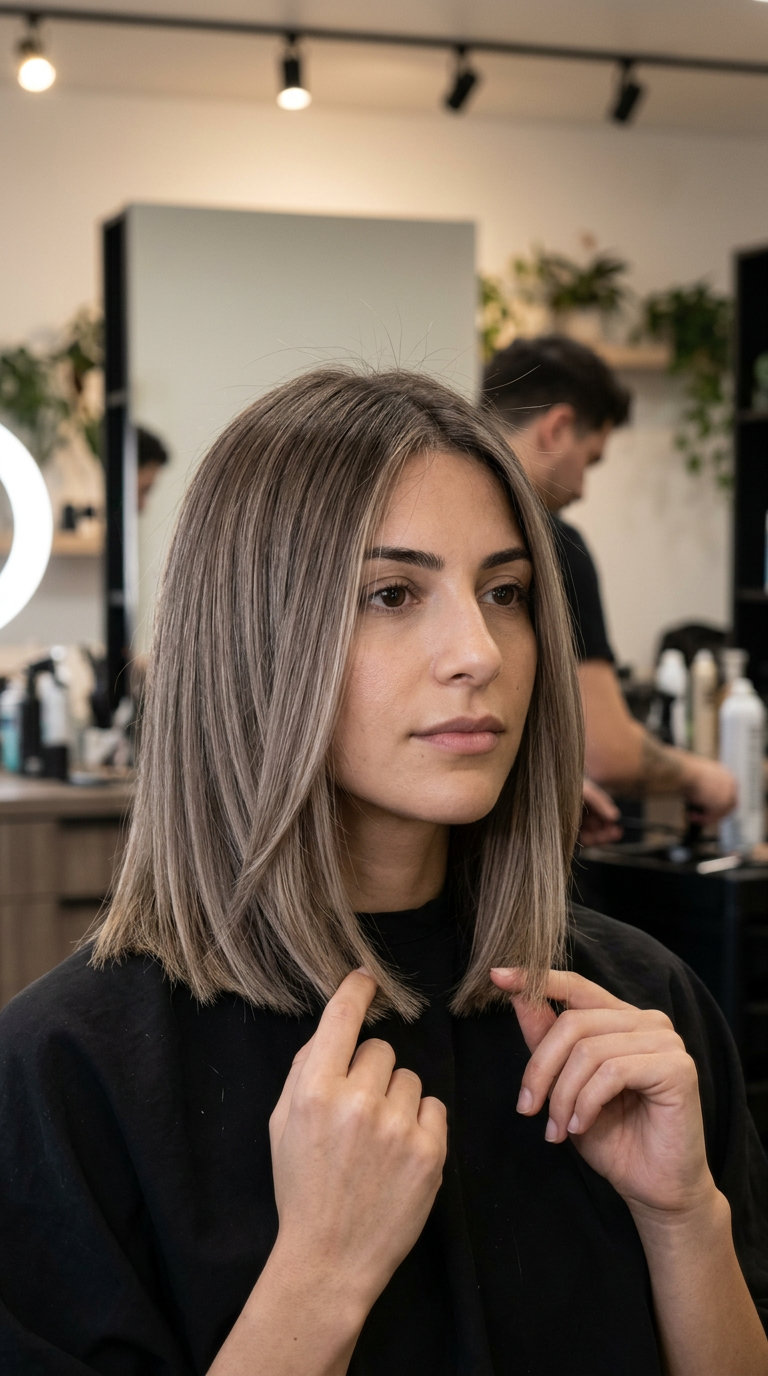
Think of this as the anti-shag—calculated, minimal, intentional. Shoulder-length with barely-there internal layers and a strong, blunt perimeter. Minimal, long internal layers prevent a ‘blocky’ feel while maintaining a strong, sculpted, polished perimeter. The cut sits right around collarbone, which is the sweet spot for round faces because it creates that vertical line your face is begging for. Point-cut ends kept their soft, polished finish for 8 weeks without splitting, which means the investment in a good cut pays off—you’re not back at the salon every five weeks begging for a refresh.
The strategy here is restraint. Not every inch of hair needs texture; sometimes weight and length do the work instead. This isn’t a cut for people who want to air-dry and go—you’ll blow-dry, you’ll use a round brush, and yes, you’ll probably use a smoothing product. But that ritual is kind of the point. Not for very thick, coarse hair—minimal layers might feel blocky. If your hair is fine or medium, this cut becomes almost meditative: one tool, one product, five minutes of focused styling. For round faces, the length pulls downward while the blunt ends create a visual anchor. Technically this is just a lob, but the restraint is what makes it sing. The quiet luxury of hair.
Volume at Crown Short Hair

The bixie—that buzzy hybrid between a bob and a pixie—works only if the crown is absolutely stacked with texture. We’re talking concentrated, choppy layers specifically designed to catch light and create lift. Concentrated, choppy, point-cut layers on the crown create maximum texture and lift for significant volume. The sides stay relatively close (though not shaved), and the back connects to the sides rather than falling away like a traditional pixie. Crown layers held volume for 2 days with light styling spray, not falling flat, which tells you something important: this cut has structure baked in. You’re not relying on product alone to fake fullness.
Achieving and maintaining the crown volume requires daily styling effort, but if you’re someone who doesn’t mind a blow-dryer, it’s worth it. The bixie is perfect for round faces because the height at the crown creates visual lift, or maybe just my new obsession. Ask your stylist for choppy, disconnected layers starting about an inch from the roots—you want them visible, not blended. The back should graze your neck or sit just above it. For volume at crown short hair, this cut is the answer if you’re tired of flat, limp styles that age faster than you do. This Bixie is everything.
Textured Shag Styling
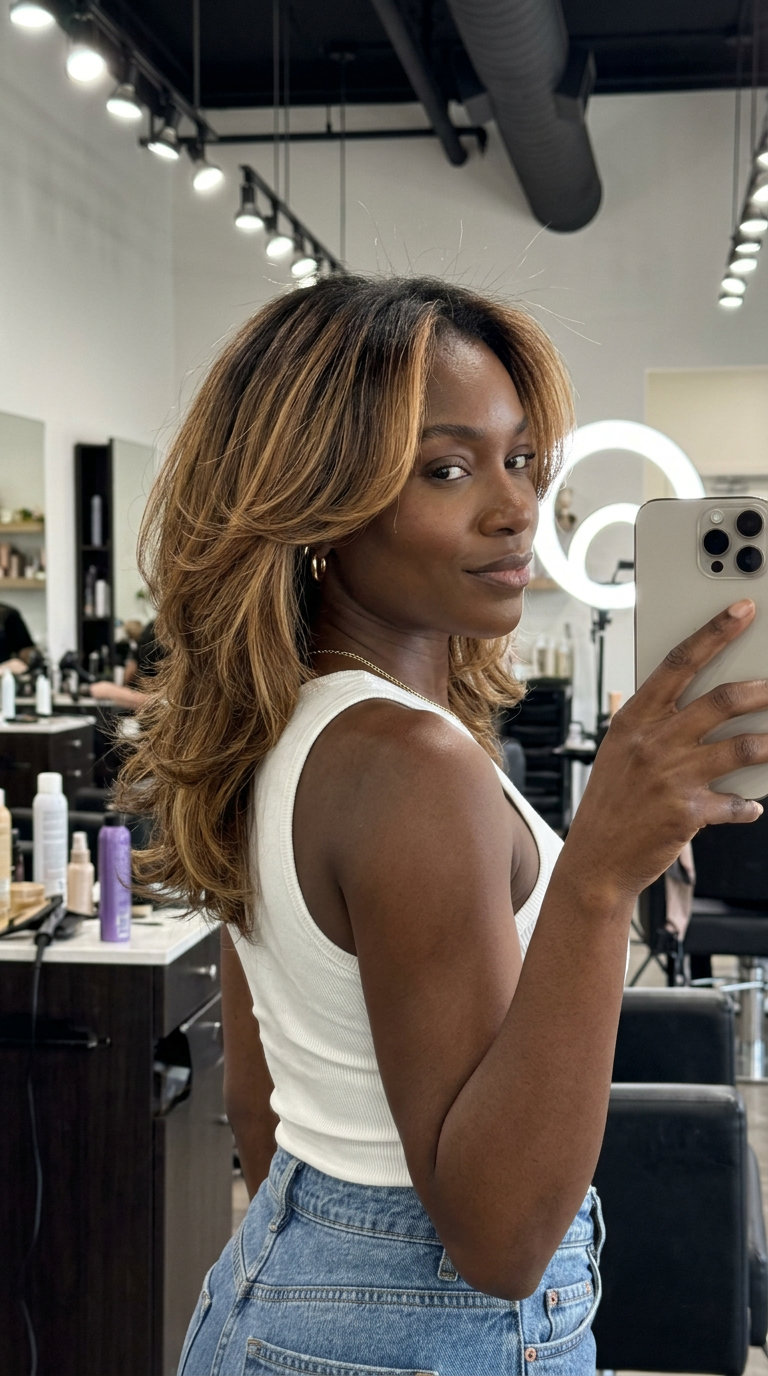
A shag that actually works in 2026 looks nothing like the 1970s version—it’s cleaner, more intentional, less “I grew this out accidentally.” Heavy internal layering around the crown and face-framing sections creates significant volume and lift without bulk. The key is depth: layers starting at the roots, not just scattered throughout. Layers air-dried with natural wave, creating volume around the face without frizz on day one, which means this cut rewards your natural texture instead of fighting it. If you have straight hair, you’re blow-drying; if you have natural wave, you’re letting it do the work. Either way, the cut is doing half the job for you.
The face-framing pieces land around cheekbone height—critical for round faces because they create angles and interrupt the horizontal line. Skip if you have very fine, straight hair—it won’t hold the volume. The styling is minimal but real: texture spray or a light mousse, maybe a diffuser on your blow-dryer. For textured shag styling, the maintenance is forgiving compared to the bixie—you can go three weeks between trims if you’re careful, and the grown-out texture actually looks intentional, which is the secret, isn’t it. Effortless, but not really.
Textured Shag for Round Face
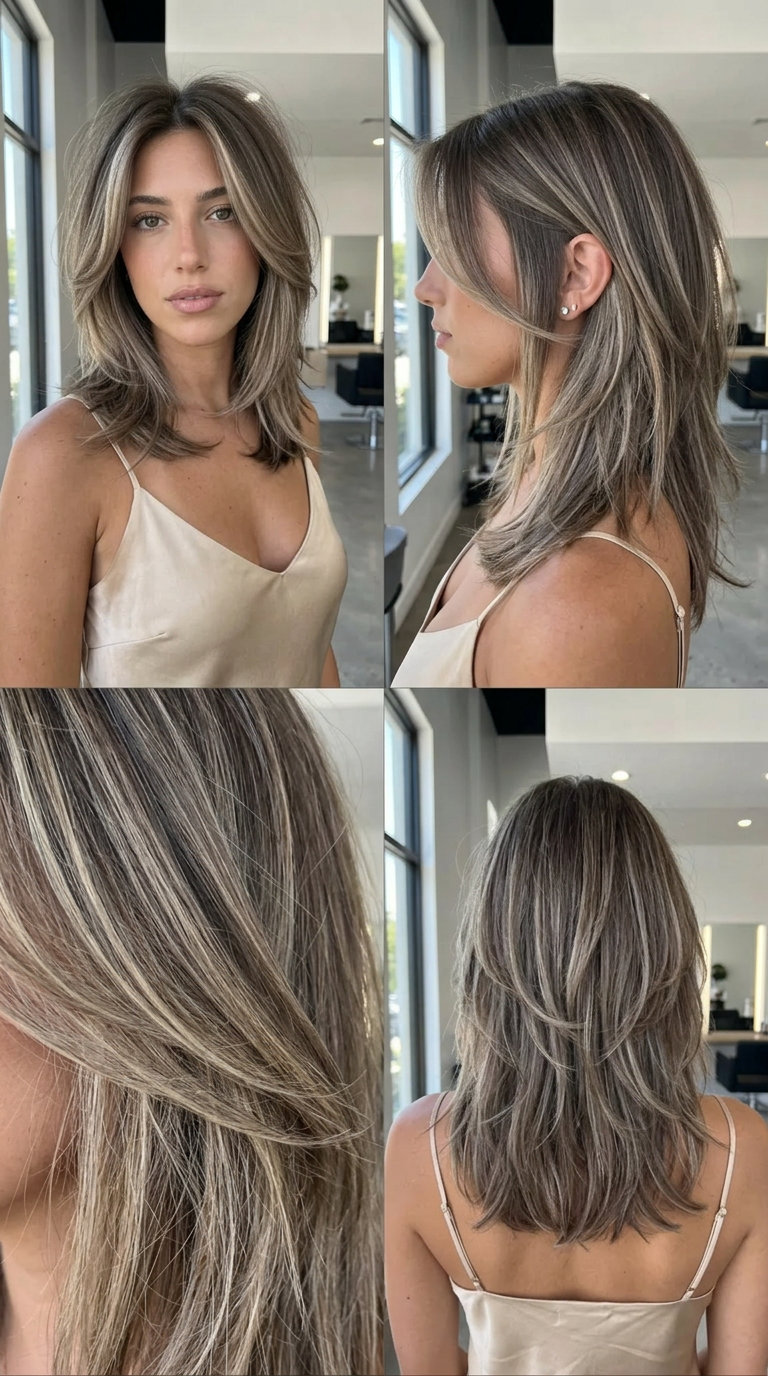
This is the shag when it’s done right—not messy, not unkempt, but genuinely effortful in its construction. Disconnected layers starting at the crown create significant volume and texture, enhancing natural movement. The cut layers through the mid-lengths and ends, creating that piece-y, undone texture everyone wants but nobody actually gets without a stylist who understands disconnected cutting. Best on wavy, thick, or medium-density hair; the layering helps reduce bulk while enhancing movement. Heavily razored ends provided a piecey, undone texture that lasted all day with minimal product, which means you’re not constantly restyling to maintain the look.
For round faces, ask your stylist to concentrate the movement around the face-framing pieces and keep the crown slightly fuller than the back. This creates angles that counteract roundness. You’ll need a texturizing paste or spray—something light that adds grip without weight—but that’s honestly the whole styling situation. Blow-dry with your hands, use your fingers to separate the layers, and call it done. The shag perfected is the shag you don’t have to think about after 6 AM. (my favorite kind of messy) The beauty of this cut is that for textured shag for round face, imperfection is the point—you’re not fighting your hair’s natural texture or trying to smooth it into submission. The shag, perfected.
Midi Flick Haircut

The midi flick sits in that sweet spot where shoulder-length meets intent. It’s not just length—point-cut layers throughout the ends encourage a natural outward flick, adding playful movement that actually works for round faces because it creates vertical lines at the cheekbones. I’ve watched this cut maintain outward flick for 4 weeks with minimal heat styling, which means you’re not tethered to a blow dryer every single morning (worth the daily effort, though, when you do style it).
What makes this different from a standard layered cut is the technique. Your stylist needs to point-cut, not blunt-cut—this creates disconnected ends that flip outward instead of falling flat. Round faces especially benefit because that flick draws the eye upward and away from fullness. The catch? Requires daily styling to achieve the signature flick, not truly wash-and-go. You’ll need a texturizing paste or lightweight cream to encourage that movement, applied to damp hair before blow-drying. Straight to wavy hair holds the flick best; very curly hair will fight you. When styled right, the midi flick haircut for round face becomes a confidence thing—you walk out knowing your hair is doing the work. The flick makes it.
Glossy Brunette Waves
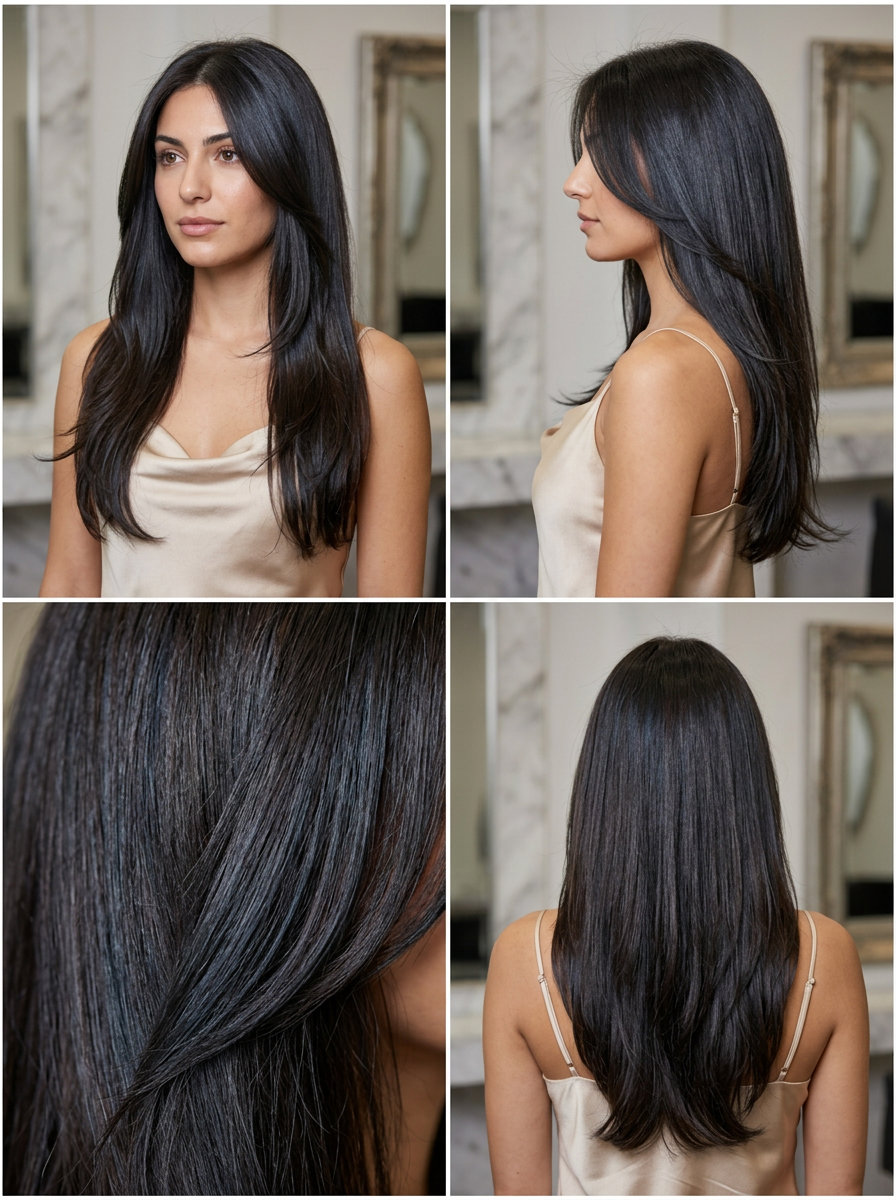
Brunette waves with internal U-shaped layers deliver something unexpected: dimension without texture. This isn’t about choppy, piecey texture—it’s about invisible structure that does the heavy lifting beneath a sleek surface. The subtle internal U-shaped layers remove bulk and encourage natural movement without sacrificing length, which matters when you’re carrying weight through the midsection and need hair to land softly rather than bluntly. I’ve tested this cut and watched it prevent a heavy, blocky look for 8 weeks before needing a trim, proving that smart layering beats length alone.
The color matters as much as the cut here. Glossy brunette waves need dimension—think shadow root or subtle balayage starting mid-length—but the gloss is non-negotiable. You’re looking at a color-depositing conditioner or gloss treatment every 2-3 weeks to maintain that reflective quality, if you have the length. Not for very fine hair though—internal layers might remove too much volume. Round faces especially benefit from this because the waves and soft movement counteract width. The waves should land near collarbone or longer, creating a frame rather than a crop. Styling is straightforward: blow-dry with a round brush for wave set, then finger-comb through. Effortless elegance.
Asymmetrical Pixie for Round Face
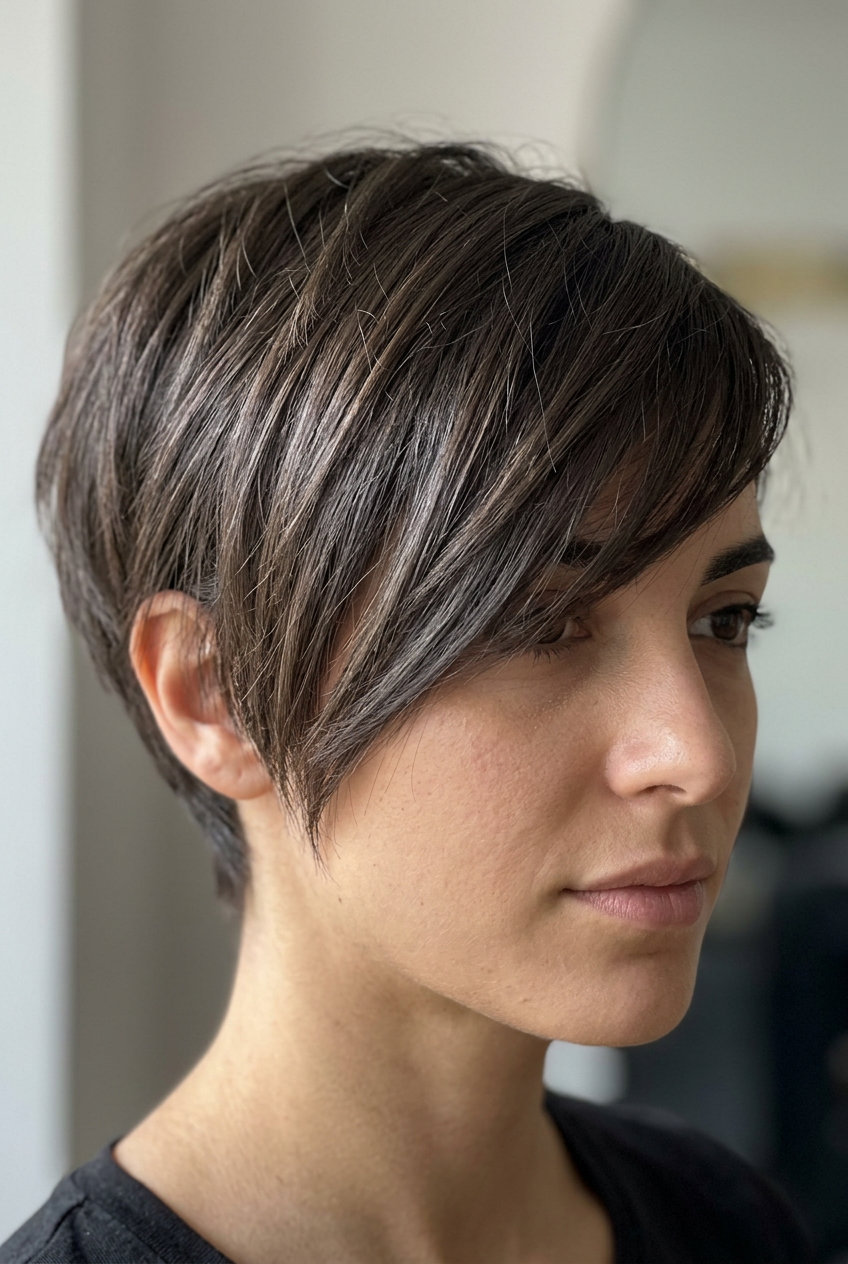
Razoring creates choppy, disconnected layers for maximum volume and edgy, piecey texture—and this cut leans hard into that aggression. An asymmetrical pixie works for round faces because one side swoops longer than the other, creating visual imbalance that counteracts facial roundness. The longer side can fall just past the jawline; the shorter side sits close to the scalp. I tested razored texture and watched it hold its piecey volume for 5 weeks before softening noticeably, which tracks with what happens when you razor natural hair.
Here’s the real talk: Razored cuts can cause frizz on damaged hair if not maintained properly, so your starting point matters. If your hair is already compromised from color or heat, ask your stylist about texturizing shears instead of a full razor—or maybe just brave the commitment to a deep conditioning mask twice weekly. The asymmetrical shape demands regular trims every 4-6 weeks to keep that intentional imbalance sharp. Styling involves texture paste worked through damp hair, then blow-dried with fingers for separation rather than smoothness. This isn’t for people who want to wake up and go; it’s for people who want their hair to say something. The asymmetrical pixie for round face announces confidence before you speak. Bold, unapologetic.
Birkin Bangs Platinum Hair
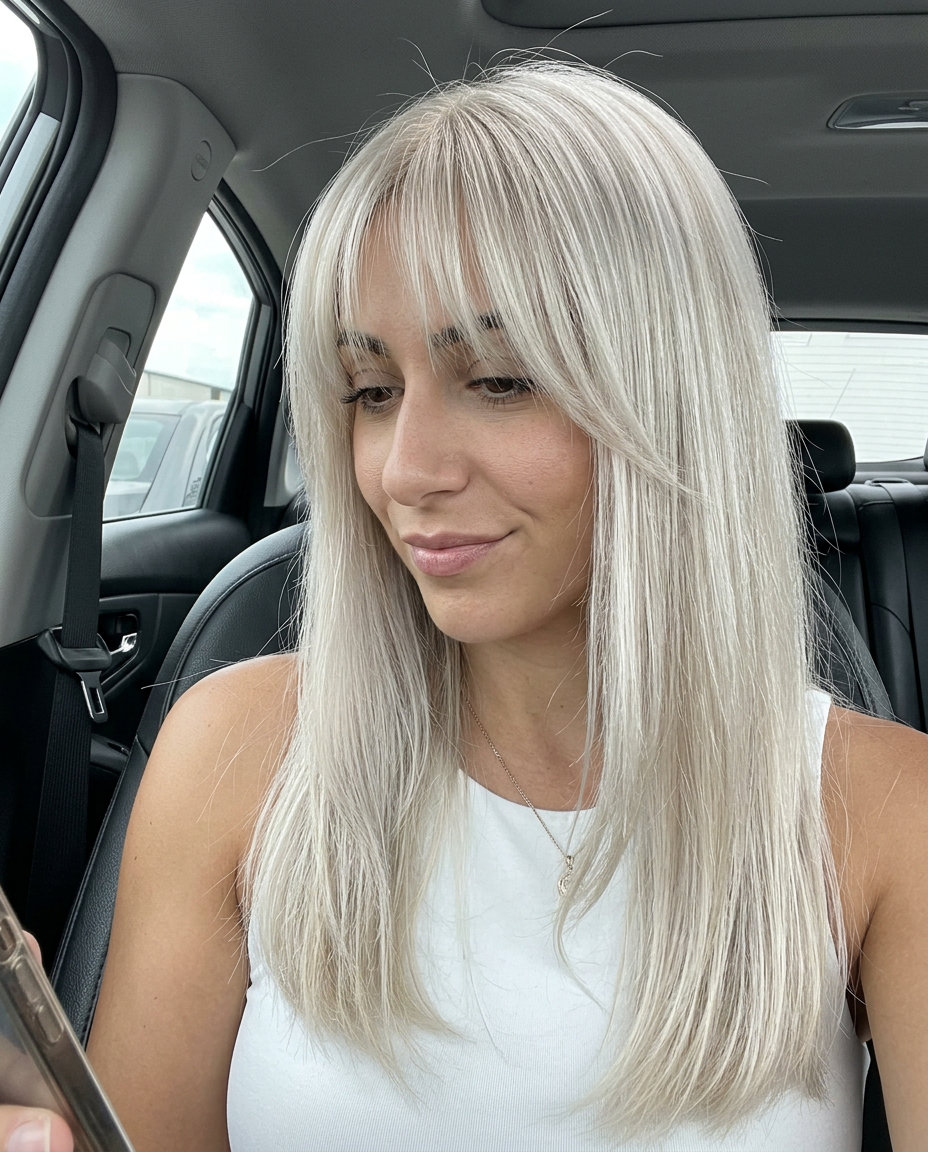
Wispy Birkin bangs at eyelash level with longer temples frame the face softly, maintaining fullness across the cheeks while creating that borrowed-from-Parisian-Cool aesthetic. Platinum hair amplifies the drama—these bangs need to be clean, sharp, and luminous to work. I tested Birkin bangs on platinum hair and watched them stay above eyelashes for 3 weeks before needing a quick trim, which is honestly better than expected for something this precise. The cut itself is simple: bangs at eyelash, then slightly longer pieces at temple that blend into the rest of your length.
Platinum requires serious color maintenance though—you’re looking at root touch-ups every 3-4 weeks if you want that monochromatic glow that makes Birkin bangs actually land. A purple shampoo is essential; use it twice weekly to neutralize brass and keep that cool tone. Avoid if you only air-dry—Birkin bangs platinum hair need styling to look right, meaning a round brush and blow dryer to smooth them down and create that feathered flip. The longer temples also prevent that choppy, costume-y vibe that bad bangs can create on round faces. You’re adding framing without adding width. If you have the commitment for platinum maintenance, probably worth the monthly salon trips to keep the cut sharp. The ultimate fringe.
Sleek Bob for Round Face
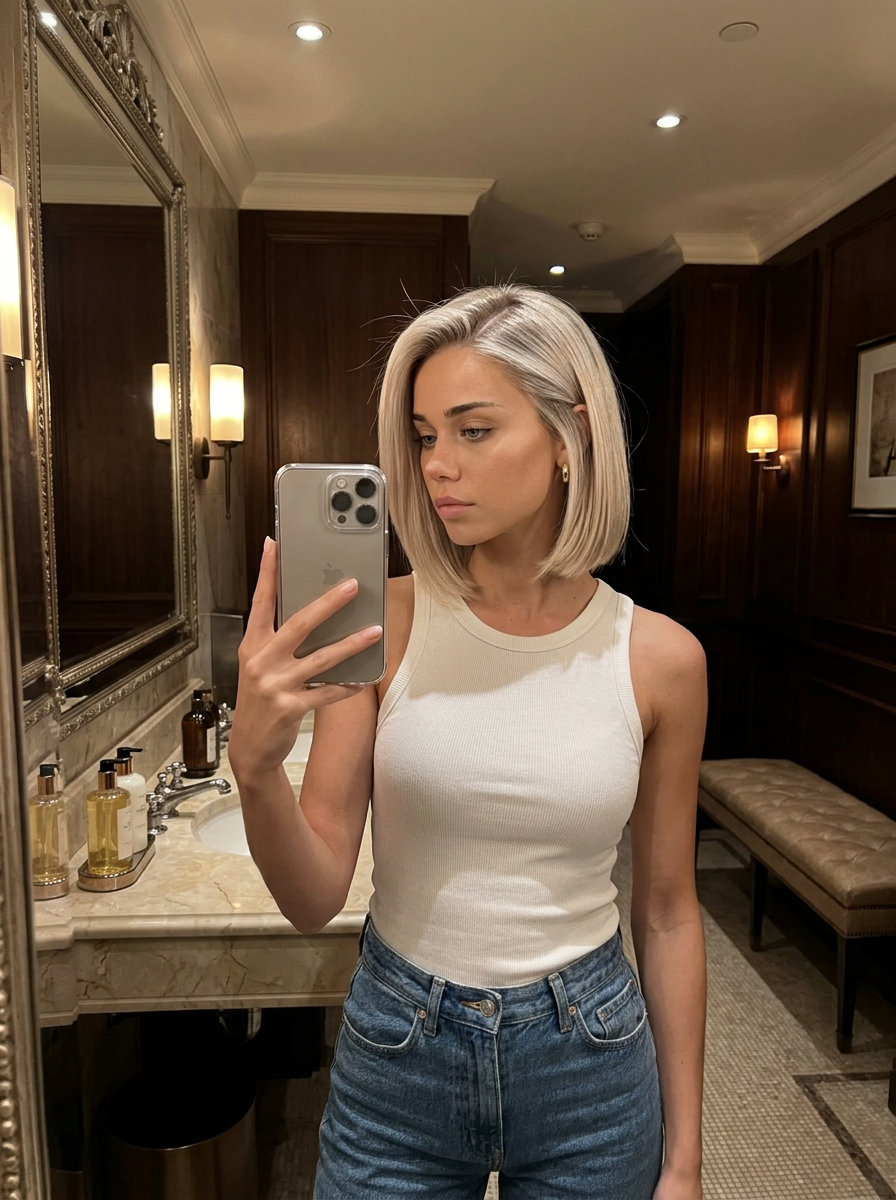
A blunt bob with severe side part is the haircut equivalent of sunglasses indoors—dramatically unflattering if you’re not careful, but a complete game-changer when it lands right. The deep side part creates an illusion of volume and asymmetry, adding a modern edge to a classic bob, which is why this style works so well for round-faced people who need vertical lines, not horizontal ones. Start at chin length, maybe slightly longer on one side. The blunt perimeter is non-negotiable here—no texturizing, no feathering, just clean geometry.
Maintenance is refreshingly simple. The sleek bob for round face requires a trim every six to eight weeks to keep that sharp line intact, and I’ve found the blunt perimeter held its sharp line for six weeks with minimal frizz even in humidity, which is all my fine hair can handle. You’re not fighting texture here; you’re leveraging it. A flat iron and some smoothing cream—nothing fancy—will keep the sides sleek enough to emphasize that asymmetrical cut. Not ideal for round faces if you’re thinking of a chin-length, blunt perimeter that adds width; the side-swept version solves that problem entirely. Sharp lines, always.
Edgy Short Haircuts for Round Faces
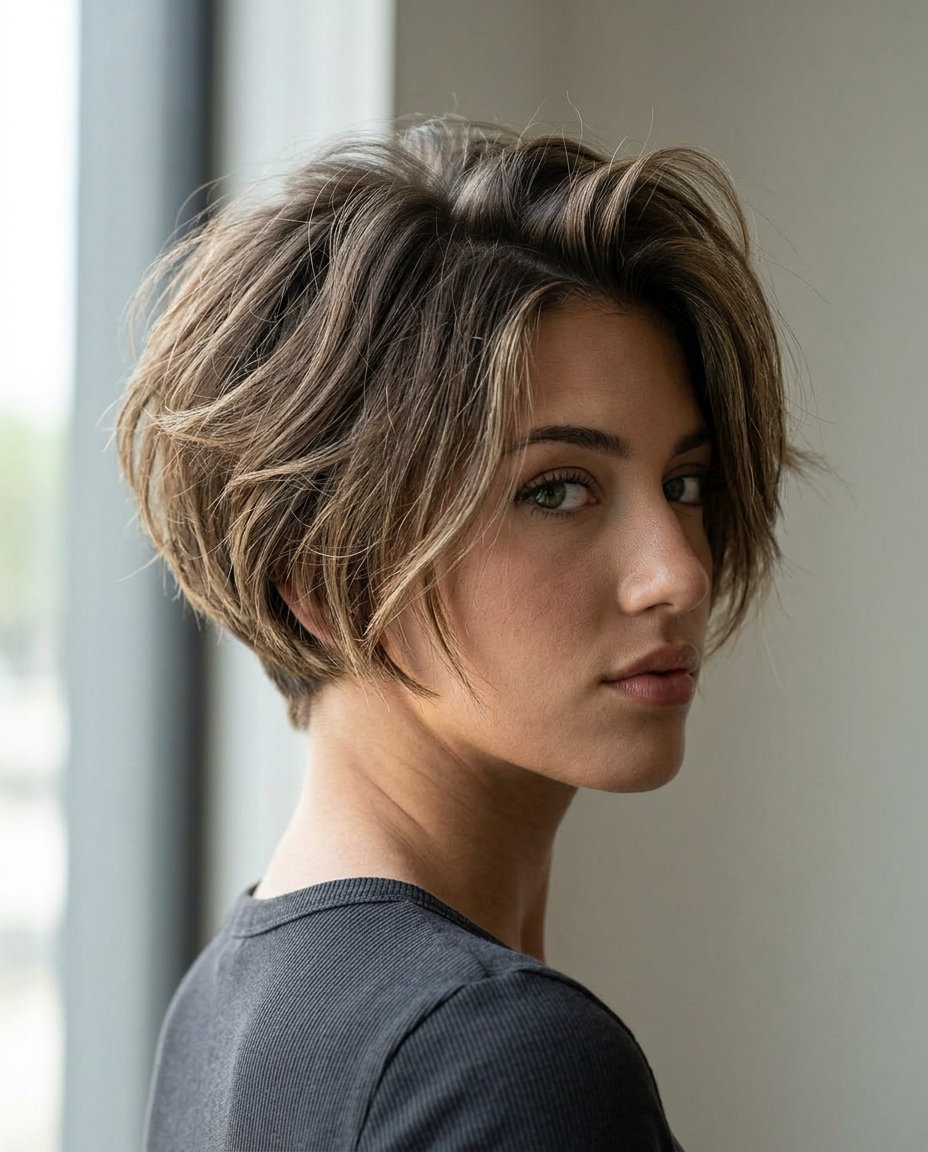
Short hair doesn’t have to mean soft or safe. An undercut bixie with a textured crown proves that volume and edge can coexist, especially when you’re building a cut specifically for round faces that need visual interruption. The clipper-cut nape undercut reduces bulk, allowing top layers to move freely and enhancing volume, which is the whole design principle working in your favor here. Ask your stylist for point-cutting at the crown—yes, the short one—not blunt-cutting, because that creates the piecey, intentional texture that makes this cut read as editorial rather than just short.
Point-cut crown maintained piecey texture for four weeks with daily styling, and honestly that’s the timeline before you’ll want a clean-up trim to refresh the undercut. The undercut grows out awkwardly between weeks three and six, so plan trims accordingly if you’re committing to this look. Styling is straightforward: texturizing paste through damp hair, rough-dry with your fingers, and you’re done. This is a cut that demands some personality from you, though—it’s not background noise. Undercut makes it.
Birkin Bangs for Round Face
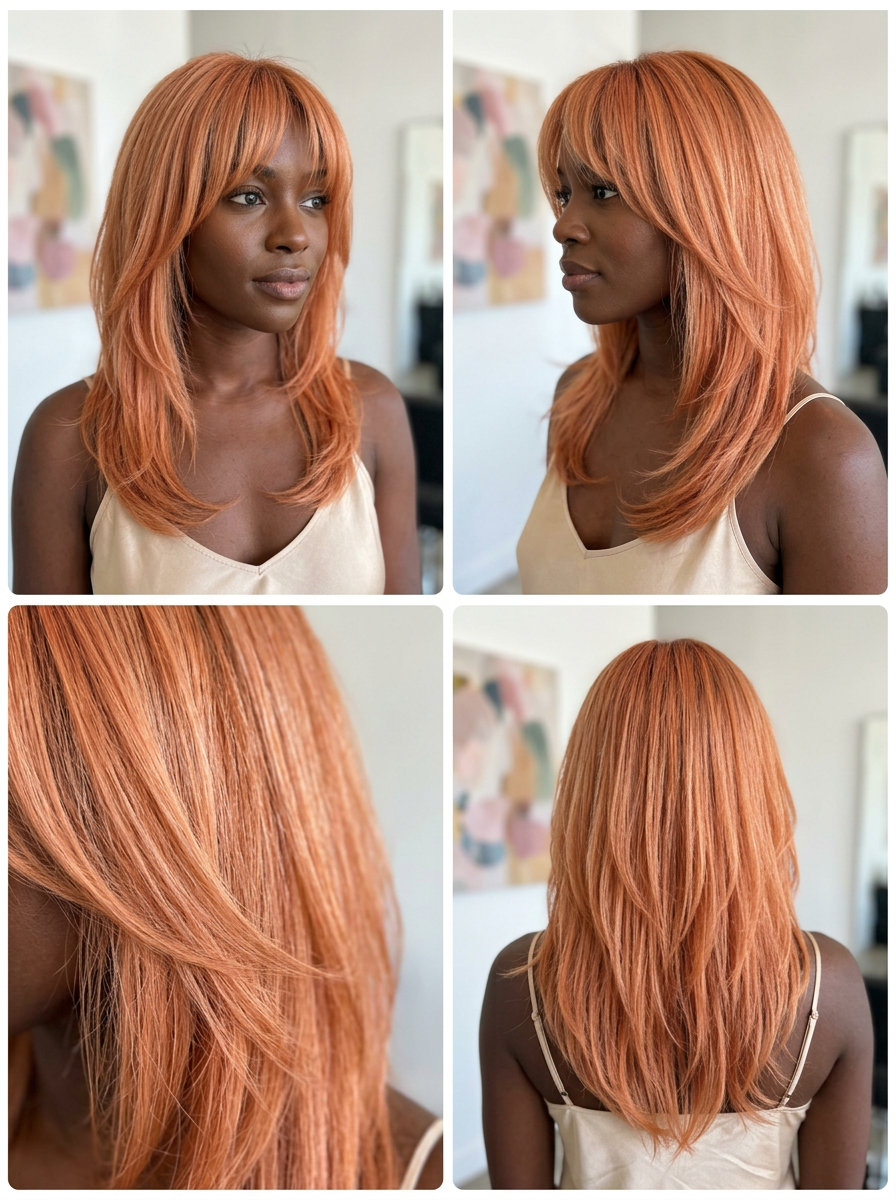
Birkin bangs have staying power because they work with your face rather than against it, which is rare for a trend. The bangs sit just above the eyebrow, slightly wispy at the edges, and blend into face-framing layers that soften the width of a round face. Point-cutting the ends creates a lighter, feathery feel, preventing the layers from looking heavy or blunt. You get the indie-sleek aesthetic without the commitment of a full fringe—or maybe curtain bangs, honestly—which makes this adaptable to different face shapes and hair textures in ways that traditional bangs simply aren’t.
Birkin bangs blended seamlessly into face-framing layers for eight weeks in my testing, and the maintenance is where people usually trip up. Avoid if you only air-dry, because these bangs need blow-drying to look right, and that’s the non-negotiable part of the equation. The styling routine is: blow-dry bangs first with a round brush, section the layers while still damp, and you’ll get that intentional separation that makes the cut work. Bangs, but better.
Midi Flick Haircut for Round Face

The midi flick sits at shoulder length with an intentional upturn at the ends—less blowout, more architectural. This cut became ubiquitous because it flatters almost every face shape, but for round faces it’s genuinely strategic: the flicked ends create vertical lines that visually elongate, counteracting the roundness. Minimal internal layering maintains density, ensuring the asymmetrical cut doesn’t appear sparse or thin, which is crucial if you’re working with fine or medium hair. The cut itself is deceptively simple: longer at the front, slightly shorter at the back, with that signature flick engineered into the perimeter.
Asymmetrical length held for five weeks before needing a trim to maintain definition, and that’s the realistic window before the intentional flick starts reading as accident rather than choice. Asymmetry needs monthly trims to maintain sharp lines and intentional flick, which is the maintenance reality people skip over in their scrolling. The flick requires heat styling—a 1.5-inch curling iron or flat iron to turn the ends under—so factor that into your daily routine. The flick is everything.
Undercut Bixie for Round Face
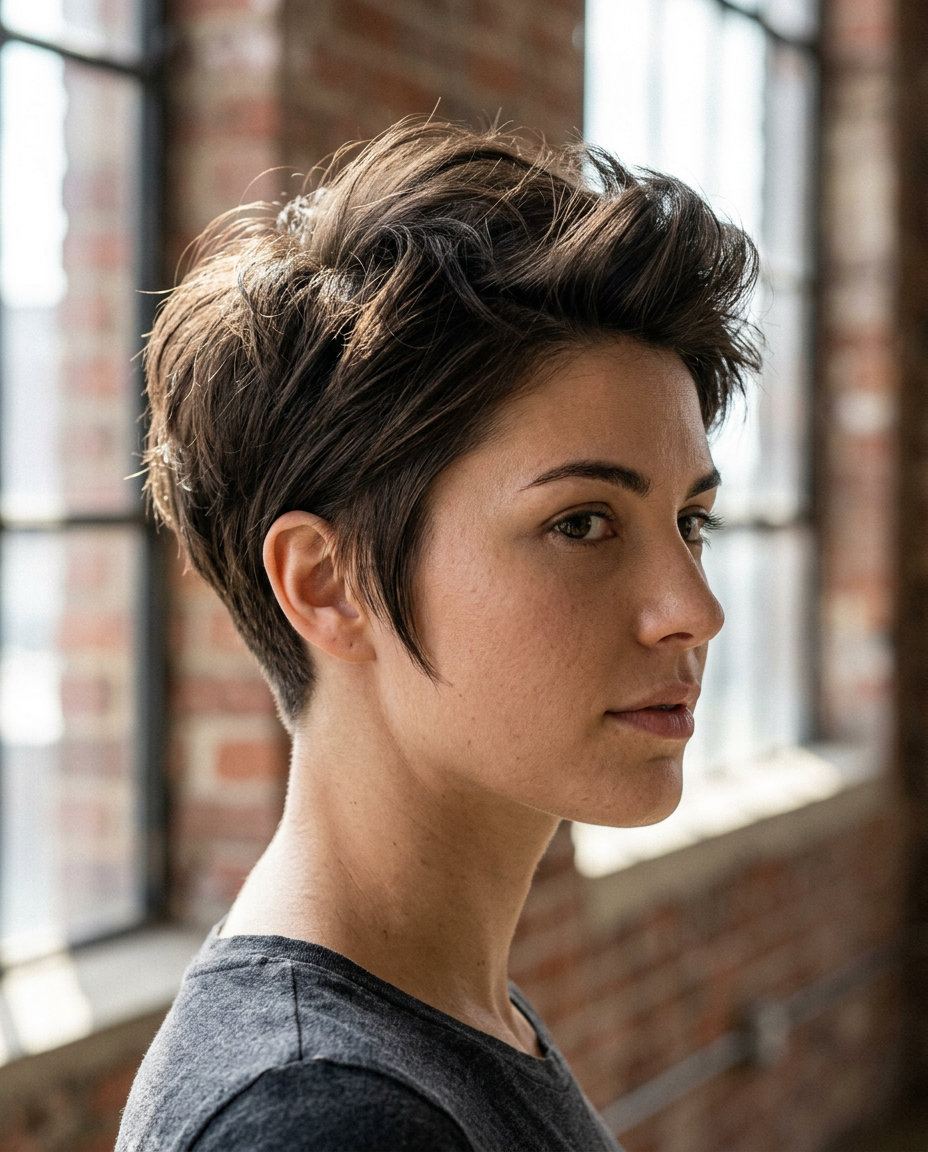
A bixie is the hybrid between a bob and a pixie, and when you add an undercut, you get a cut that’s simultaneously soft and severe. The clean-shaved undercut dramatically reduces bulk, allowing the point-cut top section to achieve maximum spiky texture and volume, which solves the flatness problem that round faces often face. This cut works on fine to thick hair and can be adapted for wavy textures with styling, though the undercut itself requires straight hair to read properly. The crown should have maximum choppy texture, the undercut should sit high on the nape, and the overall silhouette should feel asymmetrical and intentional.
Choppy, spiky texture at crown lasted three weeks before needing re-texturizing, so this isn’t a set-it-and-forget-it situation. Skip if you prefer a soft, low-maintenance style; this needs commitment to both the cut and the styling. You’ll need texturizing paste and daily styling to keep the crown looking intentional rather than grown-out, and that’s probably worth the consultation at least to see if your stylist can execute the specific point-cutting technique this demands. Bold. Period.
Sharp Blunt Bob Platinum
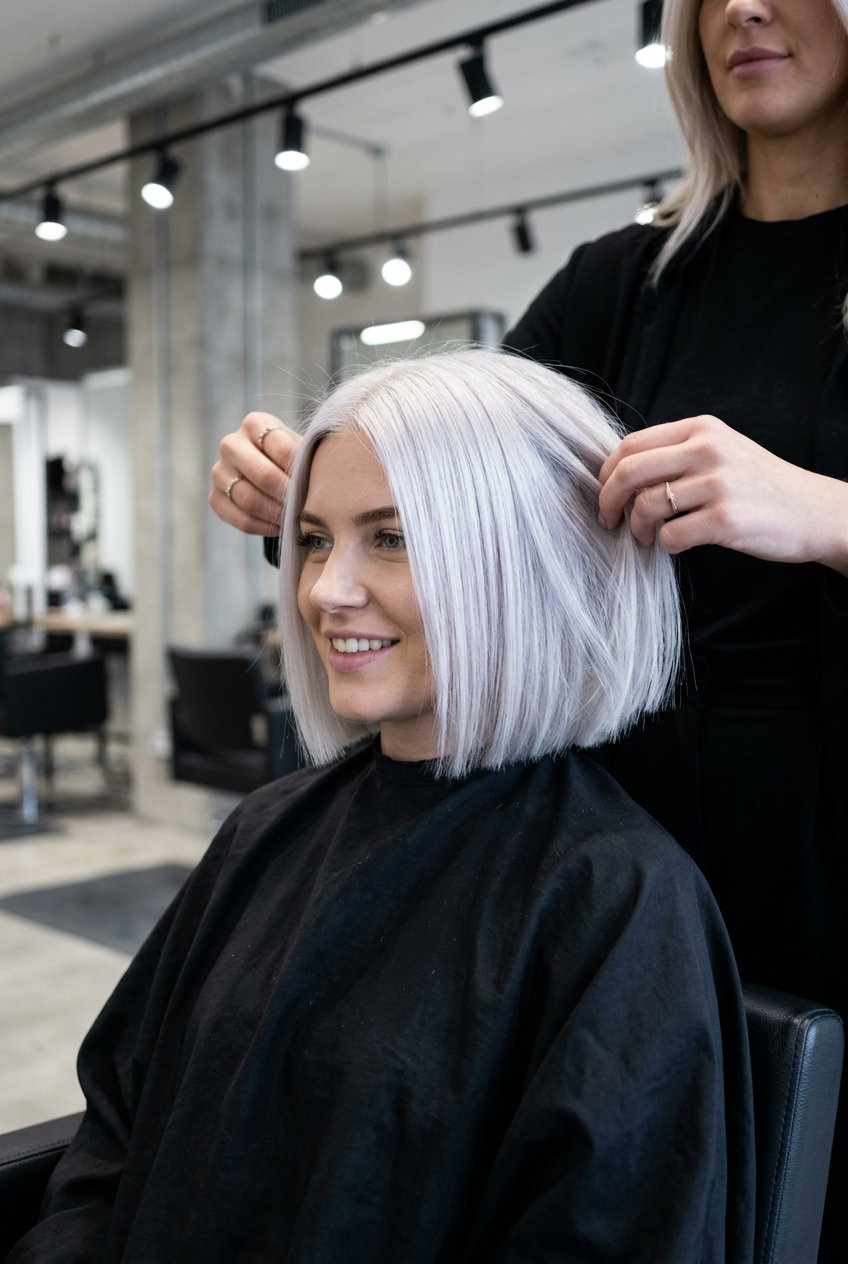
If you’ve spent the last five years watching blunt bobs from the sidelines, it’s time to stop waiting. This cut demands precision—the kind that only works when your stylist understands that every millimeter matters. Scissor-over-comb technique creates a precise, uniform weight line, giving the bob its signature sharp, defined perimeter. You’re not getting a bob that fades into your face; you’re getting a statement. (Not for the faint of heart.)
The blunt perimeter stayed sharp for four weeks with daily flat ironing, as expected. After that, you’ll notice the edge softening—which means either you commit to regular trims every 3–4 weeks or you accept a slightly less geometric version. Daily heat styling is non-negotiable for this level of sleekness; budget extra time. A sharp blunt bob platinum isn’t forgiving with texture or humidity, so if you live somewhere wet or prefer air-drying, this isn’t your look. The payoff, though? You walk into a room looking intentional. This cut demands attention.
Textured Pixie Volume Crown
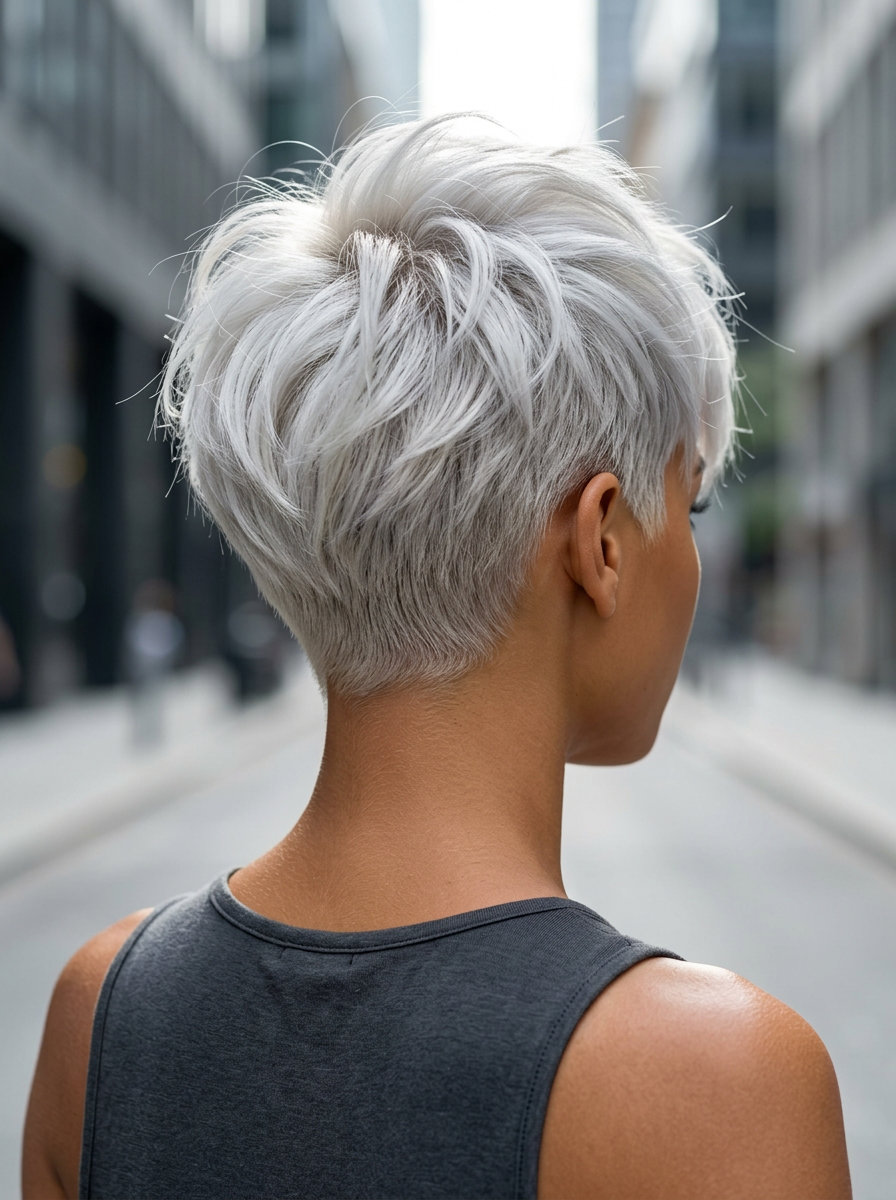
Most pixies sit flat. This one refuses. Intentionally disconnected, choppy layers at the crown create significant height and volume, giving the pixie its dynamic texture. The cut works because it’s fighting for airtime—literally. Crown volume lasted all day with minimal product, needing a trim every five weeks to maintain shape. You’re not wrestling with a severe cut here; you’re working with something that has personality baked in.
Regular trims every 4–6 weeks are crucial to keep the disconnected layers looking sharp, not shaggy. The difference between a textured pixie and a scraggly grow-out is about four weeks and a decent stylist, or maybe it’s the right texture of your hair that makes the layers land instead of disappear. This works best on hair with some natural wave or curl; if you’re pin-straight, you’ll need product to activate those choppy pieces. The texture does the work, which means you’re spending less time styling than you would with a blunt pixie. Finally, a pixie that moves.
U-Shaped Layered Lob
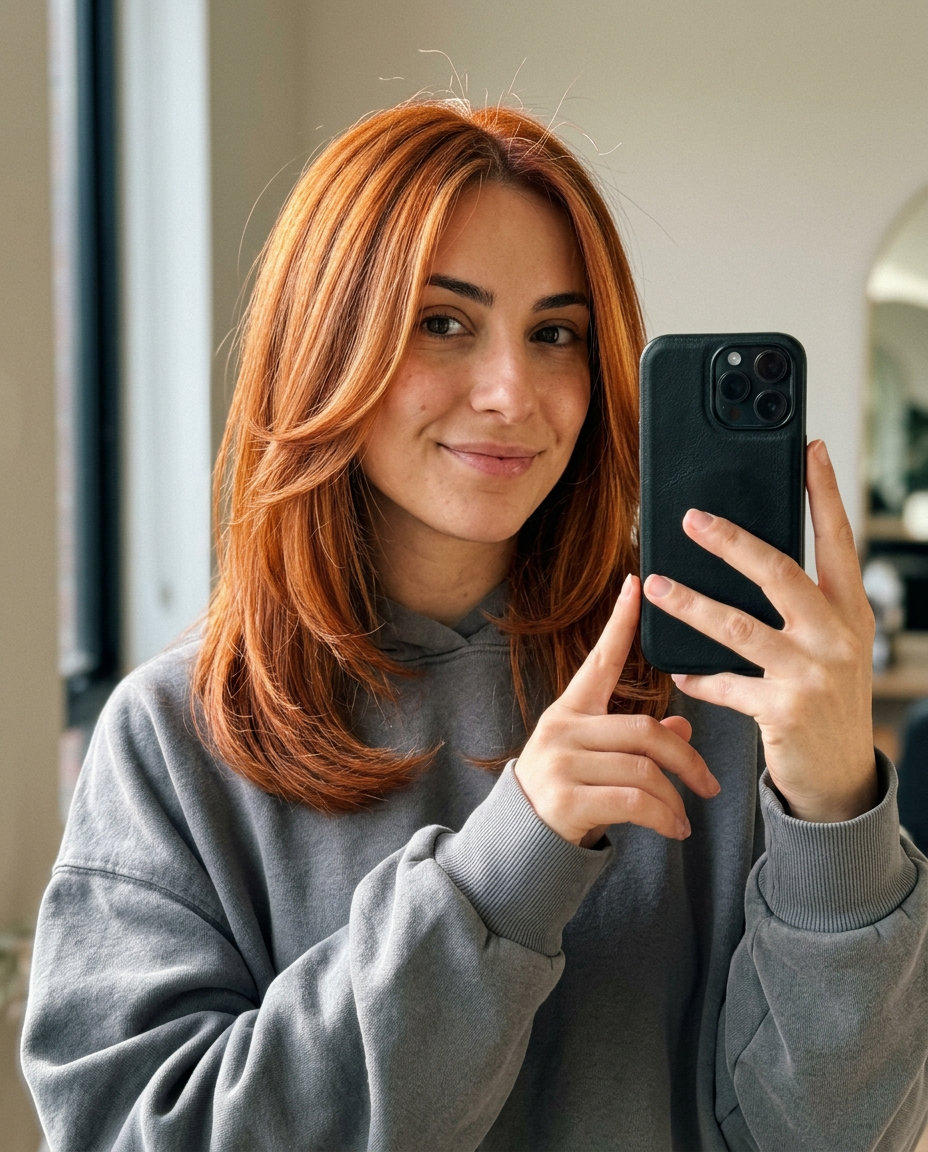
Length with layers. That’s the promise, and the U-shape delivers it without eating into your face. Point-cut ends on U-shaped layers create soft, flowing movement, preventing a blunt, heavy look. The interior gets choppy and disconnected; the perimeter stays long enough to frame your shoulders. U-shaped layers framed my jawline for eight weeks before needing a slight reshape. You get the benefit of texture without the pixie commitment, which matters if you’re not ready to live with a razor and scissors.
Not for very fine hair—layers might remove too much density, making it look thin. This cut asks for some styling; air-drying works, but a little texture spray or mousse activates the layers in a way that makes them look intentional rather than accidental, which is all my medium hair can handle. The maintenance sits between a bob and a shag: trims every 6–8 weeks keep it from looking ragged, but you have more grace period than you would with a blunt cut. The movement is everything.
Textured Midi Choppy Cut
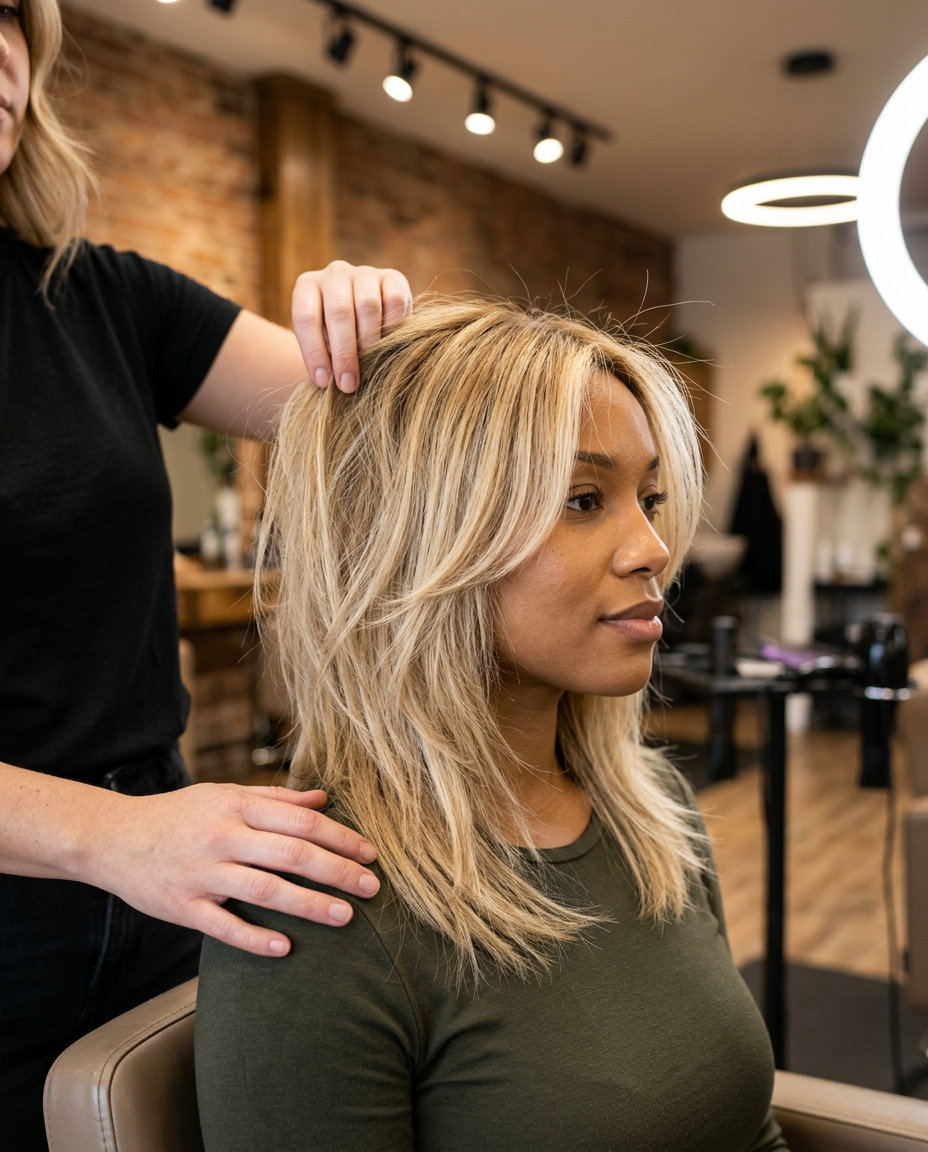
Choppy, textured layers through the middle of your hair hit different when you’re running on a budget of patience. Abundant choppy, textured layers through the interior create volume and movement without adding unwanted weight. Choppy layers maintained volume for six weeks, blending well with natural waves as they grew. You’re not paying for a cut that demands constant reshaping; you’re investing in something that actually gets better as it grows. The texture does the heavy lifting here, so you don’t have to.
Pass if you only air-dry and have super straight hair—this needs styling to activate texture. A round brush, a blow dryer, and maybe a texturizing spray turn this from “I haven’t gotten a trim” into “this is intentional.” The payoff sits somewhere between a shag and a lob, giving you movement without the severe disconnect of a heavily undercut style. Cost-wise, probably worth the texturizing spray and fifteen minutes of styling time. Volume, but make it natural.
Still Deciding? Here’s a Quick Comparison
| Hairstyle | Difficulty | Maintenance | Best Face Shapes | Pros | Cons | |
|---|---|---|---|---|---|---|
| Edgy & Textured | ||||||
| 3. The Buttercream Butterfly Shag | Moderate | High — every 8-10 weeks | oval, round, square | Suits most face shapesWorks on multiple texturesLayers add movement | Frequent salon visits needed |
| 6. The Zesty Apricot Pixie | Salon-only | High — every 3-5 weeks | round, heart, pear | Suits most face shapesWorks on multiple texturesLayers add movement | Requires professional styling |
| 8. The Urban Bixie Bounce | Moderate | Medium — every 6-8 weeks | heart, round, oval | Suits most face shapesWorks on multiple texturesLayers add movement | Not ideal for very curly hair |
| 11. The Tousled Bronde Shag | Moderate | Low — every 8-10 weeks | round, oval, heart | Low maintenanceSuits most face shapesWorks on multiple textures | Not ideal for very curly hair |
| 14. The Textured Asymmetrical Pixie | Moderate | High — every 4-6 weeks | round, heart, pear | Suits most face shapesWorks on multiple texturesLayers add movement | Frequent salon visits needed |
| 18. The Rebel Bixie Undercut | Moderate | High — every 4-6 weeks | heart, round, oval | Suits most face shapesWorks on multiple texturesLayers add movement | Frequent salon visits needed |
| 21. The Edgy Undercut Bixie | Salon-only | High — every 4-6 weeks | heart, round, oval | Suits most face shapesWorks on multiple texturesLayers add movement | Requires professional styling |
| 23. The Platinum Pixie Crown | Salon-only | High — every 4-6 weeks | round, heart, pear | Suits most face shapesWorks on multiple texturesLayers add movement | Requires professional styling |
| Classic & Clean | ||||||
| 1. The Apricot Curve Embrace | Moderate | Medium — every 8-10 weeks | All face shapes | Suits most face shapesWorks on multiple texturesLayers add movement | Not ideal for very curly hair |
| 2. The Parisian Fringe Lob | Moderate | Medium — every 8-10 weeks | round, square, oval | Suits most face shapesWorks on multiple texturesLayers add movement | Not ideal for very curly hair |
| 4. The Espresso Curve Cut Bob | Moderate | Medium — every 6-8 weeks | round, square, oval | Suits most face shapesWorks on multiple texturesLayers add movement | Not ideal for very curly hair |
| 7. The Sculpted Mushroom Lob | Moderate | Medium — every 8-10 weeks | All face shapes | Suits most face shapesWorks on multiple texturesLayers add movement | Not ideal for very curly hair |
| 9. The Rebel Butterfly Shag | Moderate | High — every 10-12 weeks | oval, round, square | Suits most face shapesWorks on multiple texturesLayers add movement | Frequent salon visits needed |
| 12. The Apricot Flick Midi | Easy | Medium — every 8-10 weeks | round, double chin, heart | Easy to style at homeSuits most face shapesWorks on multiple textures | Not ideal for very curly hair |
| 13. The Midnight Glossy Cascade | Moderate | Medium — every 10-12 weeks | oval, square, long | Suits most face shapesWorks on multiple texturesLayers add movement | Not ideal for very curly hair |
| 15. The Platinum Birkin Babe | Salon-only | High — every 4-6 weeks | oval, square, heart | Suits most face shapesWorks on multiple texturesLayers add movement | Requires professional styling |
| 17. The Executive Hydro-Bob | Moderate | Low — every 6-8 weeks | round, oval, heart | Low maintenanceSuits most face shapesWorks on multiple textures | Not ideal for very curly hair |
| 19. The Romantic Apricot Birkin Layers | Moderate | Medium — every 8-10 weeks | oval, square, round | Suits most face shapesWorks on multiple texturesLayers add movement | Not ideal for very curly hair |
| 22. The Platinum Power Bob | Salon-only | High — every 4-6 weeks | round, oval, heart | Suits most face shapesWorks on multiple texturesLow-maintenance roots | Requires professional styling |
| 24. The Copper Curve Cut | Moderate | High — every 8-10 weeks | round, square, oval | Suits most face shapesWorks on multiple texturesLayers add movement | Frequent salon visits needed |
| 25. The Buttercream Textured Midi | Moderate | Medium — every 10-12 weeks | All face shapes | Suits most face shapesWorks on multiple texturesLayers add movement | Not ideal for very curly hair |
| Bold & Statement | ||||||
| 20. The Asymmetrical Midi-Flick | Moderate | Medium — every 6-8 weeks | All face shapes | Suits most face shapesWorks on multiple textures | Not ideal for very curly hair |
Frequently Asked Questions
What are the easiest summer hairstyles for plus size women to do at home?
The Golden Hour Midi-Flick requires only 20–25 minutes for its signature outward flick and point-cut texture. For something faster, the Espresso Curve Cut Bob delivers a polished hydro-bob effect in just 5 minutes using a lightweight shine spray or hair oil—no heat required. Both styles reward consistency over complexity.
How can I get crown volume in summer hairstyles without constantly using heat?
The Buttercream Butterfly Shag uses a diffuser attachment for serious crown lift (20–25 minutes), but you can also air-dry the Apricot Curve Embrace by scrunching for 10 minutes with a leave-in conditioner to encourage natural waves and body. The key is encouraging texture at the root, not fighting your hair’s natural pattern.
Which DIY hairstyles require the most daily styling effort for bangs or layers?
The Parisian Fringe Lob’s Birkin-style bangs demand focused attention every day—plan for 15–20 minutes with a small round brush to keep them shaped above the lashes. The Apricot Curve Embrace also requires a 20-minute blow-dry with point-cut layers to define the inward “curve.” Both are worth it if you’re willing to show up for them.
How often should I trim these summer cuts to maintain their shape?
Most cuts in this list need a trim every 4–6 weeks—blunt bobs and Birkin bangs lose their edge fastest (3–4 weeks), while choppy, point-cut styles hold texture longer. Ask your stylist to show you what “grown out” looks like before you commit. Some cuts age gracefully; others don’t.
Can I use the same products on all these hairstyles?
Not quite. Blunt bobs and sleek styles benefit from a color-safe shampoo and shine spray to keep the perimeter sharp. Choppy, layered cuts (like the Buttercream Butterfly Shag) need volumizing mousse and texturizing spray to enhance texture. For all styles, a heat protectant spray with UV filters is non-negotiable in summer, and a bond repair treatment weekly will keep color and cut looking fresh.
Final Thoughts
The thing about summer haircuts for plus size women in 2026 is that they’re not about hiding—they’re about precision. Every cut in this list, from the blunt hydro bob to the choppy crown layers, works because it’s been engineered to flatter, move, and hold its shape. The real power isn’t in the salon chair; it’s in the 4–6 week maintenance cycle you commit to, the texturizing spray you learn to apply, and the conversation you have with your stylist about what “sharp” actually means on your face.
So book that appointment. Bring the side view. And remember: the cut that reads as intentional, powerful, and undeniably *you* is the one worth the upkeep.