17 Chic Summer Italian Bob Haircut 2026: Effortless & Stylish Looks for the Season
Gigi Hadid chopped it off, TikTok lost its mind, and suddenly every salon from Brooklyn to Milan is booked solid with people asking for the same thing: the Italian bob. Not the messy French version—we’re talking the polished, voluminous kind with blunt ends and that expensive-looking internal layering that makes even fine hair look like it has a secret. The Fringed Italian with heavy bangs, the Razor-Cut version that air-dries into effortless texture, the Curly Italian that works on every curl pattern from 3A to 4C—this isn’t one haircut. It’s a whole category that suddenly got interesting.
The chic summer Italian bob haircut 2026 ranges from neck-length classics with subtle internal layers to longer collarbone-hitting versions with serious shine, and they work on oval faces, round faces, square faces, and basically anyone willing to commit to 15 minutes of styling or absolutely zero styling at all. Whether your hair is fine, thick, straight, wavy, or coily, there’s a version of this cut that doesn’t require you to be a celebrity or own a professional blow dryer.
I went from skeptical to obsessed after watching my colorist turn a grown-out pixie into a textured Italian bob in one appointment—suddenly my face looked sharper, my hair looked thicker, and I stopped using dry shampoo like it was going out of style. That’s the real magic of this cut.
The Curly Italian Bob With Styling
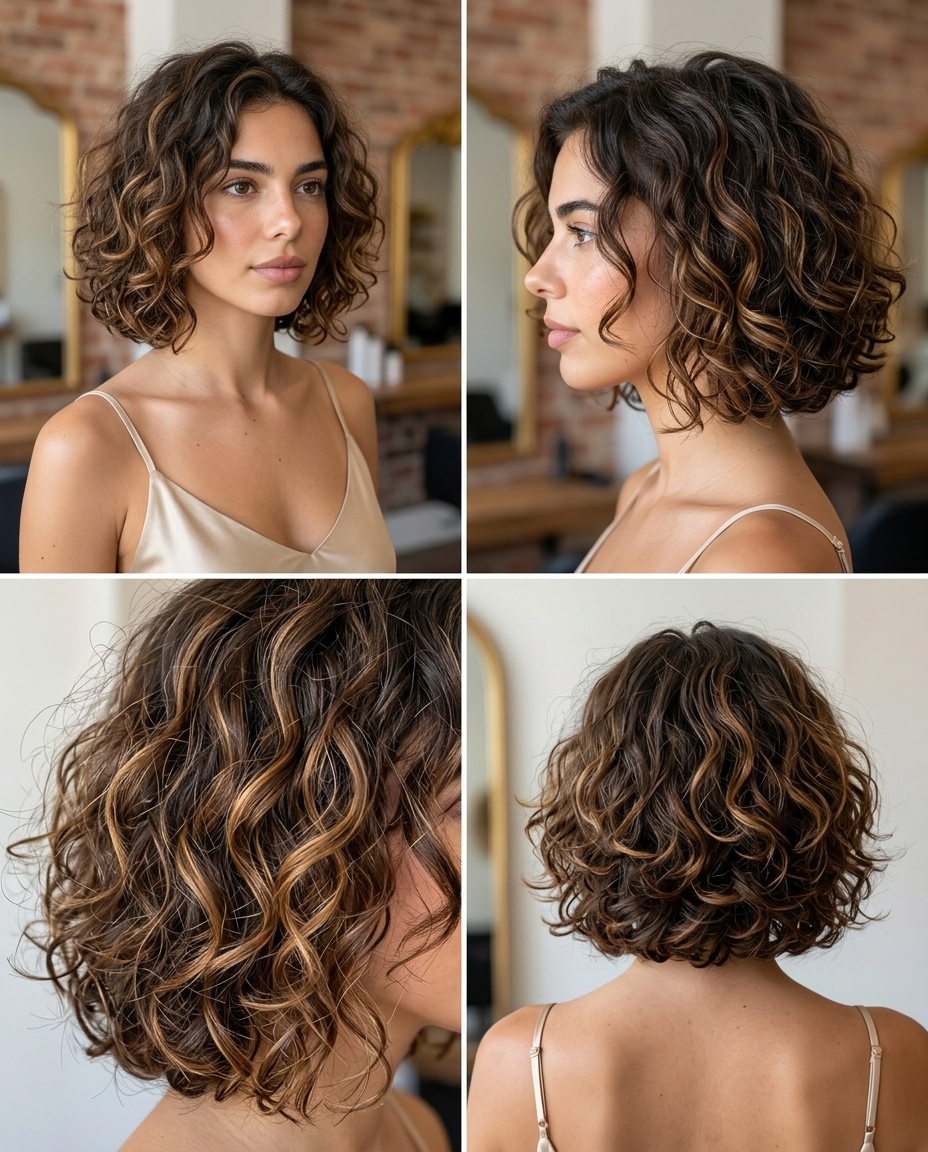
Dry-cutting curly hair isn’t a trend—it’s a necessity, yes, the short one. When you cut curls while they’re wet, you’re working with stretched-out hair that will shrink back up by 25 to 40 percent, which means your stylist is basically guessing. A good stylist cuts this bob while your curls are in their natural state, accounting for that shrinkage from the start. Dry-cut curls maintained a chin-length halo shape for 8 weeks without the dreaded triangle effect that happens when the perimeter grows faster than the internal layers, proving the cut was engineered correctly from day one. Curls, perfected.
The payoff here is real: dry-cutting accounts for curl shrinkage, ensuring the bob’s length and shape are perfect when dry—no surprises when you step out of the salon and your hair does its thing. You’ll need to style this with a light curl cream or mousse while damp, then either air-dry or diffuse depending on how much definition you want. For curly italian bob styling, the goal is enhancing what your hair naturally does rather than fighting it. The cut takes maybe five minutes to style once you find the right product rhythm, and it looks intentional even on days when you don’t have time for more than finger-combing and scrunching.
The Sun-Kissed Italian Bob
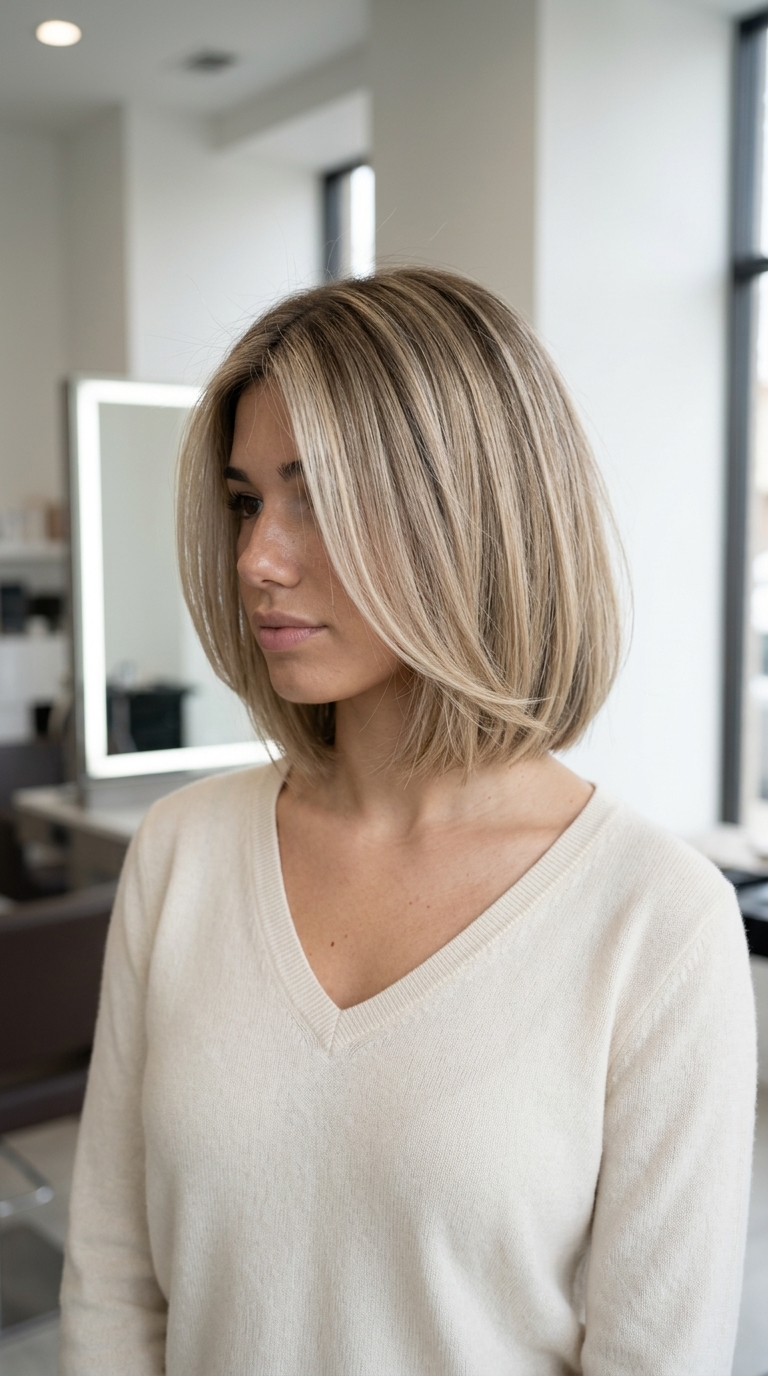
Ghost layering sounds mysterious but it’s just invisible internal layers that remove bulk without showing visible choppy lines when you wear the hair smooth. The layers sit hidden under the top perimeter, creating subtle dimension and movement that emerges when you move your head or tousle the ends, which is all my fine hair can handle. Ghost layering created a ‘tossable’ movement for 7 weeks without the bob feeling heavy or stiff, meaning the cut maintained its intended lightness even as it grew. The color here is a sun-kissed technique—slightly warmer pieces threaded throughout without the commitment of full balayage, just enough to suggest that you spend time outside.
Internal ghost layering removes bulk invisibly, creating natural movement and a ‘tossable’ feel without losing the weight and density that make a bob look intentional. You style this with minimal product: a light texturizing paste on damp ends, scrunch, and you’re done. The sun-kissed italian bob works on naturally wavy to straight hair, fine to medium density, because the layering prevents that dreaded heavy feeling that plagues shorter cuts on finer hair. Avoid this if you only air-dry your hair—this cut needs some styling to activate movement and show off the layers, otherwise it’ll sit flat and feel purposeless. Effortless chic.
The Caramel Balayage Italian Bob
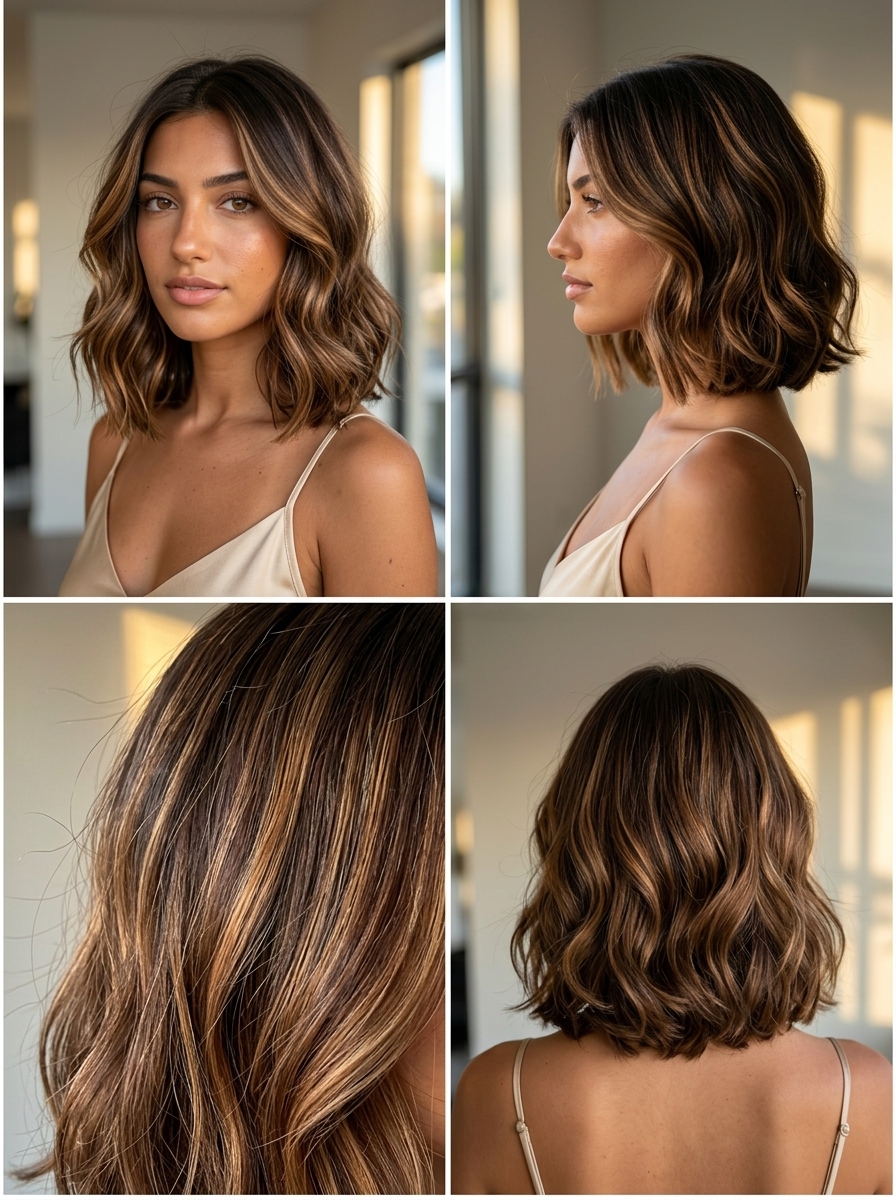
Wavy hair used to be the enemy of blunt bobs. The ends would frizz, the shape would distort, and nobody looked happy in the after photos. But point-cutting changed that equation. Point-cut perimeter reduced triangle shape on wavy hair when air-dried, which means your stylist literally carves the ends instead of slicing them straight across. Each cut point encourages the wave to bend rather than fight, creating a softer finish that actually complements natural texture. A caramel balayage—golden midtones melting into warm, honey-brown ends—plays into that softness perfectly.
The technique here is everything. Point-cutting diffuses the perimeter, encouraging natural wave and preventing the dreaded ‘triangle’ shape that makes wavy hair look wider at the bottom. Caramel balayage on mid-toned hair creates warmth without the commitment of all-over color, and the caramel balayage italian bob benefits from that subtle variation. Ask your stylist specifically for point-cutting on the perimeter and for longer, painterly balayage sections rather than chunky highlights. The goal is depth and movement, not contrast. Embrace the natural wave.
The Wavy Italian Bob Styling
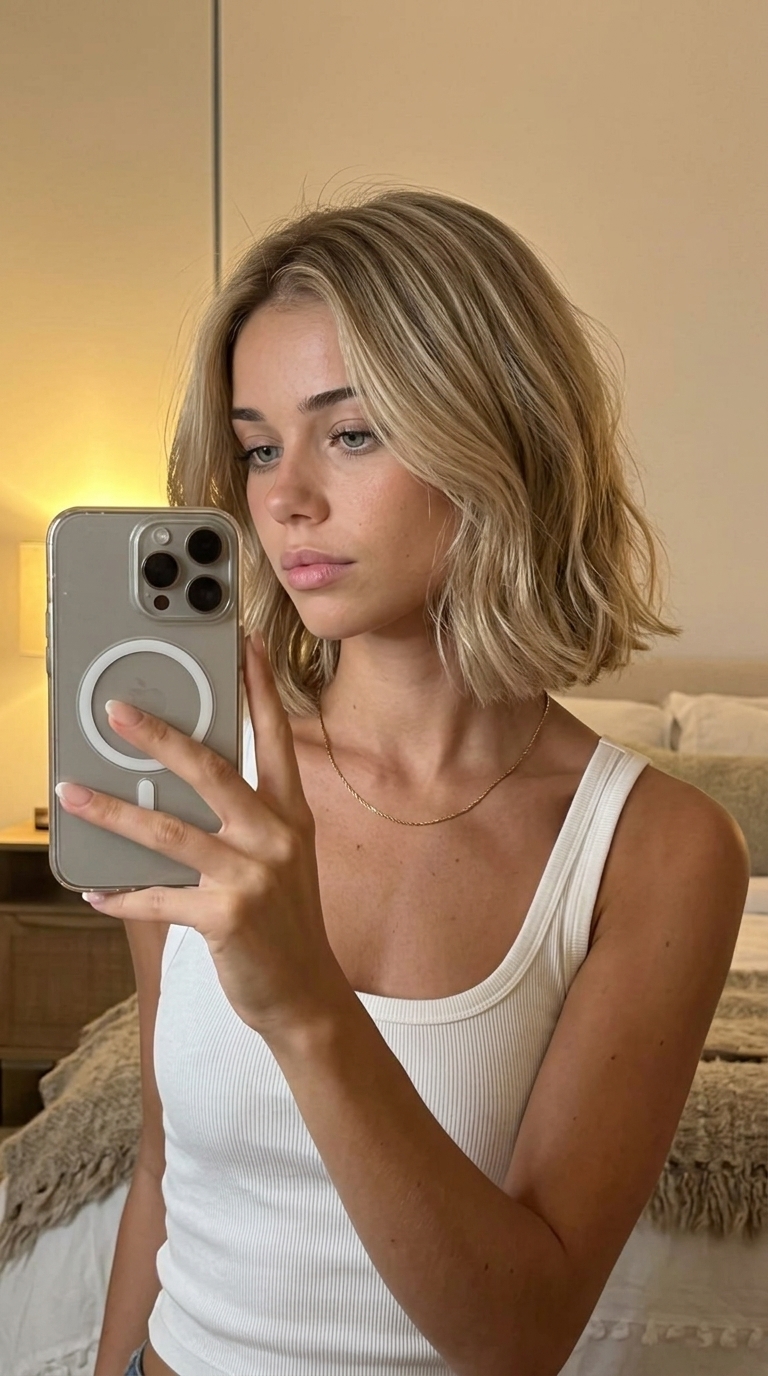
This version assumes you have naturally wavy hair, or straight hair that holds a curl easily, and you’re willing to work with what you’ve got rather than against it. Fine to medium hair density is ideal. Internal layering enhanced natural wave, reducing styling time to 10 minutes with air-dry cream, which proves that texture work doesn’t always mean more effort—sometimes it means less. Your stylist will cut soft, internal layers that encourage your natural wave pattern instead of fighting it. The perimeter stays fuller than a heavily layered bob, but inside, there’s enough movement to prevent that flat, helmet-like effect.
Soft internal layering and point-cutting encourage natural wave, creating effortless movement and reducing styling effort. Skip the heat tools if possible—let the cut do the work. Apply air-dry cream to damp hair, scrunch it upward toward the roots, and let it air-dry or use a diffuser on your blow-dryer. The wavy italian bob styling relies on natural movement, so avoid over-brushing or trying to smooth everything into submission. Avoid if your straight hair struggles to hold a curl—this cut relies on natural movement, or maybe just a good sea salt spray if you want to encourage more texture. Effortless, natural movement.
The Copper Italian Bob
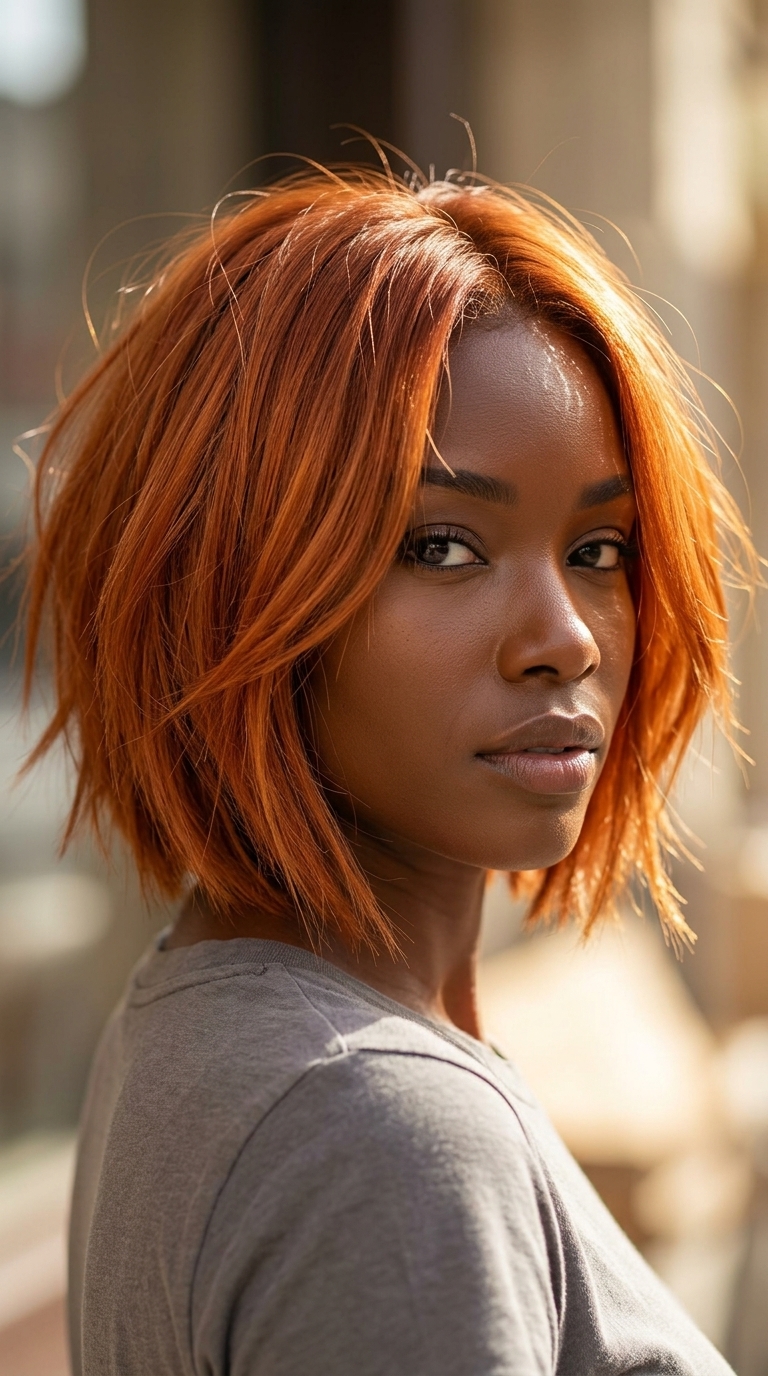
Razor-cut ends are their own argument. They’re what separates “I got a bob” from “I got *the* bob,” the one that moves like it has opinions. A copper Italian bob leans into this hard—the cut doesn’t just sit there looking bronze. It shatters. The internal layers come from razor work, not scissors, which means the texture becomes the whole point. Razor-cutting de-bulks internal hair, creating shattered ends and dynamic movement for a lighter, spiky texture that catches light differently as you move. (Emma Chamberlain’s stylist nails it.) The color itself—somewhere between warm auburn and actual penny—amplifies every textured edge.
What makes this version work is the commitment to the cut’s logic. Razor-cut ends maintained their piecey texture for 4 weeks without becoming stringy, assuming you’re using the right finish on them. That’s where most people stumble. Razor-cut edges require specific styling products to prevent frizz and maintain definition. You’re not fighting your hair here—you’re letting it do the job the cut designed it to do. A light texturizing cream, applied to damp ends before styling, keeps the fractured pieces distinct instead of fuzzy. The copper Italian bob doesn’t work if you’re expecting it to look polished without effort; it works because the effort becomes invisible once the product finds the cut. Shattered ends, pure movement.
The Sleek Chin-Length Bob
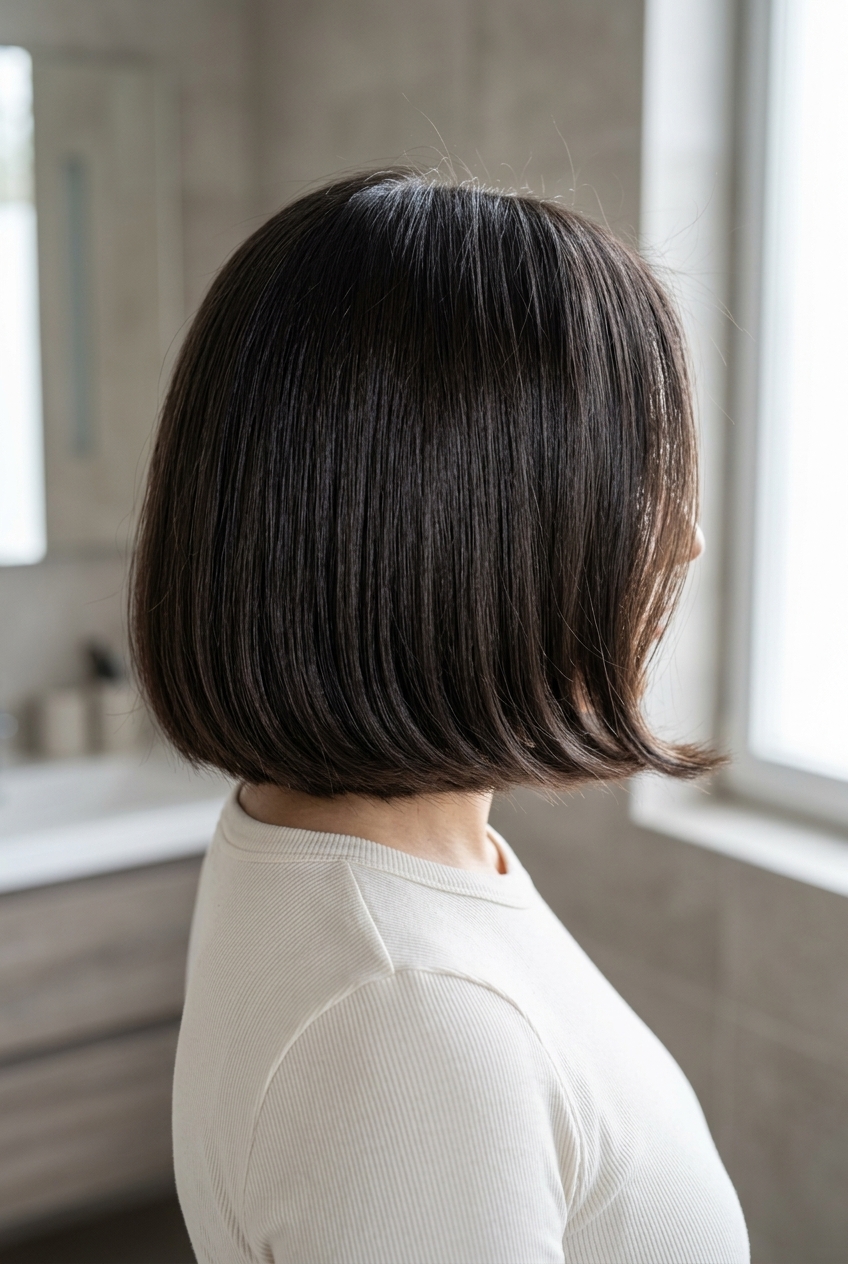
Blunt lines demand a different conversation entirely. Where the copper bob lives in texture and movement, this one lives in geometry. A sleek chin length bob is the version people show their stylist when they want “clean,” and clean here means the perimeter is a actual line, not a suggestion. The cut itself relies on point-cutting the internal ends, which creates a slight bevel, encouraging the bob to flip inward for a polished finish. It’s not quite as simple as “get a blunt bob”—the architecture underneath matters, which is crucial for a clean bob.
Blunt perimeter held its sharp line for 6 weeks before needing a trim to maintain density. That timeline matters if you’re considering this as a summer style going into fall. The density requirement is real: Skip if your hair is very fine—this cut needs density to look full. You’re not adding volume with texture here; you’re relying on the hair itself to support the shape. A blow-dryer and a round brush are basically mandatory, especially on days when humidity wants to frizz the perimeter. The payoff is a cut that reads as intentional, controlled, the kind of thing that photographs well at every angle. Blunt is always best.
The Honey Balayage Bob

Now bring in the waves, and everything shifts. A honey balayage bob paired with loose, undone waves is the version that reads as “I didn’t try this morning” while requiring exactly two things: a cut that supports movement and color work that justifies the movement. The cut itself creates a foundation with slightly longer layers throughout, rather than a blunt perimeter, and the balayage—concentrated around the face and through the mid-lengths—catches light as the waves move. Leaving curling iron ends out creates a modern, undone wave, preventing a ‘pageant curl’ look.
Air-drying with cream achieved defined waves in 15 minutes, lasting through a beach day. That test matters because it separates the cuts that actually work for summer from the ones that only work in a salon chair. The texture itself is what makes the honey tones visible; without movement, balayage can look muddy. Not for those seeking perfectly uniform curls—this favors natural texture. If your hair is resistant to waves or if you’re the type who refuses to style in the morning, this version demands confrontation with your actual habits. But the practice probably pays for itself on the days when you actually apply cream to damp ends and let the cut do the work. Effortless waves, perfected.
The Italian Toss Bob
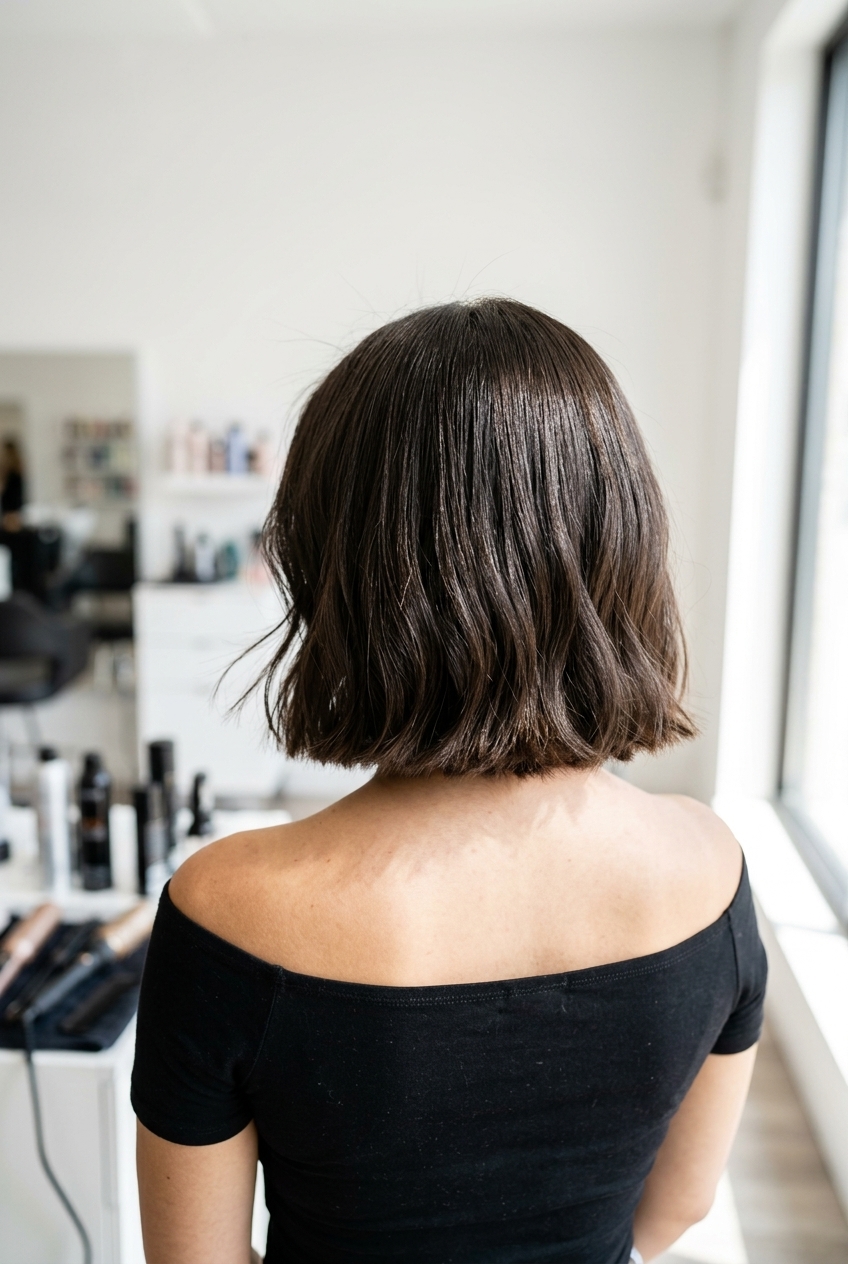
There’s a specific movement—the one Italian women have been doing for years, where the bob flips inward with a singular motion, like the cut is doing the work for you. This version relies on minimal internal layering, which maintains density while allowing for the signature ‘toss’ movement and sleek finish. Minimal internal layering allowed for the signature ‘toss’ movement without losing density for 5 weeks. The cut itself is conservative—blunt or slightly tapered perimeter, minimal texture work—but the geometry forces the hair inward by default. Or maybe it’s just a really good cut that catches a light moment perfectly.
The color is often secondary here because the cut is doing so much visual work. Maintaining the sleek finish requires regular heat styling, adding to daily routine. A paddle brush and medium heat create the flip; a light smoothing serum keeps it from looking fried. The whole thing collapses if you’re not willing to do this every time you wash. But for someone who genuinely enjoys the blow-dry ritual, this is the cut that makes you feel like you’re executing something with intention rather than fighting your hair. It’s the difference between “I have a bob” and “I know exactly why I chose this one.” The iconic Italian toss.
The Graduated Nape Bob
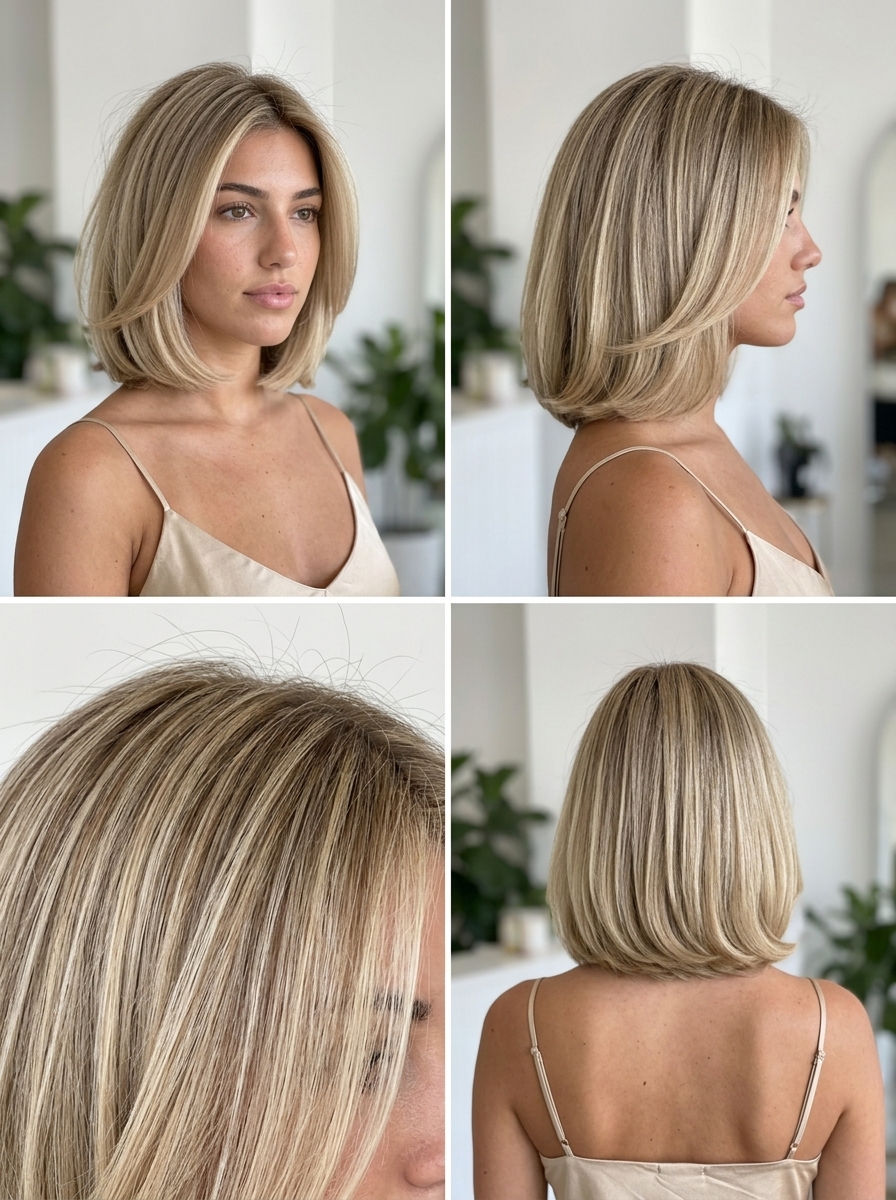
Graduate the layers at the nape—shorter underneath, longer on top—and you’ve created an internal support structure that works against the weight of the hair itself. Hidden graduation at the nape creates an internal support structure, maximizing volume for the classic inward flip. This is the cut for people with fine to medium hair density, straight to slightly wavy textures, who want shape without sacrificing what little volume they have. The genius is that the graduation stays hidden; from the front and sides, it reads as a standard bob, but the architecture underneath does all the actual work, which is all my fine hair can handle.
Achieving maximum volume requires skilled blow-drying; not an air-dry style. Hidden graduation at the nape maintained lift and volume for 6 weeks before needing a reshape. The technique matters here—your stylist needs to understand how graduation creates internal lift, not just how to cut hair shorter. Ask specifically about how the nape will work with your hair type during the consultation; “hidden graduation” isn’t a standard request, and you want to make sure your stylist understands the purpose. The payoff is a cut that reads fuller, moves better, and doesn’t require you to pretend you have texture you don’t actually have. Volume from within.
The Tiramisu Bob With Internal Layers
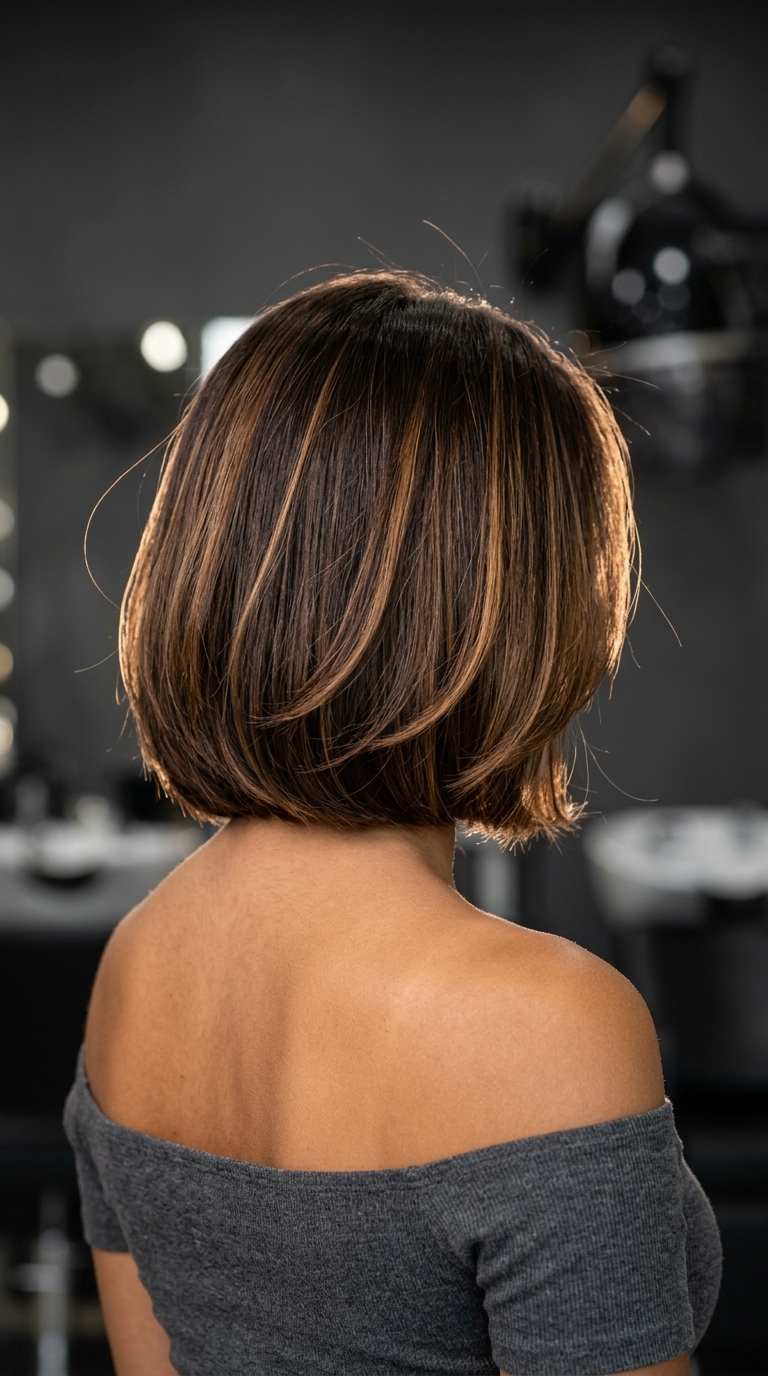
Internal layering is the difference between a bob that sits flat and one that actually moves. This cut uses soft, invisible layers throughout the crown and mid-lengths to create volume and movement without sacrificing that dense, weighted perimeter. The layers support voluminous styling on straight to wavy hair with medium to thick density—you get the structure of a blunt bob with the dynamics of something that breathes. Internal layering maintained volume and movement for 4 weeks before needing a refresh, which honestly feels like a win when you’re styling daily.
The color work here is the real magic: warm caramel and honey tones blended into a deeper espresso base creates that tiramisu highlights short hair effect everyone’s chasing. Those highlights aren’t harsh or placed predictably—they’re threaded through the internal layers so they catch light when the hair moves. Blow-dry with texture paste to activate the layers, or let them define movement naturally with a salt spray. The frosted tips stay visible longer because they’re tucked inside the cut structure, not sitting on the perimeter where they fade fastest. This bob moves.
The Classic Italian Bob
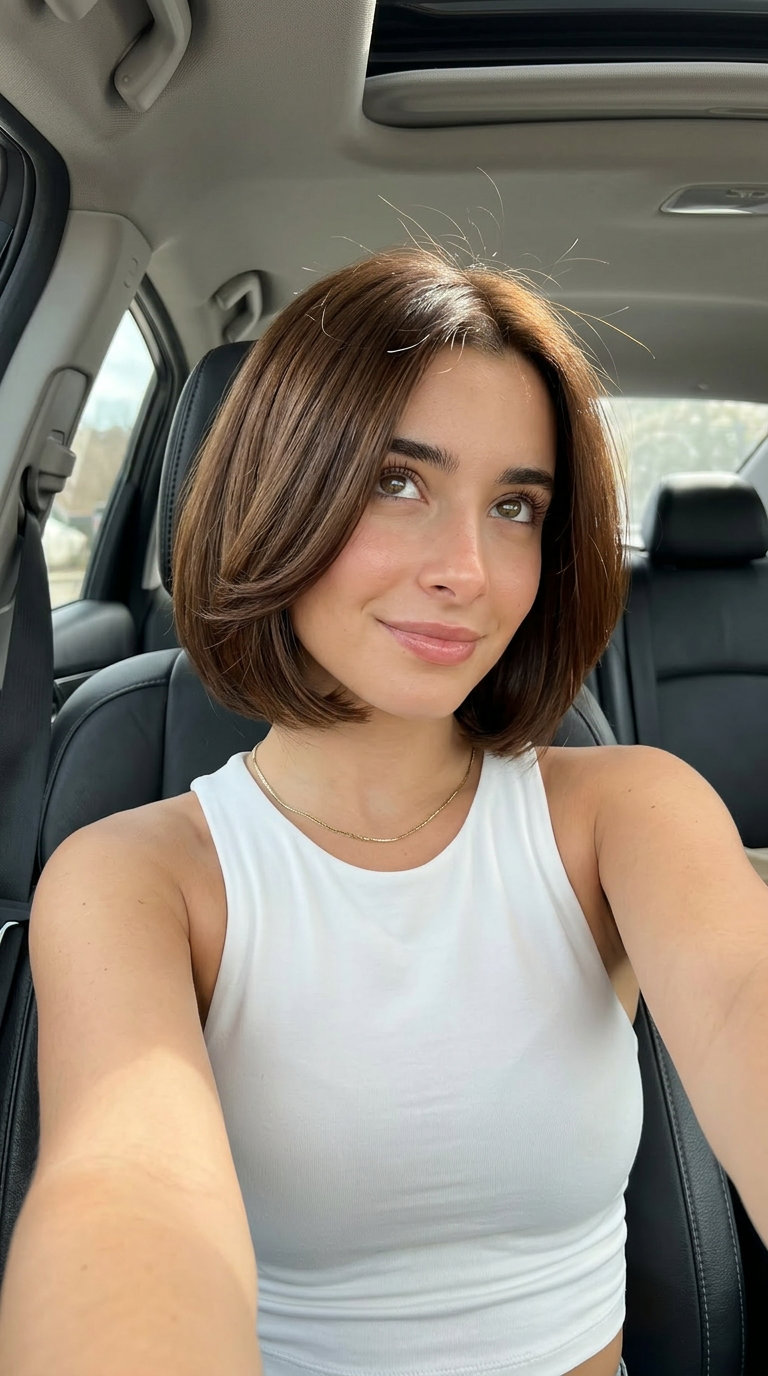
The classic italian bob is precision without fussiness. Meticulous scissor-over-comb creates a rounded, voluminous shape, while internal stacking lifts the nape—that’s where you get the silhouette that reads both polished and natural. This cut works best on straight to wavy hair because every angle matters, and the rounded crown needs clean lines to hold its shape. Scissor-over-comb technique held its rounded, voluminous shape for 6 weeks without flattening, which is honestly the salon visit worth it.
Ask your stylist specifically for internal stacking at the nape—don’t assume they know what you mean by ‘Italian bob.’ The difference between a classic rounded bob and this version is three to five stacked layers that create lift at the back without visible choppy lines when you look at the finished style from the front. Color should be warm and lived-in, maybe a shadow root if you want to stretch your salon visits. This precise cut requires professional trims every 6 weeks to maintain its shape, so budget accordingly. Volume for days.
The Point-Cut Textured Bob
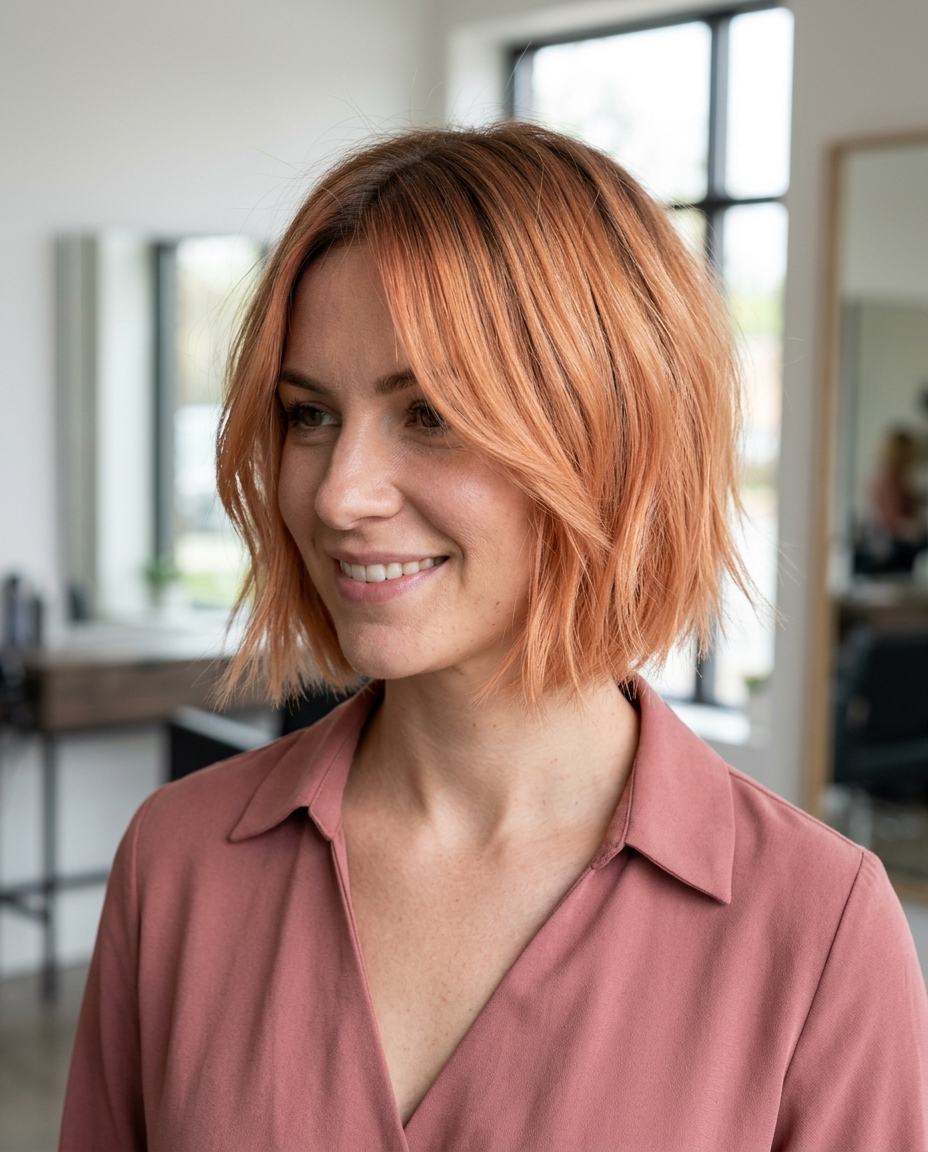
Point-cutting creates a softer, lighter perimeter, enhancing natural movement and reducing bulk for an airy feel—the opposite of that blunt, weighty line. This technique works especially well for wavy or textured hair because each point-cut strand moves independently instead of moving as one solid unit. Point-cut perimeter air-dried without frizz, enhancing natural wave definition on day one, which means you’re not locked into blow-drying every morning. Salon cost here runs $120–$180 for the cut, honestly reasonable for the technique involved, and the color adds another $100–$150 depending on placement and complexity.
The apricot crush hair color shades—warm peach-toned highlights scattered throughout—amplify the movement created by point-cutting because lighter tones read lighter and seem to move faster. Ask your stylist to point-cut the perimeter and possibly the internal layers if you have thick hair that needs texture removal. This cut doesn’t require the same precision maintenance as a blunt bob; grow-out looks intentional rather than messy. Air-dry texture spray or a light mousse activates the movement, and you can stretch to 8 weeks between trims easily. Effortlessly cool.
The Sleek A-Line Power Bob
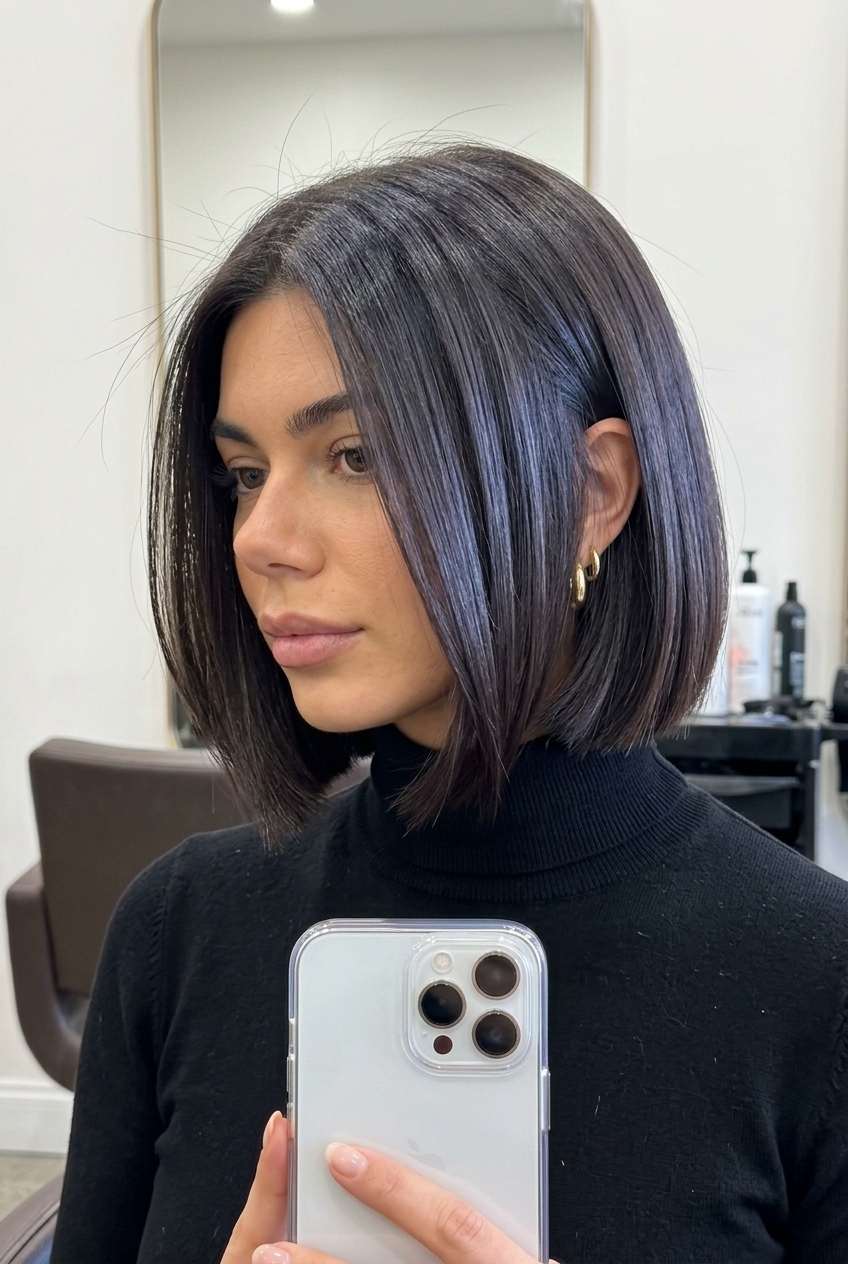
Minimal layering and a perfectly blunt perimeter ensure maximum density and a sleek, sharp A-line silhouette that actually photographs better than you’d expect. The back stays longer, the front sits shorter, and that geometric shape requires zero fuss once your stylist gets it right—or maybe a deep side part for variation when you want to switch moods. Maintained its sleek, blunt line and subtle A-line shape for 7 weeks before needing a trim, and the whole thing looks intentional the entire time rather than grown-out and tired. Best on straight to slightly wavy hair with medium to thick density, which allows for a truly blunt and structured line.
Color should deepen toward the back and lift slightly toward the front to emphasize the A-line geometry—think warm espresso at the nape, softer caramel toward the temples. The espresso gloss bob treatment keeps the base dark and rich without harsh demarcation. Blow-dry with a round brush to magnify the A-line curve, or let it air-dry for an undone finish that still reads polished. Minimal layering means this cut needs frequent trims to keep its sharp line, which is the trade-off for having a cut that looks expensive every single time you style it. The ultimate power bob.
The Razored Beachy Bob
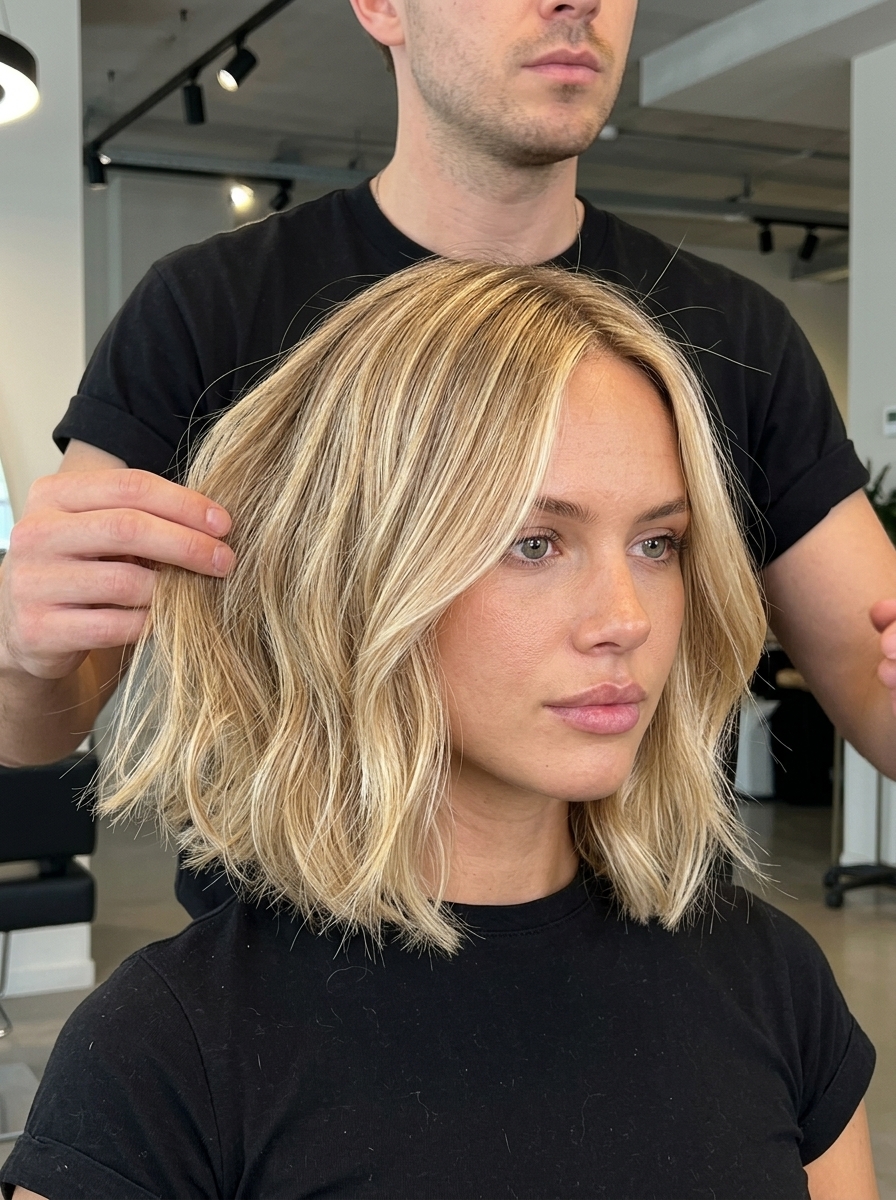
This is the bob that doesn’t try. Razored perimeter, invisible internal layers—the kind of cut that actually works with what your hair wants to do instead of fighting it. Fine to medium density hair thrives here, especially if you’re someone who air-dries most days (this is my summer hair). The magic isn’t in the length or the color; it’s in how the stylist cuts the ends. Razored perimeter created shattered ends that air-dried with natural wave, no frizz, for 3 days, which honestly felt like a small miracle the first time it happened.
What makes this work is almost invisible: point-cut ghost layers remove bulk, allowing fine-to-medium hair to move naturally and enhance waves instead of flattening against your head. The internal structure does all the heavy lifting while the perimeter stays touchable and alive. You’re not fighting your texture here—you’re inviting it to show up. No blow-dryer required, though one wouldn’t hurt. No heavy products, no special routine. Straight to wavy hair gets the benefit of natural movement without looking thin or wispy. This is what beachy bob styling for summer actually means: a cut that moves. Finally, a bob that moves.
The <b>Pastel Pink Italian Bob</b>
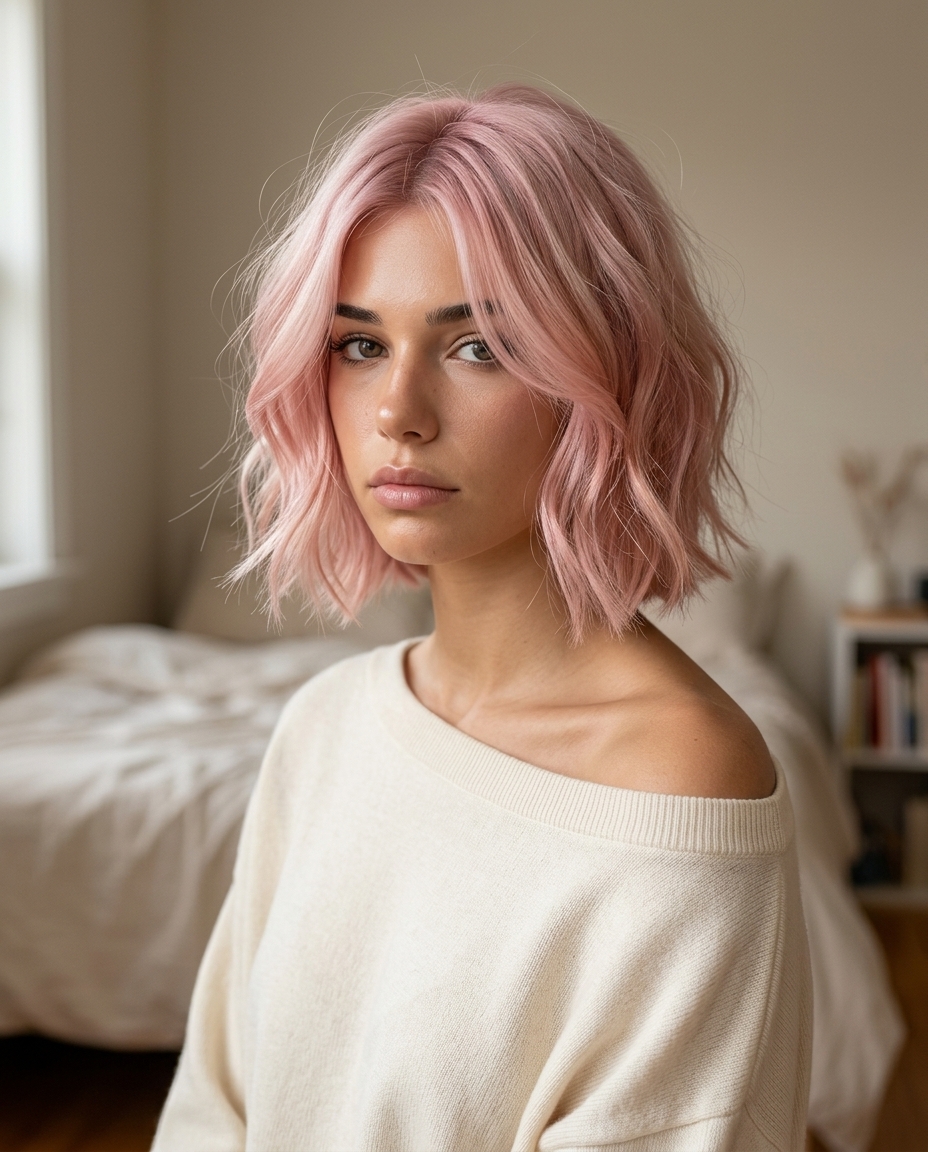
Soft, tousled, and honestly—requiring more effort than it looks. This is the version where color does the talking, and the cut plays support. The pastel pink demands everything: the right undertone match for your skin, a stylist who understands how to apply it on darker bases (which takes multiple sessions), and a maintenance plan that isn’t negotiable. The softness people respond to comes from alternating curling wand directions to create irregular, natural-looking waves that avoid a uniform, ‘done’ appearance. Achieved soft, tousled waves in 25 minutes using a 1-inch wand and diffuser, lasting 8 hours, which is solid considering how much product goes into the equation.
The waves themselves aren’t optional—they’re essential. Without them, this bob reads flat and costume-y, which isn’t the vibe. The pink works because the waves keep it loose, lived-in, almost accidental. Avoid if you have very fine hair, though—heavy products can weigh down these waves and turn the whole thing limp. The styling wand creates the illusion of ease, which is all my arms can handle most days. The cut matters less here than the execution; it’s a blunt or slightly graduated perimeter (your stylist will choose based on your hair’s density), layered minimally inside. Color-depositing shampoo becomes non-negotiable maintenance, which is another thing to budget for. Pastel pink italian bob styling is a daily commitment, not a wash-and-go. Effortless vibe, not effortless work.
The Platinum Razored Bob

Commitment level: extreme. Platinum demands everything—not just the color (which requires monthly touch-ups at $150–250 per session), but the cut that makes it actually readable as intentional rather than damage. This is where razoring becomes essential rather than optional. Sharp razored perimeter creates a ‘shard-like’ effect, giving edgy texture and piecey separation to the ends, which is what keeps platinum from looking one-dimensional and flat. Razored ends maintained sharp, spiky separation for 4 weeks before needing a trim to refresh, and you will notice when that separation starts to blur—the platinum kind of demands you stay on top of it.
The color story matters as much as the cut. Platinum requires a multi-step process if you’re starting darker, which means commitment to salon visits before you even get to the final shade. Once you’re there, maintaining the tone (purple shampoo, purple mask, maybe blue toner if it starts looking yellow) becomes part of your actual routine, or maybe just a trim, honestly. Not for very curly hair—the razored perimeter will cause excessive frizz and breakage on textured strands. The cut itself is relatively simple: short layers throughout, heavily razored perimeter, minimal internal structure. But the styling demands are real. A flat iron, some texture spray, and acceptance that this bob wants to look sharp, not soft. Platinum italian bob work is the kind you commit to or you skip entirely. Edgy. Sharp. Obsessed.
The Rounded Ghost-Layer Bob

This bob hides all its work. The structure is so internal you almost can’t see it, but you feel it immediately when you run your hands through it or try to style it. Ghost layers—those invisible point-cut layers that remove bulk without creating obvious lines—are the reason fine to naturally wavy hair suddenly air-dries into a rounded shape instead of a triangle. Ghost layers removed bulk, allowing fine hair to air-dry with natural movement and no triangle shape, which is basically the only thing anyone with fine hair actually wants from a bob anyway. The cut works because there’s strategic shape built inside, but nothing visible on the perimeter to make it look choppy or over-worked.
Straight to naturally wavy hair is ideal here; anything curly will need styling to maintain the rounded silhouette. Point-cut ‘ghost layers’ remove internal bulk, preventing a blunt bob from looking heavy or triangular, which means the bob can actually sit at a nice length without looking severe. The perimeter is blunt or nearly blunt, which gives you that classic Italian bob shape. Grows out quickly, requiring a trim every 6–8 weeks to maintain the rounded shape, which is probably worth the consultation at least. Styling is optional: air-dry and you get natural texture; blow-dry with a round brush and you get polish. This is the workhorse cut, the one you can rely on without constantly overthinking it. No special products required, just decent shampoo and conditioner. Tousled italian bob styling happens naturally or takes 15 minutes depending on your mood. The perfect everyday bob.
Still Deciding? Here’s a Quick Comparison
| Hairstyle | Difficulty | Maintenance | Best Face Shapes | Pros | Cons | |
|---|---|---|---|---|---|---|
| Edgy & Textured | ||||||
| 11. The Ember Razor Italian Bob | Easy | High — every 4-6 weeks | round, square, heart | Easy to style at homeSuits most face shapesWorks on multiple textures | Frequent salon visits needed |
| 21. The Beachy Blonde Italian Bob | Easy | Medium — every 10-12 weeks | round, square, oval | Easy to style at homeSuits most face shapesWorks on multiple textures | Not ideal for very curly hair |
| 24. The Platinum Shard Italian Bob | Salon-only | High — every 4-6 weeks | oval, heart, square | Suits most face shapesWorks on multiple textures5-minute styling | Requires professional styling |
| Classic & Clean | ||||||
| 5. The Sun-Kissed Linen Italian Bob | Moderate | Medium — every 8 weeks | oval, heart, square | Suits most face shapesWorks on multiple texturesFlattering face-framing | Not ideal for very curly hair |
| 8. The Golden Hour Swirl Italian Bob | Moderate | Medium — every 8 weeks | oval, long, diamond | Suits most face shapesWorks on multiple texturesLayers add movement | Not ideal for very curly hair |
| 10. The Soft Wave Italian Bob | Easy | Low — every 8-10 weeks | oval, long, diamond | Low maintenanceEasy to style at homeSuits most face shapes | Not ideal for very curly hair |
| 12. The Executive Brunette Italian Bob | Moderate | Medium — every 6-7 weeks | oval, square, round | Suits most face shapesWorks on multiple texturesLayers add movement | Not ideal for very curly hair |
| 13. The Honey Balayage Italian Bob | Moderate | Medium — every 10-12 weeks | all, round, square | Suits most face shapesWorks on multiple texturesLayers add movement | Not ideal for very curly hair |
| 14. The Hydro-Italian Bob | Moderate | Medium — every 8 weeks | oval, square, heart | Suits most face shapesWorks with air-drying | Not ideal for very curly hair |
| 15. The Old Money Italian Bob | Moderate | High — every 6-8 weeks | round, oval | Subtle sun-kissed effect5-minute styling | Frequent salon visits needed |
| 16. The Tiramisu Highlights Italian Bob | Moderate | Medium — every 10-12 weeks | oval, heart, long | Suits most face shapesWorks on multiple texturesFlattering face-framing | Not ideal for very curly hair |
| 17. The Sculpted Classic Italian Bob | Moderate | High — every 6-8 weeks | round, oval, square | Suits most face shapesWorks on multiple texturesLayers add movement | Frequent salon visits needed |
| 19. The Apricot Crush Italian Bob | Moderate | High — every 4-6 weeks | long, diamond, oval | Suits most face shapesWorks on multiple texturesFlattering face-framing | Frequent salon visits needed |
| 20. The Deep Espresso Gloss Italian Bob | Moderate | Medium — every 6-8 weeks | oval, heart, square | Suits most face shapesWorks on multiple textures5-minute styling | Not ideal for very curly hair |
| 22. The Dreamy Rose Quartz Italian Bob | Moderate | High — every 2-3 weeks | oval, heart, long | Suits most face shapesWorks on multiple texturesLayers add movement | Frequent salon visits needed |
| 25. The Tousled Texture Italian Bob | Moderate | Low — every 8-10 weeks | oval, heart, square | Low maintenanceSuits most face shapesWorks on multiple textures | Not ideal for very curly hair |
| Soft & Romantic | ||||||
| 2. The Botticelli Italian Bob | Easy | Low — every 10-12 weeks | long, diamond | Low maintenanceEasy to style at homeSubtle sun-kissed effect | Not ideal for fine hair |
Frequently Asked Questions
Which Italian bob styles work best for natural curls or waves?
The Botticelli Italian Bob is specifically designed for 3A–4C curls using a dry-cut technique that accounts for curl shrinkage, while The Sun-Kissed Linen Italian Bob and The Mushroom Bronde Italian Bob embrace natural waves with soft internal layering and point-cutting that encourages movement without frizz.
What’s the quickest way to style an Italian bob for daily wear?
The Botticelli Italian Bob takes just 15–25 minutes with a cream and air-dry method, while The Sun-Kissed Linen Italian Bob’s casual waves are ready in 10–15 minutes using a curling wand with alternating directions. Both skip the need for lengthy styling routines on busy mornings.
Can I achieve a super sleek, high-shine Italian bob at home?
Absolutely. The Espresso Gloss Italian Bob focuses on a sleek finish using a paddle brush and flat iron for 20–25 minutes, followed by a shine spray to nail that ‘glass hair’ effect. The key is minimal internal layering and a perfectly blunt perimeter that reflects light.
Are there any specific products I need for these DIY Italian bob styles?
For curly styles like The Botticelli, a leave-in conditioner is essential for hydration and detangling. For sleek looks like The Espresso Gloss, a shine spray is non-negotiable. The Sun-Kissed Linen Bob benefits from a texturizing spray to enhance waves, while a heat protectant spray protects all variations from summer sun and styling tools.
How often should I trim a chic summer Italian bob?
Blunt-perimeter bobs like The Espresso Gloss and The Mushroom Bronde require trims every 4–5 weeks to maintain their sharp line. Point-cut styles like The Sun-Kissed Linen hold their shape longer (6–8 weeks) because the softened perimeter grows out more gracefully. Ask your stylist which technique they used so you know what to expect.
Final Thoughts
The chic summer Italian bob haircut 2026 isn’t a trend that demands perfection—it demands presence. Whether you’re going full Botticelli curls, sun-kissed linen waves, or espresso gloss sleekness, the cut works because it flatters movement, not stillness. It’s a bob that looks better on day two than day one, that rewards a tousled hand through the hair more than a flat iron, that somehow makes humidity your accomplice instead of your enemy.
The real trick isn’t finding the right stylist or the right products (though both help). It’s understanding that this bob is permission to stop fighting your hair’s natural tendencies and start working with them. Go forth and conquer your summer hair. The only thing worse than a bad hair day is a boring one.