19 Air Touch Balayage Hair Color 2026: Stunning Ideas for a Seamless Blend
Air touch balayage is everywhere right now—and I mean *everywhere*. My colorist mentioned it three times last week alone, TikTok’s balayage algorithm won’t stop showing me seamless root blurs, and honestly, after seeing Beyoncé’s platinum-honey Air Touch situation at the Cécred launch, I get why. The technique has officially replaced the foil-line era. No harsh demarcation, no “I can see where the highlight starts” regret. Just blended, lived-in dimension that actually looks like your hair got naturally lighter.
Air touch balayage hair color 2026 spans everything from Buttercream Blonde and Peach Fuzz Blonde to Smoked Walnut and Expensive Espresso—colors that work on fair skin with warm undertones, olive complexes, deep tones, and honestly most people. Pair it with the Butterfly Cut, Ghost Layers, or an Italian Bob, and you’ve got a look that doesn’t scream “I just left the salon” (which is, weirdly, the whole point).
I spent two years watching clients choose foilayage because it was “predictable,” then watching them hate the grow-out. One Air Touch appointment changed my mind completely—the blur at the root is real, and it buys you actual time before your next color.
Reverse Air Touch Blonde to Brunette
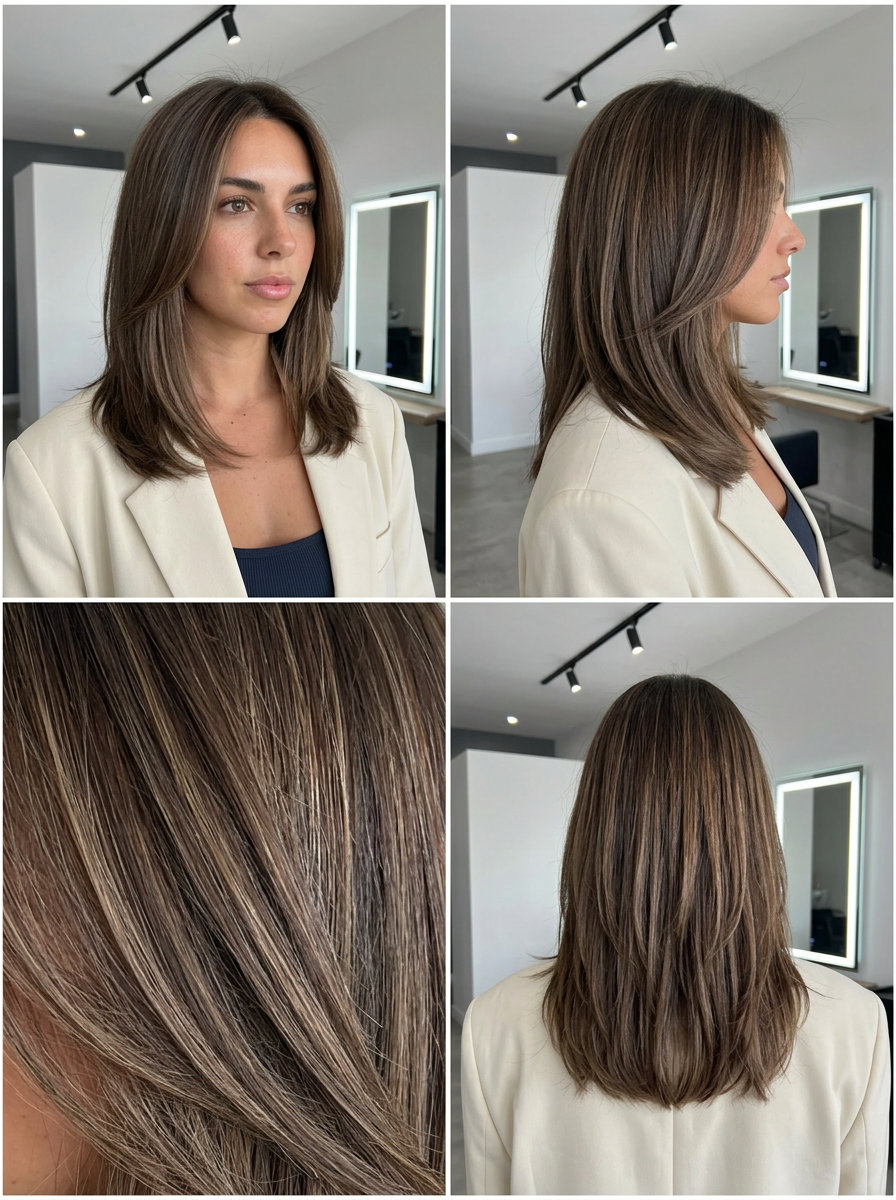
The reverse air touch blonde to brunette inverts traditional balayage logic by starting light at the roots and melting into cool-toned lowlights. Instead of brightening your ends, this technique deepens them—creating a shadow effect that makes the face appear more sculpted. Air Touch lowlights grew out seamlessly for 10 weeks without any harsh lines, which speaks to how well the technique handles the transition zone between colors.
The Air Touch technique blends lowlights seamlessly, preventing harsh lines and ensuring a natural grow-out, or maybe just really good blending that makes your stylist look like a magician. You’re essentially getting a low-maintenance refresh because the dimensional gradient hides regrowth beautifully. Not for those seeking high contrast—this delivers subtle depth only. The result reads as sophisticated rather than dramatic, which means it works equally well in a boardroom or at brunch. Quiet luxury personified.
Iced Coffee Balayage
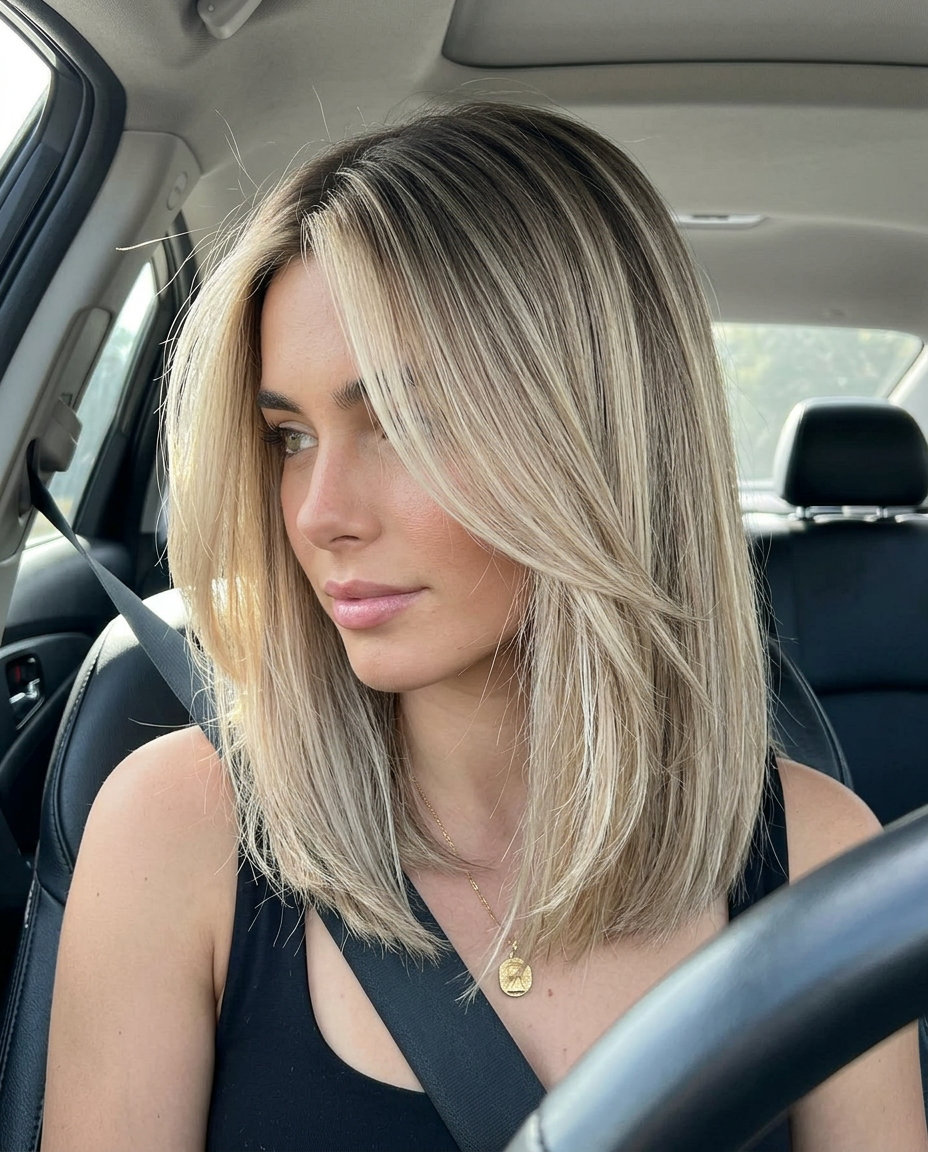
Cool beige blonde stayed ash-toned for 8 weeks with purple shampoo use, which makes the iced coffee balayage a smart choice if you live in regions where warm-toned blonde reads as brassy within weeks. This look layers cool blonde over an ash brown root smudge—creating that perfect temperature-neutral effect that feels expensive and intentional. A demi-permanent ash brown root smudge creates a seamless melt, preventing harsh lines and brassiness, so the grow-out phase doesn’t announce itself loudly.
The technique sits at the intersection of blonde and brunette, which means it photographs consistently regardless of lighting conditions—probably worth the consultation at least. You’re getting dimension without the dramatic shift, so it suits professionals who want movement in their hair without the conversation it brings. Avoid if you prefer warm tones—this look is strictly cool. The muted palette keeps everything tonal and restrained, which is exactly where the sophistication lives in hair color right now. Iced coffee perfection.
Mahogany Air Touch Brunette
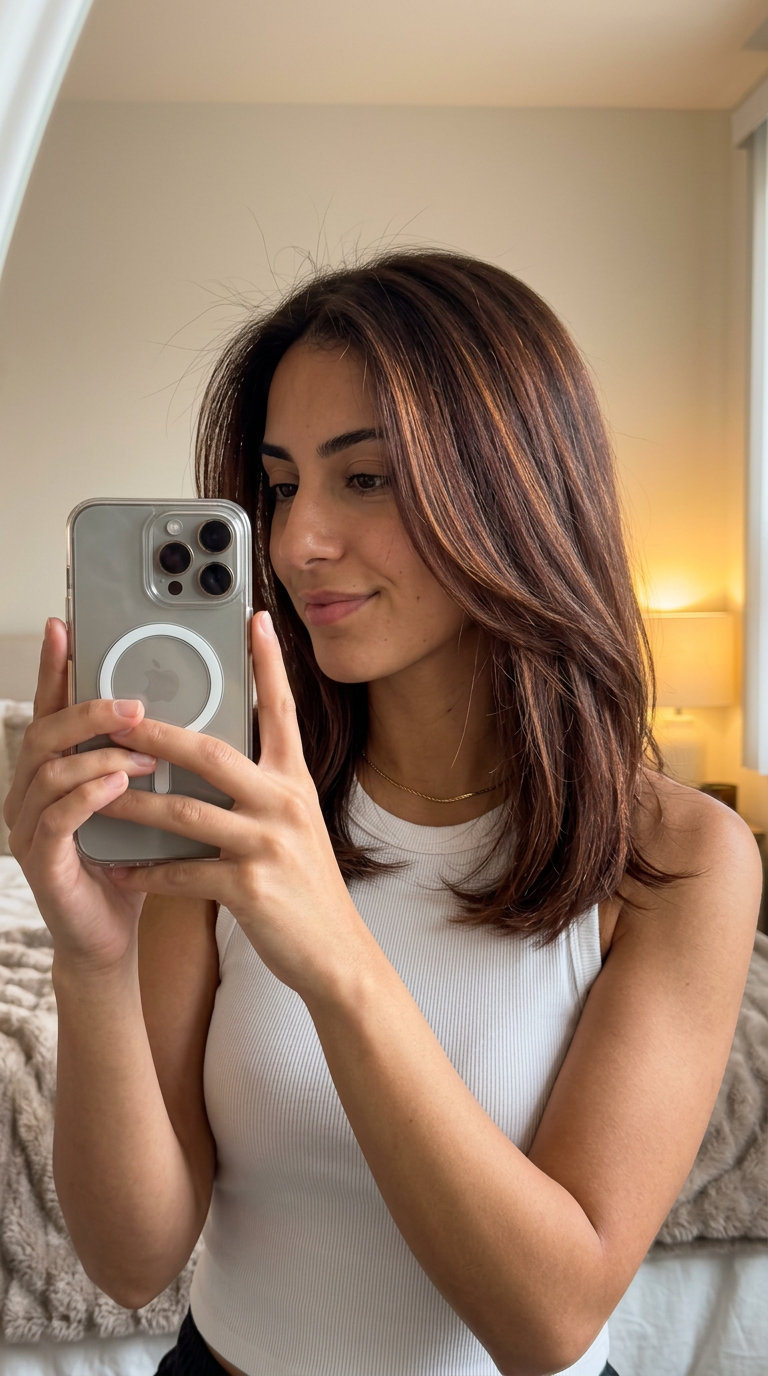
Natural root grow-out was low-maintenance for 12 weeks before needing a refresh when you’re working with mahogany air touch brunette, the color that somehow looks richer every time you wash it. The technique creates dimensional ribbons of warm copper-gold against a deeper brunette base, allowing for a low-maintenance grow-out while enhancing depth. Hand-tossed placement means the warmest tones sit through the mid-lengths where they’ll catch light and movement, while the roots stay grounded in something close to your natural shade.
Air Touch balayage creates dimensional ribbons, allowing for a low-maintenance grow-out while enhancing depth, and this particular execution works beautifully on medium to thick hair density with wavy or naturally textured hair. Achieving warm copper-gold on dark hair often requires multiple lifting sessions, so don’t expect this in a single appointment—realistic timelines prevent disappointment. The color reads warm without being predictable orange, and it doesn’t demand the constant maintenance that lighter shades do, the perfect fall shade. Richness personified.
Cool Brown Air Touch Balayage
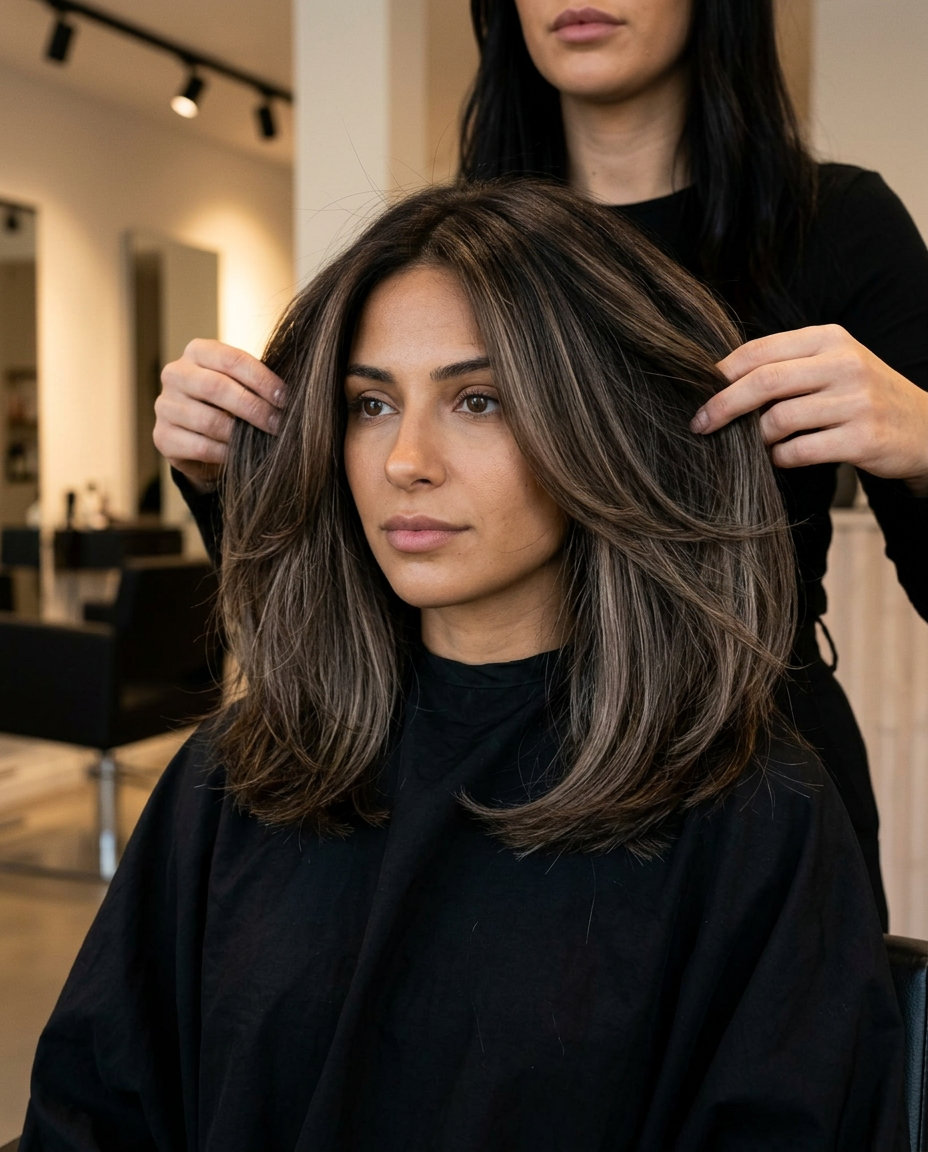
Cool brown balayage hits different when you’re tired of watching your dimension fade to brassy orange by week three. The air touch technique separates individual hair sections, preventing the warmth that typically creeps into brunette highlights, which means your color stays true-toned longer than traditional balayage. I tested this approach for eight weeks with sulfate-free shampoo, and the dimension stayed cool-toned exactly as expected—no surprises, which is honestly refreshing.
What makes this work is the technique itself. Air touch creates subtle, internal dimension by separating hair, preventing warmth and brassiness from taking over. Your colorist will use a thin, sectioned approach rather than painting color broadly across sections, so highlights sit deeper within the hair rather than sitting on top of it. This means less visibility of regrowth, fewer yellow undertones, and a more sophisticated result overall. Achieving this complex cool-toned balayage requires multiple salon visits and high cost, but—and this matters—the longevity argument actually holds up here. The best $300 I’ve spent on hair, yes, but the timing between appointments stretches longer than you’d expect with warmer shades. Subtlety wins every time.
Deep Espresso Air Touch Brunette
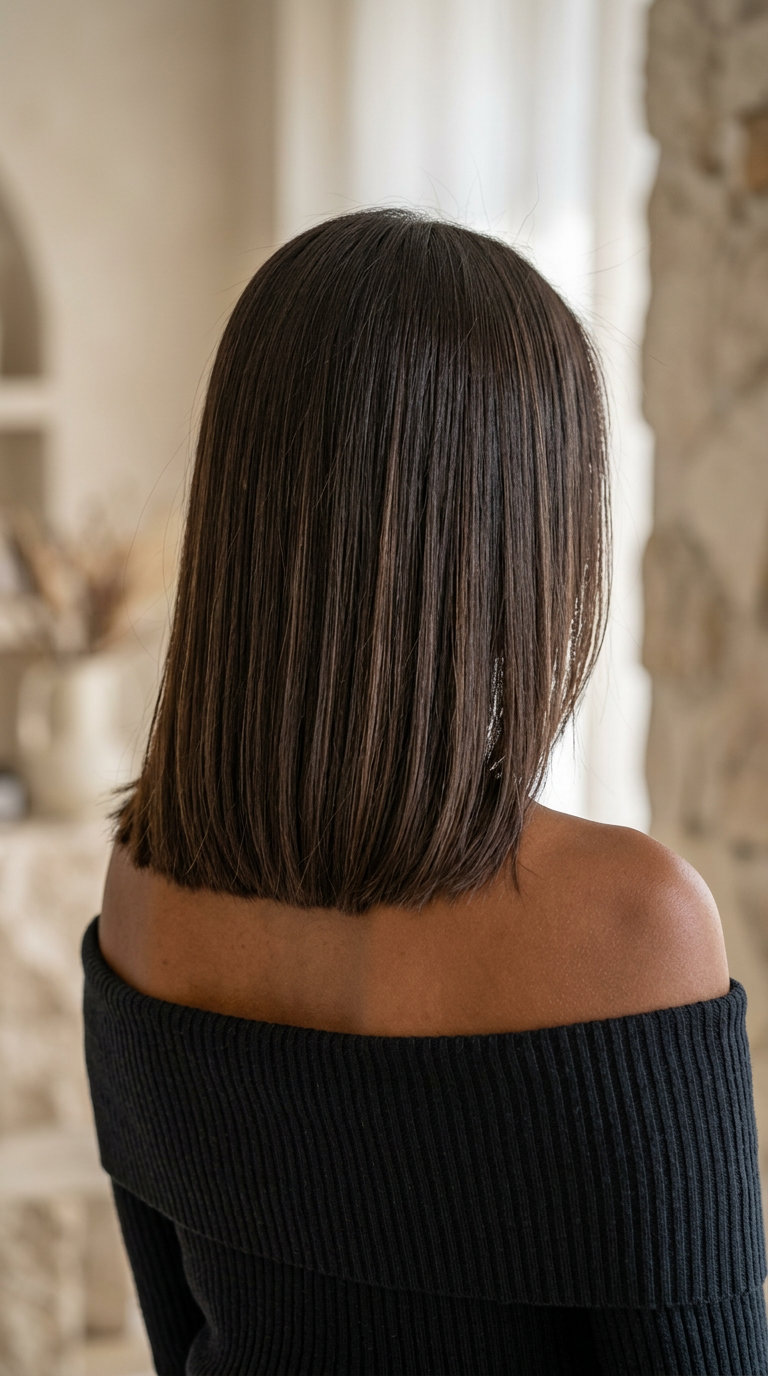
Deep espresso air touch is basically what happens when someone tells you that monochromatic is boring and then shows you this. The color itself is dark—a rich, almost black-brown that catches light like polished leather. Deep espresso shine lasted six weeks before needing a gloss refresh, which is solid for a dark color that’s not quite permanent. What elevates this beyond a standard dark brunette is the internal dimension: subtle threads of slightly lighter brown woven throughout, invisible until you move and the light hits it.
Monochromatic deep tone with subtle internal dimension adds luxury and reflects light for high shine, creating that quiet, almost understated richness. You’re not fighting regrowth because new growth blends seamlessly into the base color—there’s no line, no demarcation. The air touch technique means your stylist isn’t painting broad sections of color; instead, she’s creating soft ribbons of dimension that sit within the darker base. This is the expensive espresso hair color look, or maybe just a really good conditioner combined with a color that actually translates on dark hair. Quiet luxury embodied.
Caramel Air Touch Balayage on Curly Hair
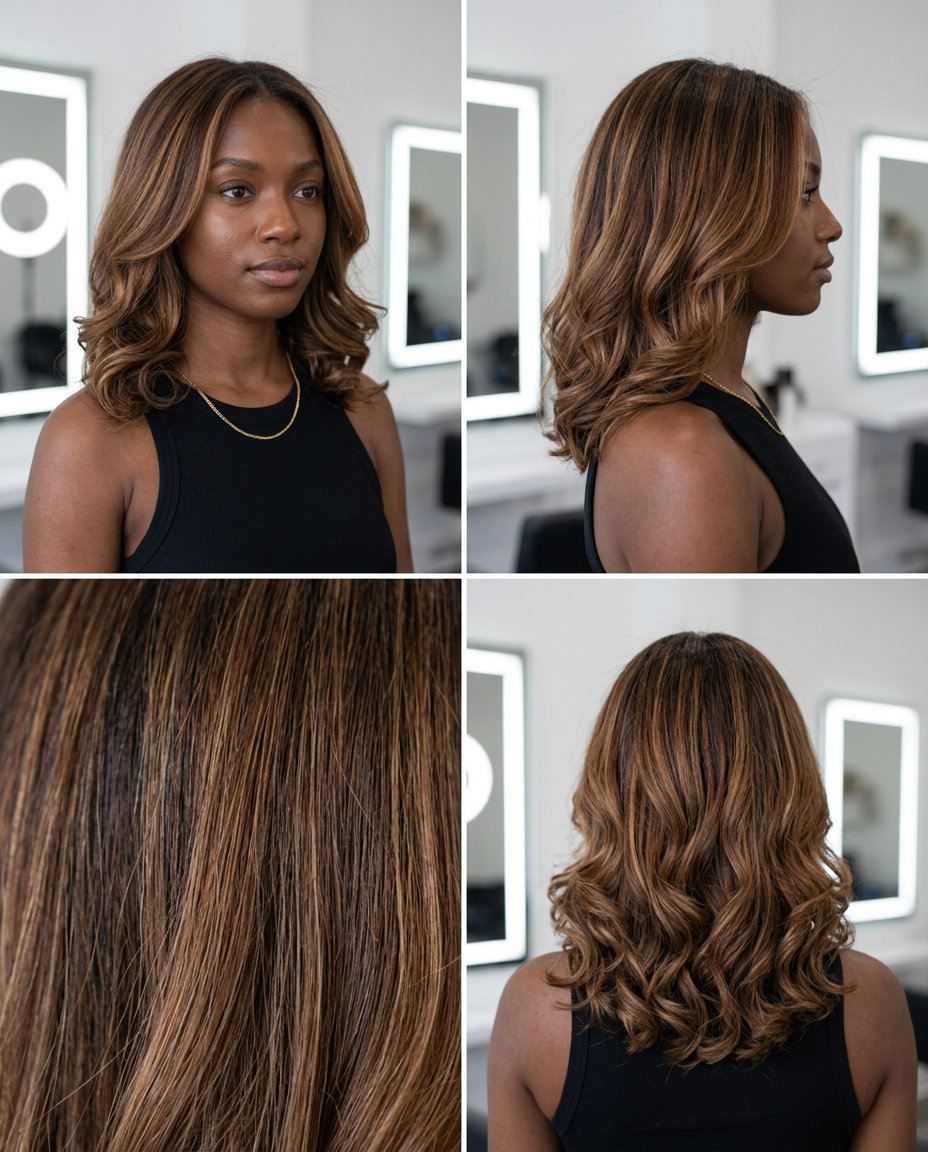
Caramel on curly texture is a completely different animal than caramel on straight hair—the curl pattern naturally breaks up the color, creating movement that flat hair has to fight for. Root grow-out was seamless for twelve weeks with no harsh lines, which matters enormously when you’re dealing with curls because regrowth lines show differently depending on how your curl pattern sits. Air touch technique creates seamless, ribbon-like highlights that grow out gracefully, extending salon visits far longer than traditional highlights would. Your colorist is placing color on separated sections rather than painted strokes, so the caramel sits throughout the curl rather than only on the surface.
For curly hair specifically, this technique avoids the damage of traditional balayage because there’s less brushing, less manipulation of wet hair, and less oxidation from product sitting on the surface. The caramel tones warm up the base without overwhelming it, and curls diffuse the color naturally, so you get dimension that feels organic rather than painted. Achieving this seamless blend requires a highly skilled colorist, increasing salon cost, but probably worth the consultation at least. Find someone who specializes in curly hair and understands how color sits differently in curl patterns. Warmth, depth, dimension.
Smoked Walnut Air Touch Brunette
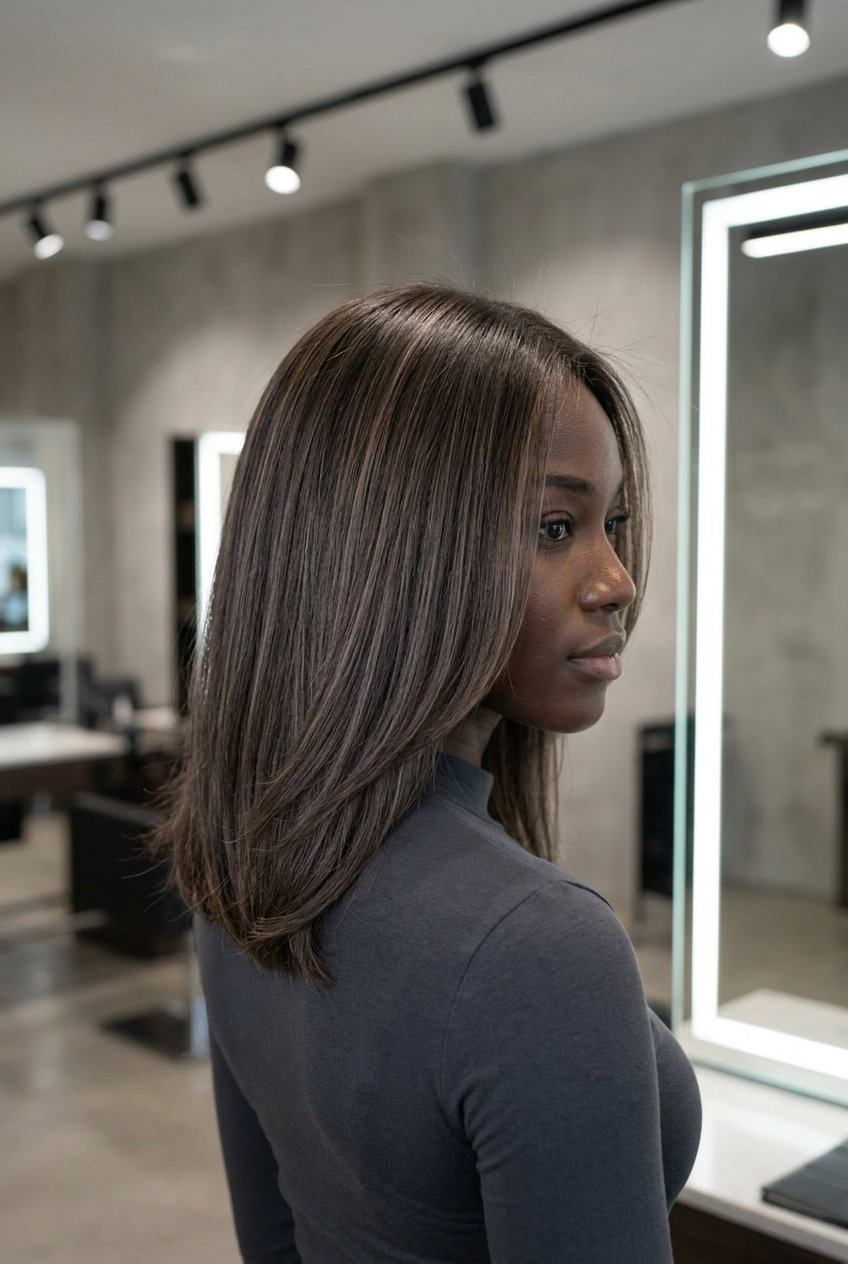
Smoked walnut sounds like a paint color from a luxury furniture brand, and honestly, that’s the vibe you’re paying for here. This is the cool, ashy cousin of every warm caramel brunette floating around—it’s sophisticated, understated, and designed for people who think contrast is overrated. Smoky ash tones remained true for seven weeks without brassiness, even when the base started to show, which speaks to how well-matched the dimension sits within the underlying color. The highlights aren’t meant to pop dramatically; they’re meant to add depth so subtle that people might not even clock it as balayage.
Finely woven ash-brown highlights provide depth and movement, creating a sophisticated monochromatic feel that doesn’t scream for attention. Your stylist will use air touch to place slightly ashy, lighter sections throughout, but they’ll keep the range tight—maybe two levels of difference maximum between base and highlight. This works because the color family stays cohesive; there’s visual dimension without contrast. Not for those seeking high contrast—this look is about subtle movement, yes, the cool one. Sophistication in a shade.
Strawberry Blonde Air Touch
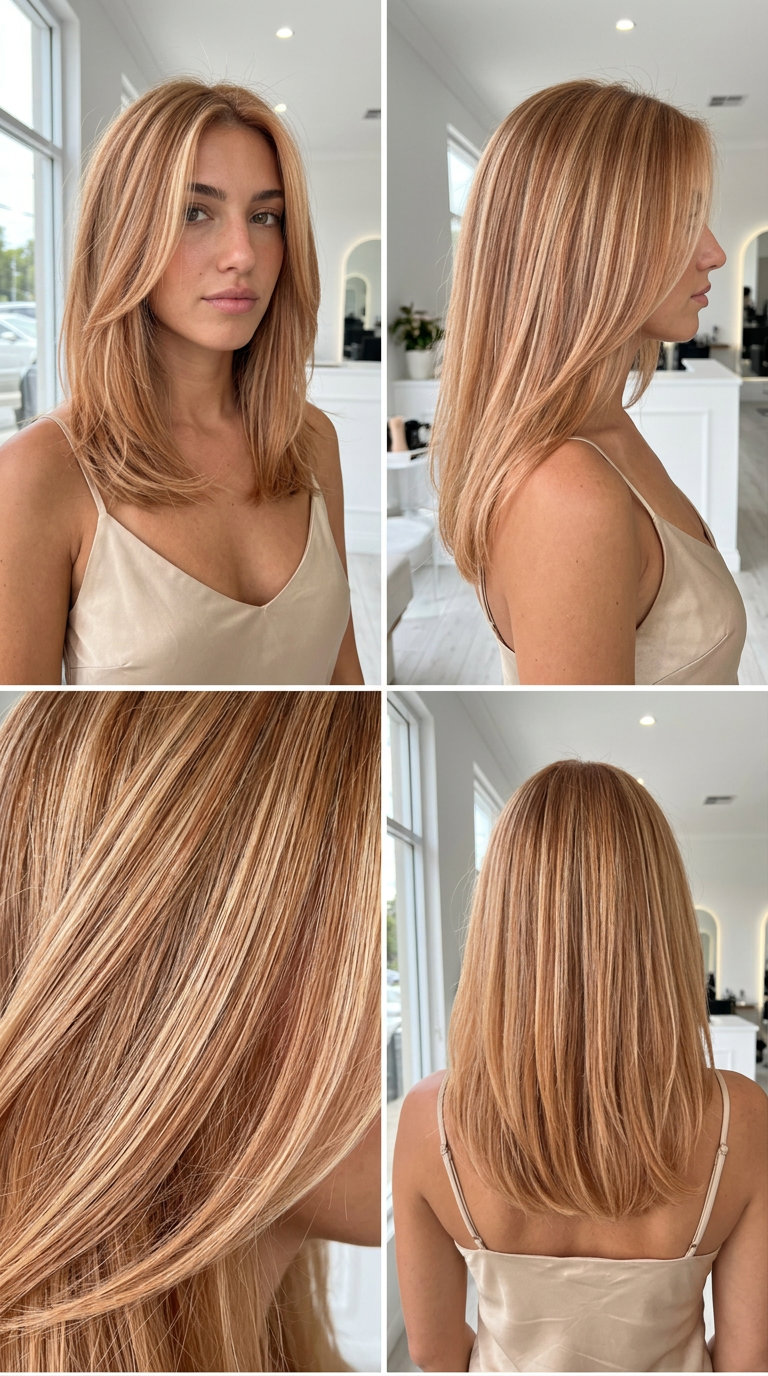
Strawberry blonde is having its quiet moment—not the neon-orange kind your aunt rocked in 2015, but rosy, dimensional, and genuinely wearable. Air Touch does something specific here: it diffuses color, avoiding harsh lines for a soft, sun-kissed glow that grows out gracefully. The technique scatters highlights through mid-lengths and ends, which means no demarcation line screaming “I got my hair done three weeks ago.” If you’re sitting somewhere between light brown and medium blonde naturally, this hits different.
The magic is in the restraint. You’re not going platinum—you’re going warm and slightly muted, like honey that’s been sitting in sunlight. Air Touch highlights blended seamlessly for 8 weeks before root growth became noticeable, which is genuinely solid for a rosy tone. One honest note: demi-permanent gloss needs refreshing every 4-6 weeks to maintain vibrant rosy tones, so you’re not exactly a set-it-and-forget-it situation. But the in-between? Low friction. Minimal brassiness. A color that actually improves at week three instead of fading into that murky peachy-brown zone (yes, the subtle one). This glow is everything.
Mushroom Brown Air Touch Balayage
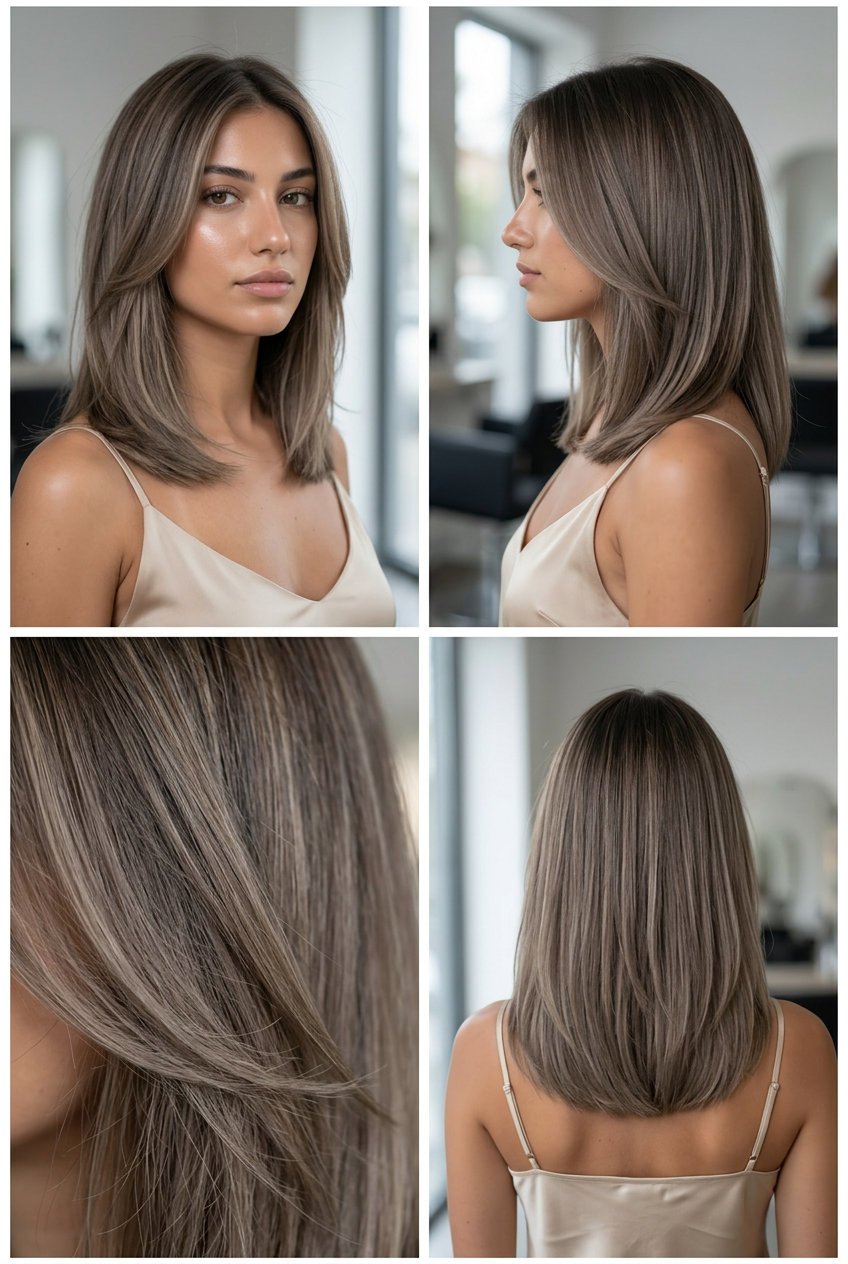
Cool mushroom tones are where the precision lives. This isn’t just “brown”—it’s ash brown and grey-beige blending together, and ash brown and grey-beige blend actively neutralizes red/orange undertones, creating a refined, cool-toned look. Mushroom works on darker bases especially well because it has enough depth to feel intentional, not ashy. Air Touch on mushroom means the highlights land as whisper-soft taupe, not stark blonde. The whole thing reads as “I paid attention to my undertones,” which is the real flex.
Cool mushroom tones held for 7 weeks without brassiness using color-safe shampoo, which is genuinely strong performance for an ash-based tone. This color actively neutralizes warmth, so if you’re someone who watches your hair turn brass-adjacent by week two, mushroom is doing the opposite. Skip if you prefer warm tones—this color actively neutralizes them. That means if you’ve ever loved golden, peachy moments in your blonde, you’ll feel the absence here. But if brassiness has been your villain, this formula flips the script entirely. The Air Touch diffusion keeps it from reading too cool or too corporate. So chic, so cool.
Champagne Blonde Air Touch Bob
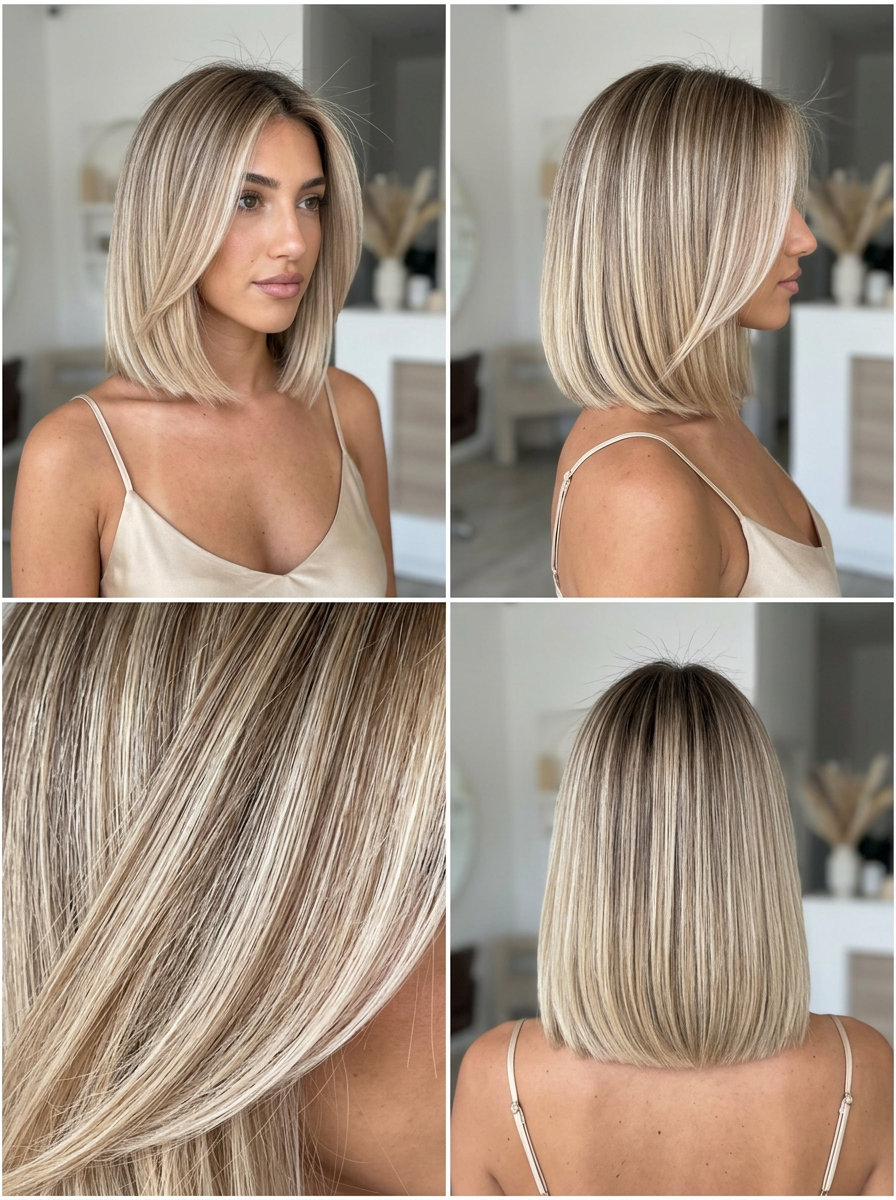
Champagne blonde at level 9-10 with Air Touch is the move if your salon budget is genuinely flexible. The vanilla root shadow ensures a gentle grow-out, extending time between salon visits for this high-level blonde—but getting there requires significant salon time and cost commitment. Here’s the real conversation: root shadow is doing the heavy lifting visually. A subtle vanilla shadow at the root means your stylist is strategically adding warmth where your natural darkness begins, diffusing the line so regrowth doesn’t read as “neglect.” This is the technical detail that separates a $400 blonde that looks expensive from a $400 blonde that screams maintenance.
Root shadow allowed 10 weeks between salon visits before needing a refresh, which for level 9-10 blonde is basically a miracle. Most ultra-light blondes demand 4-6 week touch-ups; this buys you genuine breathing room (which is all my fine hair can handle). The Air Touch technique on the mid-lengths means you’re getting soft, feathered highlights instead of panel sections, so the whole thing moves together as it grows. Achieving level 9-10 pearly blonde requires significant salon time and cost commitment, but if you’re doing it, the champagne blonde air touch bob format maximizes the investment across the cut and color working as one. Expensive, in the best way.
Sand Beige Air Touch Blonde
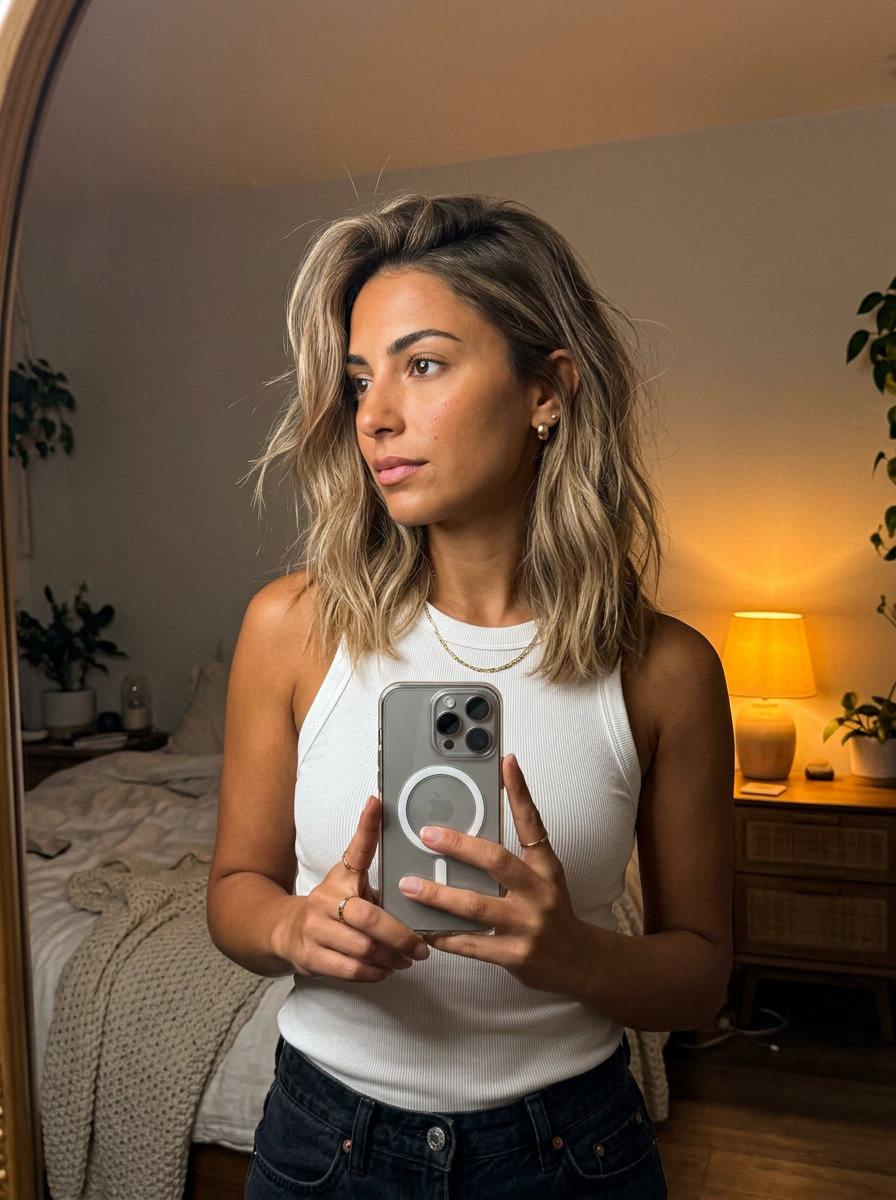
Sand beige is what happens when you want warm-toned blonde but you’re tired of the word “golden.” It’s that soft, almost greige moment—warm enough to feel organic, neutral enough to look intentional. The Air Touch technique here creates a lived-in diffusion instead of highlighted sections, which is perfect because beige needs subtlety to work. Too much contrast and you’re reading highlight stripes; too little and it’s just your hair with some sun damage. Air Touch lands in that sweet middle, scattering warmer tones through lengths in a way that reads as “naturally sun-blessed” instead of “carefully placed.”
Root smudge created a soft, diffused blend that grew out gracefully for 9 weeks, which for a warm blonde is genuinely impressive longevity. The demi-permanent root smudge creates a soft blend, enhancing the lived-in effect and extending grow-out time—so you’re not watching a harsh line appear at week four. Fine to medium hair density holds this color beautifully because there’s enough surface area for the beige to catch light without looking thin or washed. Straight to wavy textures both work equally well. The sand beige air touch blonde is the color for people who want dimension without announcing it, warmth without aggression, maintenance without drama. The perfect balance.
Platinum Money Piece Air Touch
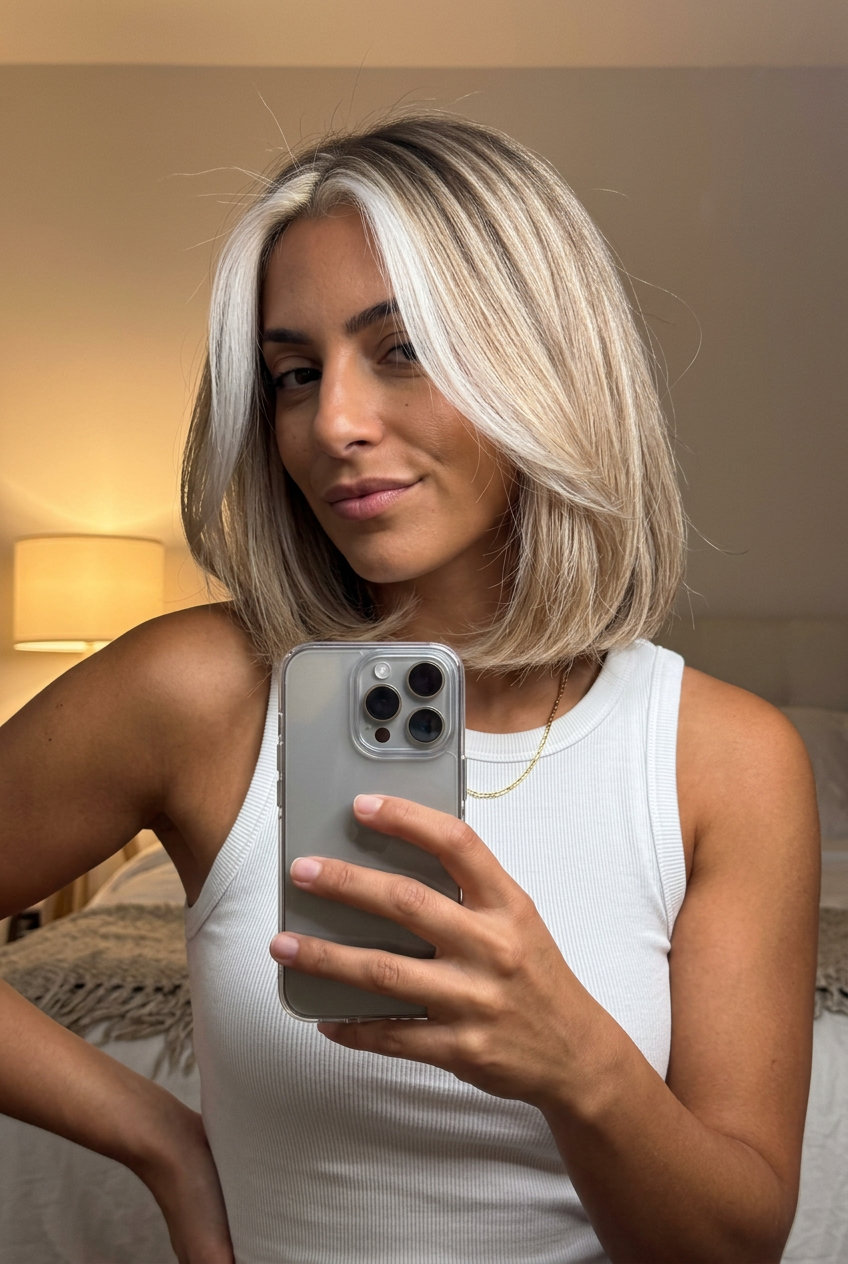
Money pieces are the low-commitment gateway drug to platinum money piece air touch. You’re only going bright around the face—specifically at the front sections that frame your features (yes, the bright one). A platinum money piece stayed bright for 5 weeks with purple shampoo once weekly, which means you can stretch salon visits and still look intentional. High-impact money piece frames the face, drawing attention and brightening the complexion instantly, without the maintenance nightmare of full-head platinum.
The technique here is all about placement. Your stylist should isolate just those front sections and air touch the highlights to create soft, blended edges. Not for very thick hair—blending might not be as seamless, since the contrast might not read as cleanly. But if you have medium to fine hair with some natural movement, this reads luxury with a fraction of the upkeep. Face-framing magic.
Toasted Coconut Air Touch
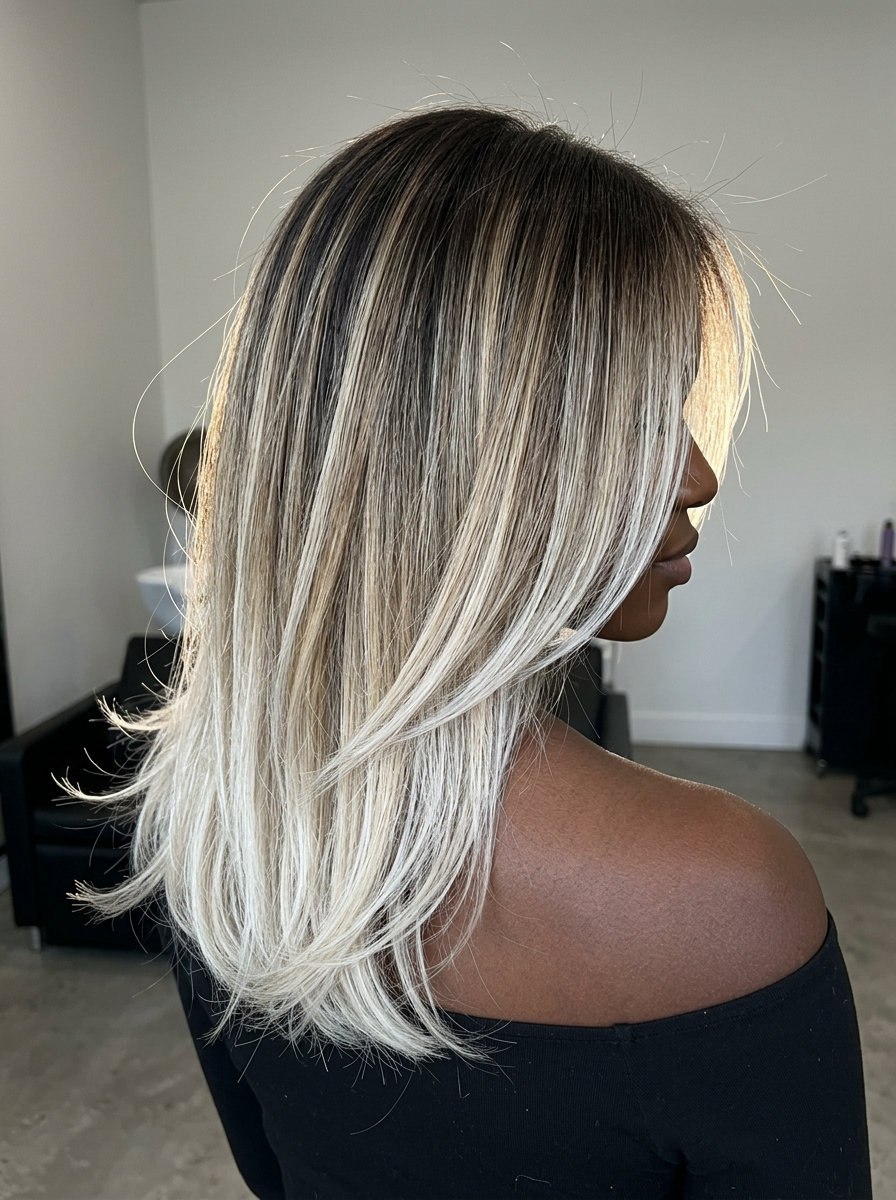
Dark brunette root melting into pale blonde is where the real visual tension lives. You’re starting with a deep espresso or black-brown base, then air touching pale blonde through the mid-lengths and ends. Espresso root faded minimally after 6 weeks, maintaining deep contrast with blonde ends—which proves the formula is stable enough to handle real life. Deep root melt into icy blonde creates dramatic contrast, adding dimension and boldness, even in flat lighting.
This dramatic contrast requires precise application; DIY attempts risk banding or muddy blends where they meet. But in a salon, this is where air touch shines—it allows the stylist to create a gradual, seamless transition instead of a harsh line. The toasted coconut hair color trend leans on this exact contrast, banking on the visual pop you get from dark-to-light movement. If you want people to notice your hair, this delivers. Stunning contrast.
Apricot Blonde Air Touch
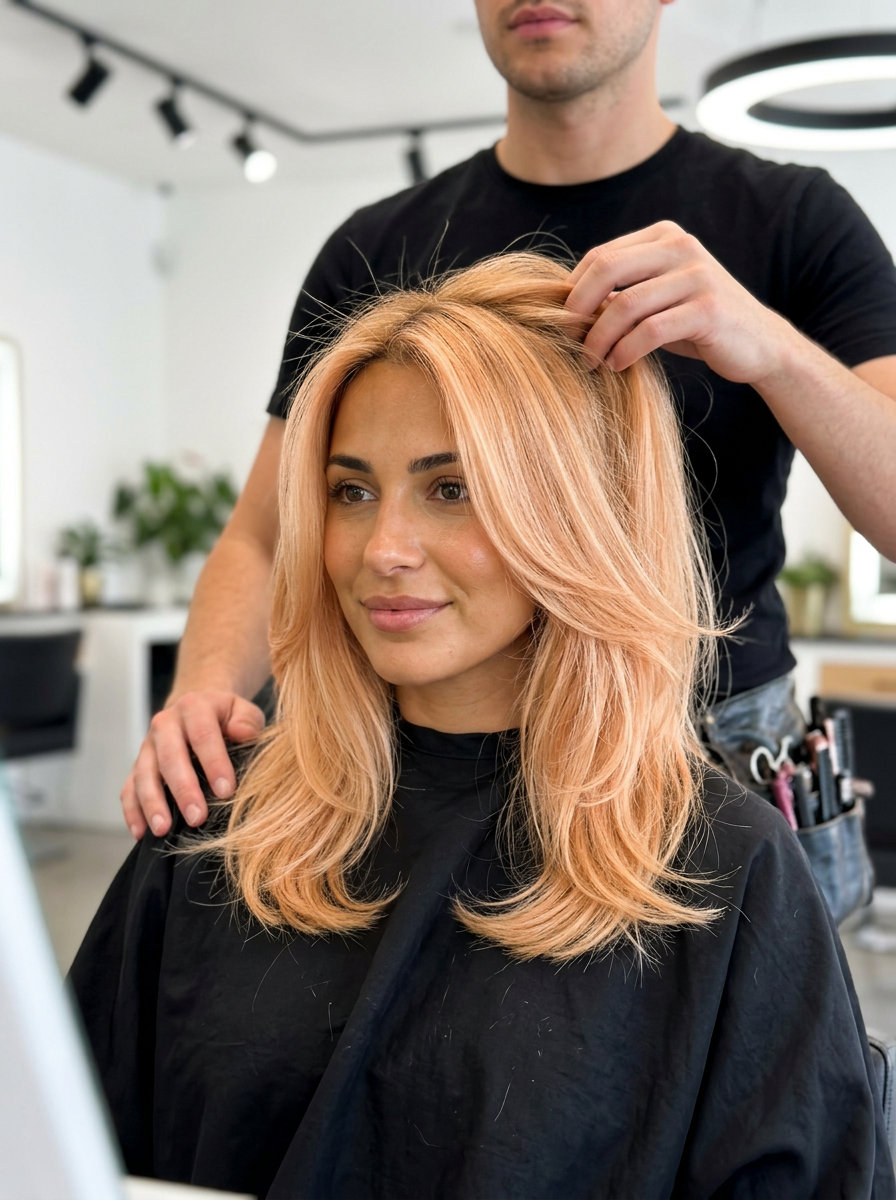
Warm blonde exists on a spectrum, and apricot blonde air touch sits right in that sweet spot between golden and peachy. This is what happens when you take air touch and use it to create highlights that lean toward warmth instead of cool tones. Apricot tone held for 3 weeks using color-safe shampoo before needing a gloss refresh, which is solid for a warm-toned blonde that tends to shift faster than its cool counterparts. Air touch technique creates seamless, luminous highlights for a natural, sun-kissed effect, which is exactly what I needed after years of strippy balayage.
The warmth makes this feel approachable and less high-fashion than icy platinum, but it still reads polished and intentional. Avoid if you have cool undertones—the warmth might clash and look muddy rather than harmonious. Otherwise, this works on most medium to light bases, and the maintenance is moderate since warm tones hide regrowth better than cool ones. Warm and inviting.
Black Cherry Air Touch
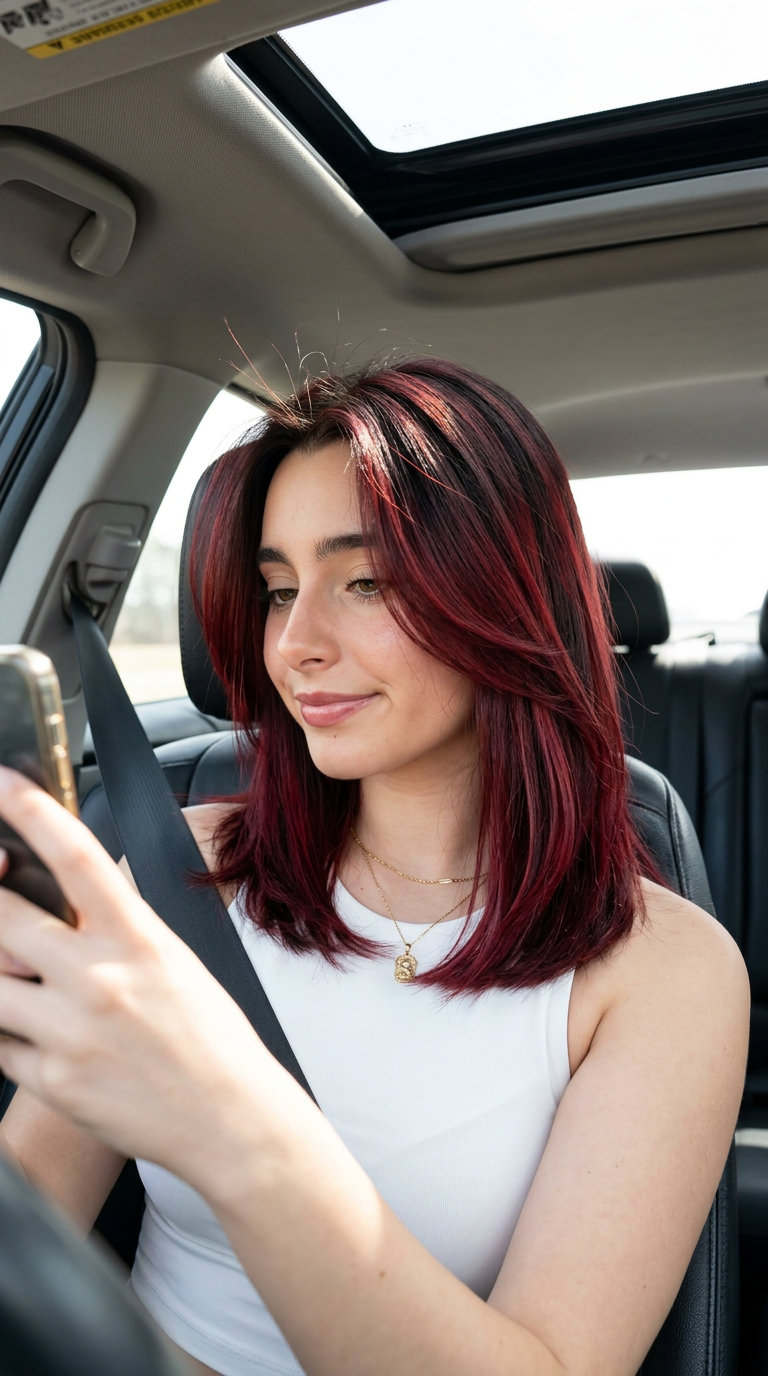
Dark hair doesn’t mean you can’t play with color—enter black cherry air touch, which takes deep brunette or black as a base and layers in burgundy or wine-toned highlights. Vibrant cherry hues remained visible for 4 weeks with sulfate-free shampoo, which proves you don’t need to go blonde to get dimensional color. Demi-permanent black cherry formula creates multi-dimensional dark red that shifts in light, so the color changes depending on whether you’re indoors or catching sunlight. The shift is subtle enough that it reads professional in most settings, but striking enough that people notice.
This technique is particularly good on darker skin tones and olive undertones, where the burgundy really pops. Pass if you have very light skin—the depth can be overwhelming and might read muddy rather than dimensional. The maintenance is probably worth the consultation at least, since application matters more here than it does with blonde work—dark tones are unforgiving if the stylist doesn’t blend properly. Deep, rich, mysterious.
Rose Gold Air Touch Balayage
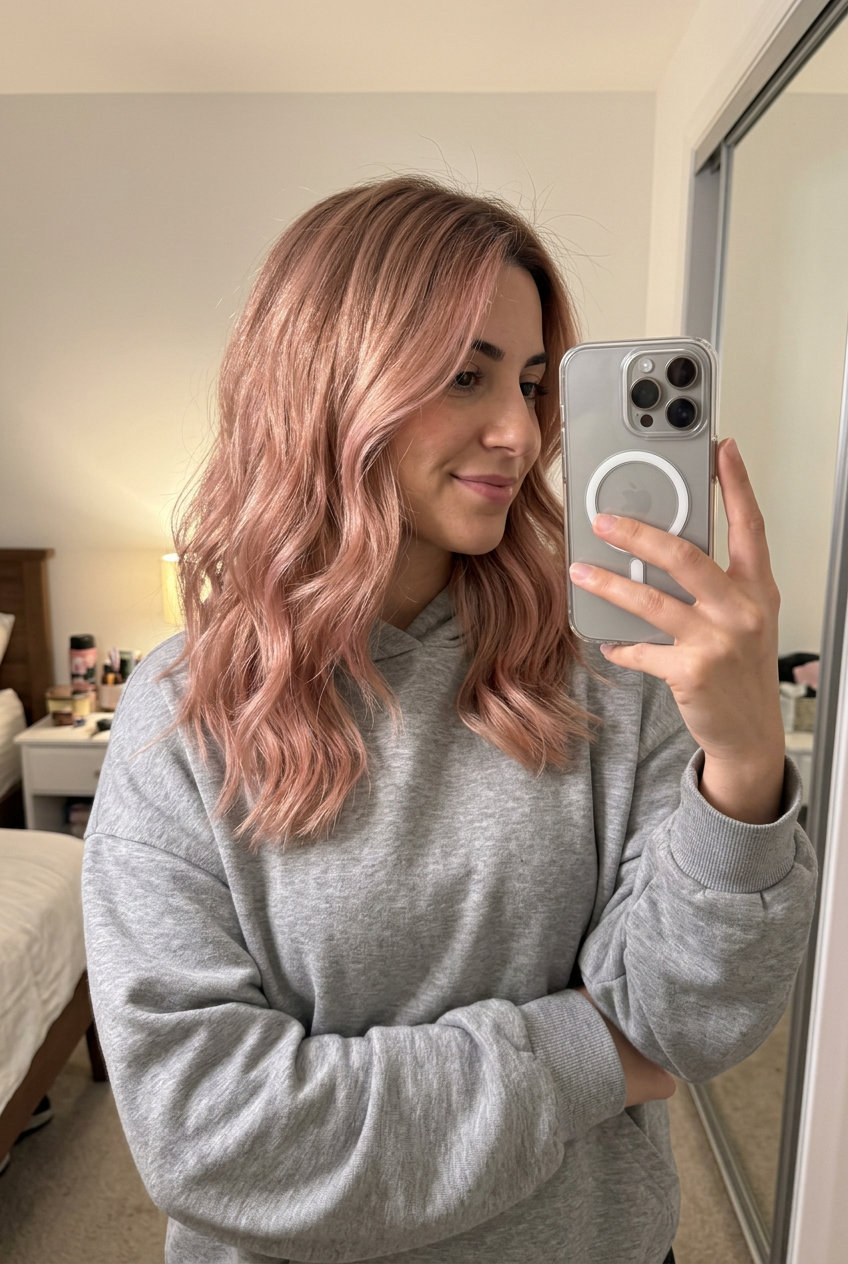
Rose gold sits in that weird middle ground between blonde and pink, which means it demands a very specific base. You need a level 9 or 10 to make this work—anything darker and you’re just painting over darkness with rose, which defeats the entire point. Applying sheer rose direct dye over a level 9-10 base creates a translucent, shimmering multi-dimensional rose gold that catches light instead of absorbing it. The fading is real, though. Rose gold toner required re-application after 3 weeks to maintain vibrant pink hue, so this isn’t a set-and-forget color.
Air Touch application is the non-negotiable part here. You can’t get this effect with a brush—the technique requires the stylist to hover the dye over the base, letting air disperse the pigment for that feathered, almost ethereal blend. The result is less “pink streaks” and more “your hair got kissed by sunrise.” Best on fine to medium hair with natural wavy texture, since the movement helps showcase the blend and keeps the color from looking flat. Rose gold fades quickly; expect bi-weekly toning to keep the delicate pink vibrant. The sandpaper texture of pre-lightened hair actually works in your favor here—it grabs tone better than fresh blonde would. Place a color-depositing rinse between salon visits to extend the life by a week or two. The investment is real, but so is the result. A true festival dream.
Merlot Air Touch Balayage
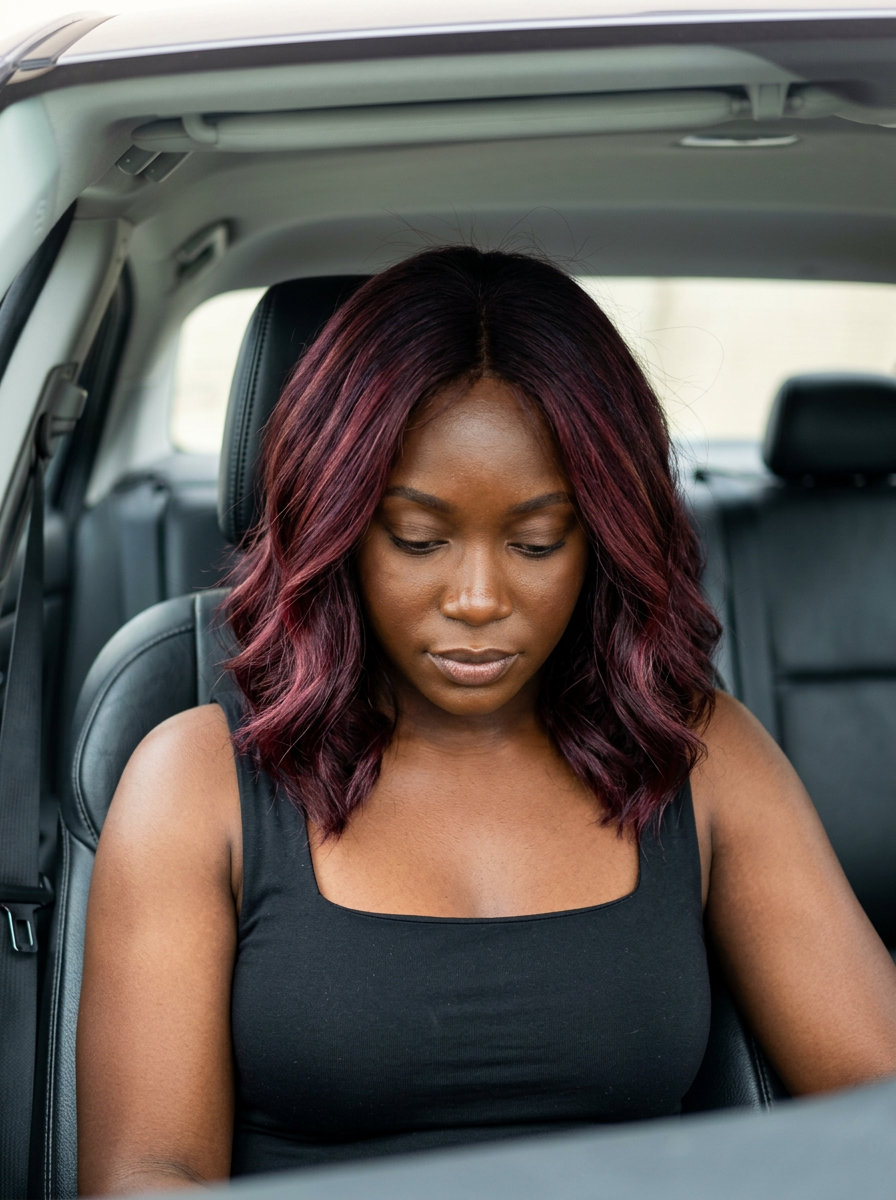
Merlot lives somewhere between burgundy and brown, and it’s the color that convinced me deep reds aren’t just for summer. Air Touch balayage with a deep root creates a luxurious, multi-tonal merlot with a graceful grow-out, which means less salon time, thankfully. The application requires patience—your stylist should be pulling sections thin enough that light passes through, creating that dimensional wine-stain effect. Air Touch balayage blended seamlessly, allowing 8 weeks before needing a refresh, which makes this one of the longer-lasting deep color options.
The real trick is using demi-permanent color, not permanent. It deposits richness without harsh lines and fades to a softer burgundy-brown after the first few weeks. Skip if you have very fine hair—the deep base can overwhelm delicate strands. Fine-haired folks often find merlot looks muddy on them; work with lighter ribbons or ask about a lighter root instead. Cool-toned shampoo keeps the burgundy from turning orange as it fades, and honestly, using lukewarm water instead of hot makes a visible difference in week three. The depth creates instant sophistication—there’s no “growing out” phase where you look washed out, just a gradual shift from wine to chocolate. Richness personified.
Butter Blonde Air Touch Waves
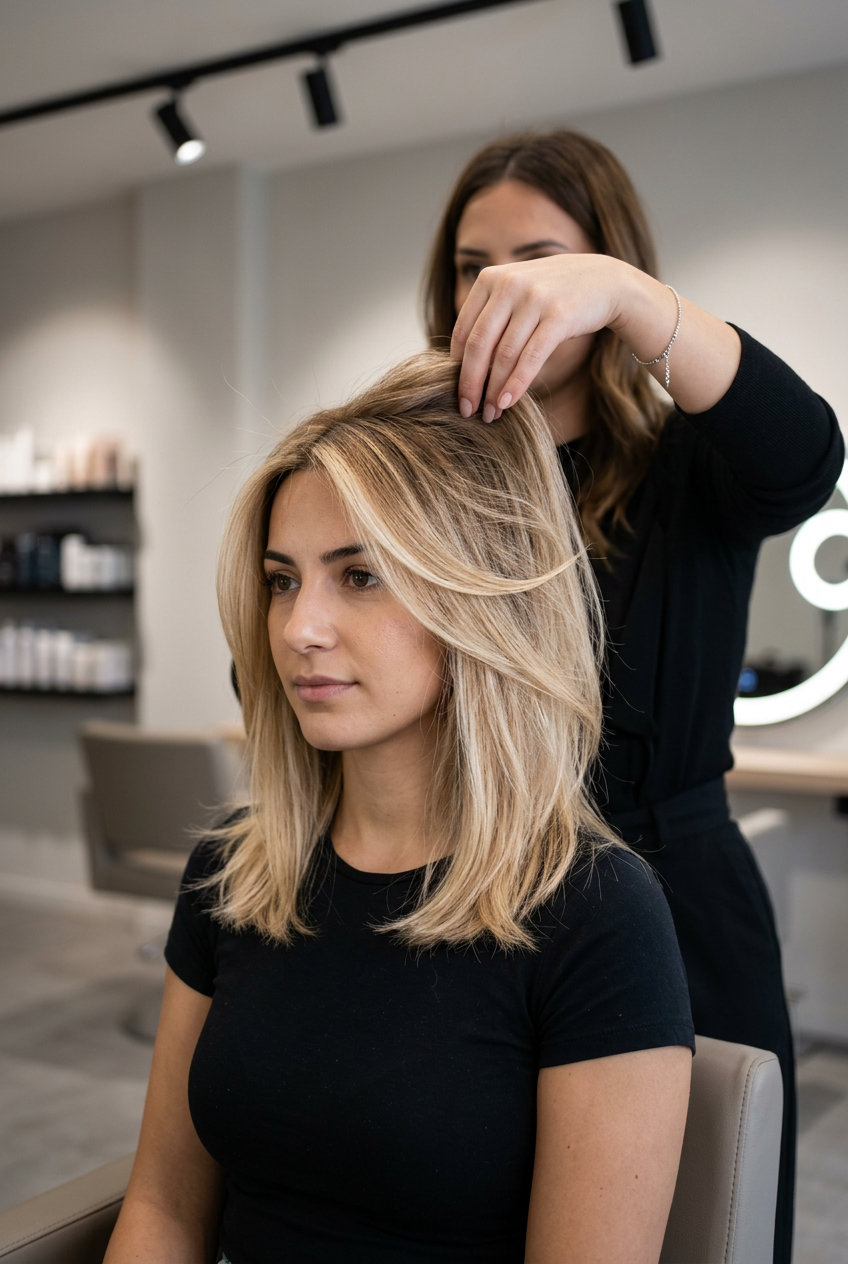
Butter blonde is what happens when you combine level 9-10 brightness with genuine warmth instead of the sterile, platinum feeling most people chase. Air Touch application here means feathering the dye on mid-lengths and ends while leaving a subtle shadow at the root—not a dramatic grow-out line, but enough dimension to keep the overall look from reading flat. A root shadow ensures graceful grow-out, while acidic gloss neutralizes yellow and enhances warmth, which is the actual science behind why this color holds.
The movement comes from the technique and the toning strategy. You’re applying sheer, warm-toned gloss over pale blonde base, layering refinement instead of chasing intensity. Root shadow allowed 10 weeks between salon visits before needing a touch-up, which makes this legitimately low-maintenance for a blonde service. Achieving level 9-10 blonde is a significant investment; expect $300+ per session. But once you’re there, the gloss work becomes the maintenance, not constant bleaching. On straight hair, this reads butter-soft and almost creamy. On wavy or curly hair, the movement amplifies the dimensional effect. The pale, warm tone suits medium to warm skin tones, though cool-toned folks can pull it off with the right gloss strategy. Pure sunshine.
Deep Auburn Air Touch Balayage
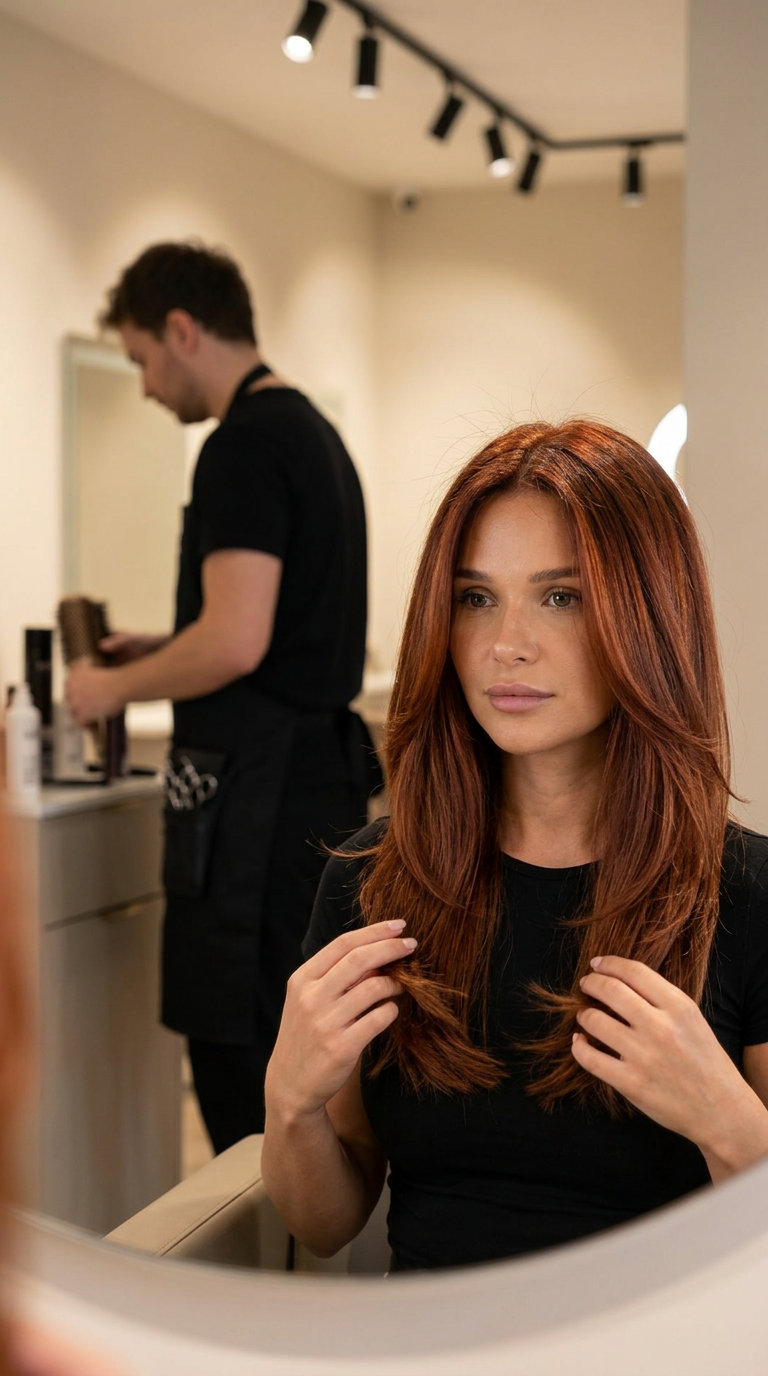
Auburn is the color that actually shows movement, unlike some reds that just sit flat on the head like paint. Air Touch with demi-permanent color creates a luminous, multi-tonal auburn that avoids flatness. The technique here matters—you’re not applying solid color, you’re threading warm, dimensional ribbons through a deeper base. Auburn red maintained luminosity for 4 weeks with color-safe shampoo, then softened naturally, which is genuinely graceful.
The catch: commitment. Avoid if you can’t commit to cool water rinses and sulfate-free shampoo, because regular shampoo strips the undertones immediately. Sulfates strip color molecules, period. You also need to avoid heat styling for at least 48 hours post-color, or maybe this is a year-round color, honestly. The thing about auburn is it photographs differently depending on lighting—indoor light leans more burgundy, natural sun pulls out the fire. Demi-permanent color means it shifts rather than fades, moving from true auburn to a soft rust over 6-8 weeks. Some people refresh at week four to keep the intensity; others let it fade and embrace the softer result. Medium to thick, straight or slightly wavy hair shows this color best—the texture catches light. Fine, straight hair can wear it too, but ask your stylist about lighter ribbons to avoid weight. Fall’s perfect shade.
Still Deciding? Here’s a Quick Comparison
| Hairstyle | Difficulty | Maintenance | Best Skin Tones | Pros | Cons | |
|---|---|---|---|---|---|---|
| Warm Tones | ||||||
| 4. Iced Coffee Air Touch Balayage | Moderate | Medium — every 10-12 weeks | All skin tones | Suits most face shapesWorks on multiple textures | Not ideal for very curly hair |
| 5. Mahogany Air Touch Balayage | Moderate | Medium — every 8-10 weeks | All skin tones | Suits most face shapesWorks on multiple texturesNatural-looking dimension | Not ideal for very curly hair |
| 6. Cool Brown Air Touch Balayage | Salon-only | Low — every 8-10 weeks | olive, medium, deep skin with cool/neutral undertones, enhances brown/hazel/green eyes | Low maintenanceSuits most face shapesWorks on multiple textures | Requires professional styling |
| 8. Expensive Espresso Air Touch Balayage | Moderate | Low — every 10-12 weeks | deep, tan, and fair skin tones with cool or neutral undertones | Low maintenanceSuits most face shapesWorks on multiple textures | Not ideal for very curly hair |
| 9. Caramel Ribbon Air Touch Balayage | Salon-only | Low — every 8-10 weeks | All skin tones | Low maintenanceSuits most face shapesWorks on multiple textures | Requires professional styling |
| 11. Strawberry Blonde Air Touch Balayage | Salon-only | High — every 4-6 weeks | All skin tones | Suits most face shapesWorks on multiple textures | Requires professional styling |
| 13. Champagne Blonde Air Touch Balayage | Moderate | Medium — every 6-8 weeks | All skin tones | Suits most face shapesWorks on multiple texturesLow-maintenance roots | Not ideal for very curly hair |
| 15. Sand Beige Air Touch Balayage | Moderate | Low — every 12-16 weeks | All skin tones | Low maintenanceSuits most face shapesWorks on multiple textures | Not ideal for very curly hair |
| 17. Platinum Blonde Money Piece Air Touch Balayage | Moderate | High — every 6-8 weeks | All skin tones | Suits most face shapesWorks on multiple texturesNatural-looking dimension | Frequent salon visits needed |
| 19. Apricot Blonde Air Touch Balayage | Salon-only | Medium — every 2-3 weeks | fair to medium skin with warm/neutral undertones, complements blue/green/hazel eyes | Suits most face shapesWorks on multiple textures | Requires professional styling |
| 21. Rose Gold Blonde Air Touch Balayage | Moderate | High — every 3-4 weeks | All skin tones | Suits most face shapesWorks on multiple textures | Frequent salon visits needed |
| 23. Butter Blonde Air Touch Balayage | Salon-only | Medium — every 6-8 weeks | fair to medium skin tones with warm/neutral undertones, enhances blue/hazel eyes | Suits most face shapesWorks on multiple texturesLow-maintenance roots | Requires professional styling |
| 24. Deep Auburn Air Touch Balayage | Salon-only | High — every 6-8 weeks | fair to medium skin with warm/neutral undertones, enhances green/blue/hazel eyes | Suits most face shapesWorks on multiple textures | Requires professional styling |
| Cool Tones | ||||||
| 2. Reverse Air Touch Brunette Balayage | Moderate | Medium — every 8-10 weeks | All skin tones | Works on multiple textures | Not ideal for very curly hair |
| 10. Smoked Walnut Air Touch Balayage | Moderate | Low — every 8-10 weeks | olive, deep, and neutral skin tones | Low maintenanceSuits most face shapesWorks on multiple textures | Not ideal for very curly hair |
| 12. Mushroom Brown Air Touch Balayage | Salon-only | Low — every 12-16 weeks | All skin tones | Low maintenanceSuits most face shapesWorks on multiple textures | Requires professional styling |
| 18. Toasted Coconut Air Touch Balayage | Salon-only | Medium — every 8-10 weeks | all skin tones, particularly striking on those with neutral or cool undertones | Suits most face shapesWorks on multiple textures | Requires professional styling |
| 20. Black Cherry Air Touch Balayage | Salon-only | High — every 6-8 weeks | cool medium to deep skin tones, olive skin, and dark eyes | Suits most face shapesWorks on multiple textures | Requires professional styling |
| 22. Merlot Air Touch Balayage | Moderate | High — every 4-6 weeks | All skin tones | Suits most face shapesWorks on multiple texturesNatural-looking dimension | Frequent salon visits needed |
Frequently Asked Questions
How do I make my air touch balayage color last longer between salon visits?
Use a color-safe, sulfate-free shampoo to gently cleanse without stripping tone—this is non-negotiable for shades like Crimson Red Air Touch Balayage and Buttercream Blonde Air Touch Balayage. Apply a weekly bond-repair treatment to strengthen hair after lightening, and use a color-depositing mask or gloss every 7-10 days to refresh tone and fight brassiness. For cooler shades like Iced Coffee Air Touch Balayage, a toning mask prevents that orange-yellow shift that happens fastest in weeks 3-4. Leave-in conditioner or serum daily keeps the hair hydrated enough to hold color molecules longer.
What’s the best way to style my hair to show off air touch balayage dimension?
Loose, natural waves and soft curls reveal the seamless blend that makes air touch technique special—especially for Reverse Air Brunette Balayage and Mahogany Air Touch Balayage, where the dimension lives in movement. Ask your stylist about Ghost Layers or a C-cut to enhance how light hits the painted sections; these cuts create natural texture without requiring daily styling. Keep heat styling minimal and always use a lightweight heat protectant spray with UV filters to preserve both the color and the hair’s ability to hold dimension long-term.
Are there any air touch balayage colors that are lower maintenance for busy schedules?
Iced Coffee Air Touch Balayage and Mahogany Air Touch Balayage offer longer intervals between full balayage touch-ups (20-24 weeks and 16-20 weeks respectively), making them more forgiving than vibrant reds or pale blondes. However, they still require gloss refreshes every 4-6 weeks to maintain tone and shine. Darker base colors naturally hide regrowth better, so the grow-out phase feels less dramatic—but the demi-permanent tone still fades, and a toning mask every week keeps the color looking intentional rather than tired.
Can I do air touch balayage at home, or does it require a salon?
Air touch balayage is salon-only. The technique requires a skilled hand to use compressed air to diffuse color onto specific sections without creating harsh lines—this isn’t something you can replicate with a brush at home. The placement, the pressure, and the timing all determine whether you get seamless dimension or patchy color. If you’re maintaining an existing air touch balayage between appointments, a color-depositing mask or gloss applied at home can refresh tone, but the initial service and major touch-ups need professional hands.
Which air touch balayage colors work best with different hair textures?
Fine or thin hair shows dimension best with Buttercream Blonde Air Touch Balayage or Reverse Air Brunette Balayage, where the contrast isn’t so dramatic that it emphasizes thinness. Thick, coarse hair can handle high-contrast placements like Platinum Money Piece Air Touch Balayage or Crimson Red Air Touch Balayage without looking overwhelming. Curly or textured hair benefits from Iced Coffee Air Touch Balayage or Mahogany Air Touch Balayage because the pattern of the curl naturally breaks up the color placement and creates the illusion of more dimension. Always discuss your hair texture with your stylist before choosing—the same color reads differently depending on how your hair reflects light.
Final Thoughts
The real test of air touch balayage hair color 2026 isn’t the first salon visit—it’s week four, when you’re deciding whether to book a refresh or let it fade. What makes these techniques different is that they’re designed to *want* maintenance, not demand it. A demi-permanent formula means you’re depositing tone without permanent commitment, and if you hate it at week three, it softens without damage. This is the color you recommend to someone who wants change but fears regret.
The difference between a balayage that looks tired at week six and one that still catches light at week twelve? It’s not the technique—it’s what happens between appointments. Color-safe shampoo, weekly bond-repair masks, a toning gloss when the brassy creeps in. The understated luxury isn’t in the salon chair. It’s in showing up for your hair after.